
Related videos:
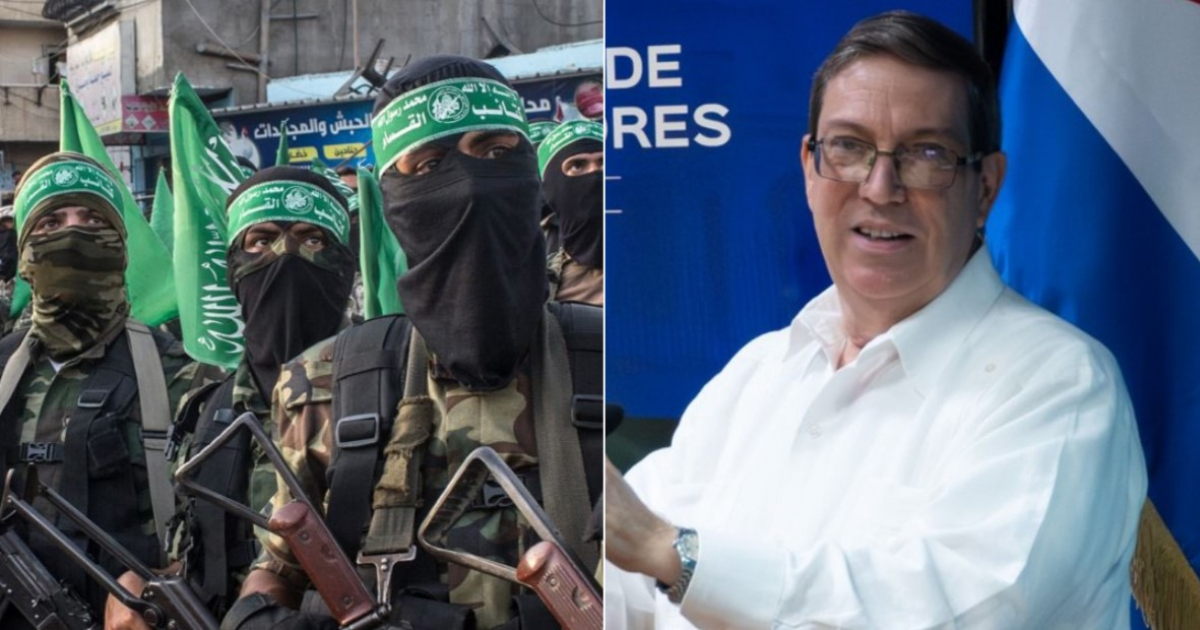
The Cuban regime again demonstrated its closeness to the terrorist group Hamas after condemning the Israeli airstrike against a headquarters of that organization in Doha, Qatar, where a negotiating delegation was present.
In a message posted on X (formerly Twitter), Foreign Minister Bruno Rodríguez Parrilla stated that the Israeli action is an "extrajudicial execution of Zionism, a blatant violation of International Law and the sovereignty of Qatar, and a severe threat to regional security and stability."
The statement from the Foreign Minister omits a crucial detail: Hamas is not a "resistance movement," but a terrorist organization responsible for indiscriminate attacks against Israeli civilians and for using its own population as human shields.
The Israeli attack in Qatar
On Tuesday, September 9, Israel confirmed that it had launched a military operation against senior Hamas leaders in Doha.
According to the Israeli Defense Forces and Shin Bet, the bombing was part of an operation called Fire Summit, conducted exclusively by Israel without foreign support.
Prime Minister Benjamin Netanyahu himself emphasized on X: "Today's action against the main terrorist leaders of Hamas was a completely independent Israeli operation. Israel initiated it, Israel directed it, and Israel takes full responsibility."
International media reported that the offensive targeted residences used by the Hamas leadership in the Qatari capital, while they were discussing a ceasefire proposal put forward by Washington.
On X, the user Vivid Prowess claimed that all the leaders of Hamas have been eliminated. "None are left alive," he said, alongside photos of six of them.
For its part, the government of Qatar labeled the attack as "cowardly."
The Background: Hamas and the War in Gaza
It is worth remembering that the current escalation began in October 2023, when Hamas launched a surprise attack against Israel with thousands of rockets and armed commandos crossing the border.
The massacre left hundreds of civilians dead and more than 300 abducted, including children and the elderly. It was the largest terrorist attack against Israel in decades.
Despite this, neither Díaz-Canel nor his foreign ministry have condemned the atrocities committed by Hamas.
The official narrative of the Cuban regime has been limited to holding Israel responsible for the war in Gaza, ignoring the murders, kidnappings, and violations committed by the Islamist group.
Cuba and Hamas: a close relationship
The affinity between Castroism and Hamas is not new.
In February of this year, the head of the Cuban diplomatic mission in Lebanon, Jorge León, met with Ahmed Abdel-Hadi, one of the leaders of the organization.
In that meeting, Cuba reiterated its support for the Palestinian cause under the leadership of a group that the democratic world considers terrorist.
The activist Félix Llerena, ambassador of Cuba to the organization Youth and Democracy in the Americas, then denounced that the regime of the Island "is a sponsor of international terrorism," and presented images from the meeting in Beirut.
A double standard policy
Havana's stance once again reveals its double standards.
While denouncing the deaths of innocent civilians in Gaza, it remains silent about the massacre of Israelis perpetrated by Hamas and takes the side of those who kidnap children, murder entire families, and use the Palestinian population as cannon fodder.
Castrism does not speak of terrorism when it comes to its ideological allies.
On the other hand, it legitimizes Hamas as "resistance," even though international evidence shows that it is an extremist group whose stated goal is the destruction of Israel.
With this new statement, the Cuban regime confirms that its political compass does not point towards the defense of universal human rights, but rather towards ideological convenience and complicity with violent actors who jeopardize stability in the Middle East.
Frequently Asked Questions about Cuba's Relations with Hamas and the Middle East Conflict
Why does the Cuban regime defend Hamas?
The Cuban regime defends Hamas due to its ideological affinity with groups that oppose the United States and Israel. The stance of the Cuban government aligns with its foreign policy of supporting movements they consider part of the resistance against what they call "imperialism." Furthermore, Cuba has historically maintained close relationships with actors in the Middle East who share its opposition to the Western liberal order.
What is Cuba's position on Israel's attacks in the Middle East?
Cuba has firmly condemned the attacks by Israel in the Middle East, describing them as violations of International Law. The Cuban government believes that such actions escalate tension and jeopardize regional peace and security. This stance has been reflected in its statements regarding Israeli bombings in both Iran and Gaza, where Cuba has openly criticized Israel's military actions.
How is the relationship between Cuba and Iran perceived?
The relationship between Cuba and Iran is viewed as strategic and based on ideological affinities. Both countries have strengthened their ties in recent years, cooperating in sectors such as energy and technology. Additionally, they share an agenda in international forums where they oppose the Western order and denounce the pressure from the United States and its allies.
What impact do Cuba's alliances have on its foreign policy?
Cuba's alliances, such as those with Hamas and Iran, reinforce its anti-imperialist stance and critique of the Western order. These relationships allow Cuba to project an image of resistance and solidarity with movements and countries that share its political vision. However, they also attract international criticism due to support for actors deemed terrorists or human rights violators by the international community.
Filed under: