
Related videos:
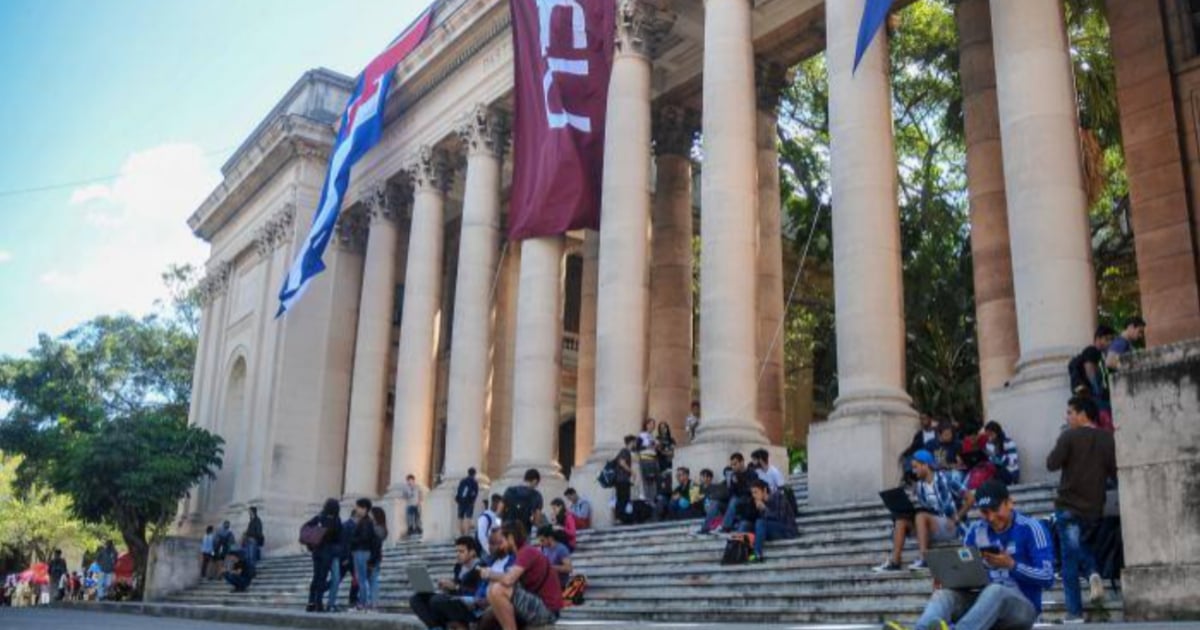
The University of Havana announced this Wednesday the activation of a "protection system" to address the energy contingency following the collapse of the National Electric System (SEN), which has left the country nearly paralyzed.
According to the official note published by the institution, eight-hour surveillance rounds will be implemented at the University Hill and SEDER, consisting of five individuals, in addition to each area being required to ensure the safety of its facilities.
The teams will consist of students and workers, under the direction of a supervisor. University life thus officially transforms into a sort of energy barracks.
In the student residences, services will be maintained, but under strict orders to conserve water and gas.
In addition to the management, a teacher will be assigned to supervise the scholarships on a daily basis, and the Budgeted Units will need to adjust the available food, prioritizing the resident students.
The university administration clarified that the institution has a generator intended to ensure minimal communications, always "depending on the availability of fuel," a phrase that seems more like an acknowledgment of fragility than a guarantee of stability.
These measures will remain in place "until further notice," in a context where teaching, research, and now also oversight fall on the same students and professors, who are forced to take on a role that has little to do with academic life.
On the other hand, the Deputy Minister of Public Health, Carilda Peña García, admitted before the cameras of state television that scheduled operations and other elective medical procedures have had to be suspended, while emergencies and urgent cases are prioritized.
According to the official, the country is not currently facing a critical situation in hospitals, although she acknowledged that there are institutions with less than 24 hours of fuel available, which are given priority attention.
The deputy minister also noted that water supply is one of the main issues. Several medical institutions were already relying on water trucks before the blackout due to the drought, which worsens the current situation.
Similarly, the precariousness of the school year was exacerbated by the massive blackout; however, the local government in Villa Clara assures that the medical schools and universities are maintaining normal teaching.
Frequently Asked Questions about the Energy Crisis in Cuba and the Measures at the University of Havana
What measures has the University of Havana taken in response to the energy crisis?
The University of Havana has implemented a "protection system" with eight-hour surveillance rounds, consisting of students and staff, to ensure the safety of the facilities. In addition, strict orders have been imposed to conserve water and gas in the student residences.
What is the current situation of the National Electric System (SEN) in Cuba?
The National Electric System of Cuba faces a significant collapse with a generation deficit exceeding 1,700 MW, resulting in prolonged blackouts throughout the island. This situation is a consequence of outdated electrical infrastructure and a lack of fuel.
How does the energy crisis affect student residences in Cuba?
Due to the energy crisis, the return of students to the university residences has been postponed. Students remaining in the facilities must adhere to strict resource-saving measures, while authorities adjust food availability, prioritizing resident students.
What role do renewable energies play in Cuba's energy crisis?
Although the Cuban government has promoted solar energy, the contribution of solar parks remains insufficient compared to the structural deficit of the electrical system. Currently, their output does not compensate for the lack of generation from thermal power plants.
Filed under: