
Related videos:
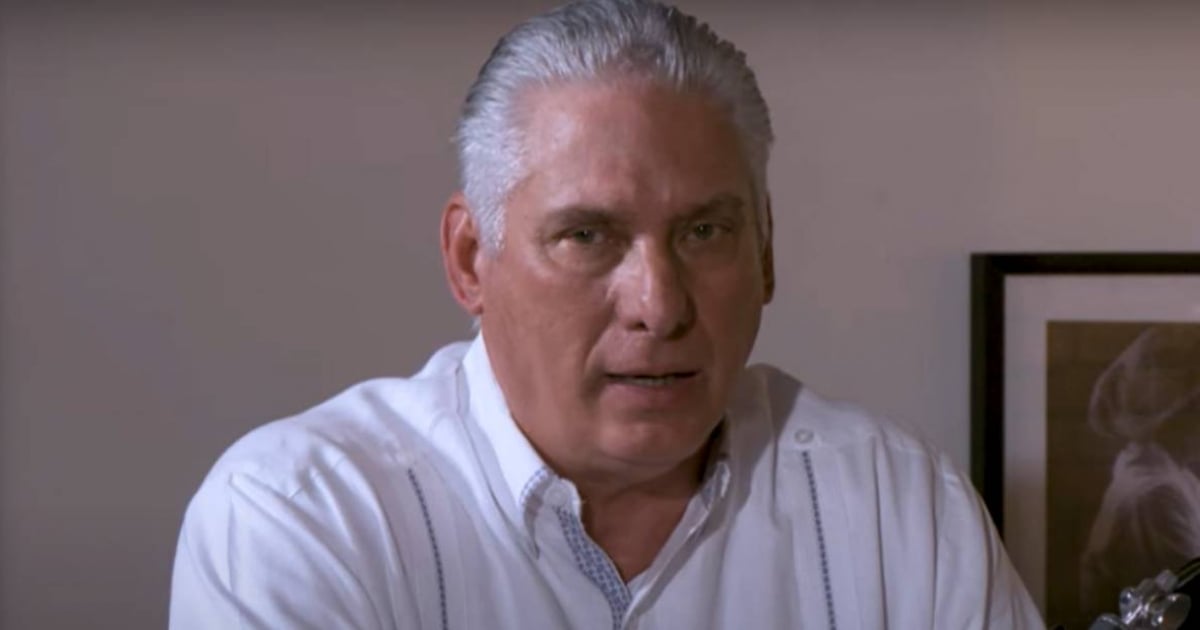
As a ruler with his back to the people, Miguel Díaz-Canel reacted to the fifth massive blackout in less than a year, the second in 2025, with a message of "encouragement" and "support" on social media, more reminiscent of empty rhetoric than genuine empathy for the affected Cubans.
In the post on X, he stated: “After a night of hard work by the specialists from MINEM and UNE, the connection of the SEN continues to progress. Over 1,000 MW are being generated, and most provinces are now linked. This day will be decisive. We remain steadfast and continue fighting.”
The country remained in near darkness for more than 24 hours following the collapse of the National Electric System that occurred on Wednesday morning, and many were wondering where the "popular" president of Cuba was.
Even after a "interconnection" of most territories, the population will continue to face blackouts that in some cases exceed 16 hours, which raises the question of what it means for the leader to be "standing and fighting."
It is not surprising that, while the people were waking up —those who managed to get some sleep— in the dark, Díaz-Canel reappeared hours after the collapse of the National Electric System (SEN) with a message of "encouragement" on social media, true to his habit of commenting on everything from a distance.
“Hard work is being done,” said the dictator on social media X, where he also had the audacity to claim: “Each province is taking its measures, as is already well known. Information to our people has improved.”
In fact, their words are backed by evidence: Cuba has experienced five massive blackouts in less than a year, two of which have occurred in 2025.
In this instance, the regime has used the figure of Manuel Marrero, Prime Minister of Cuba, to confront the intensified energy crisis.
However, this last one, also in a triumphant rhetoric, said this Thursday on X: “With the expertise and extraordinary effort of the electrical workers, the recovery of the SEN is progressing,” it’s a pity that the same knowledge is not used to prevent massive system failures.
"Over 1,000 MW are already being generated, and there are two systems: one from Mariel to Guiteras and another from Matanzas to Holguín. Efforts are underway to reach the entire country," said the communist leader earlier.
Frequently Asked Questions about the Energy Crisis in Cuba and the Government's Response
How many widespread blackouts has Cuba experienced in the last year?
Cuba has experienced five major blackouts in less than a year, two of which occurred in 2025. These outages reveal the fragility of the National Electric System (SEN) and the regime's inability to resolve this crisis that impacts the daily lives of millions of people.
What measures is the Cuban government taking to resolve the energy crisis?
The Cuban government has mentioned the incorporation of solar energy and the recovery of distributed generation as part of its strategies. However, these measures have not shown a visible impact for the citizens due to the lack of fuel and the poor infrastructure. Official statements insist that "work is being done hard," but tangible results are still not evident.
Why are Cubans dissatisfied with the government's response to the blackouts?
Cubans are dissatisfied because government responses are perceived as empty rhetoric and do not address concrete solutions to the energy crisis. Additionally, the lack of self-criticism and the tendency to blame external factors like the U.S. embargo worsen the discontent. The population faces prolonged blackouts that impact all aspects of their daily life, without seeing substantial improvements.
What has Díaz-Canel said about the situation of the electrical system in Cuba?
Díaz-Canel has stated that the situation of the electrical system is serious, but he insists that efforts are being made to resolve it. He has justified the crisis by citing a lack of resources due to the embargo and has highlighted progress in solar energy projects, although these have not translated into tangible improvements for the population. His statements have been met with skepticism and criticism from the public.
Filed under: