
Related videos:
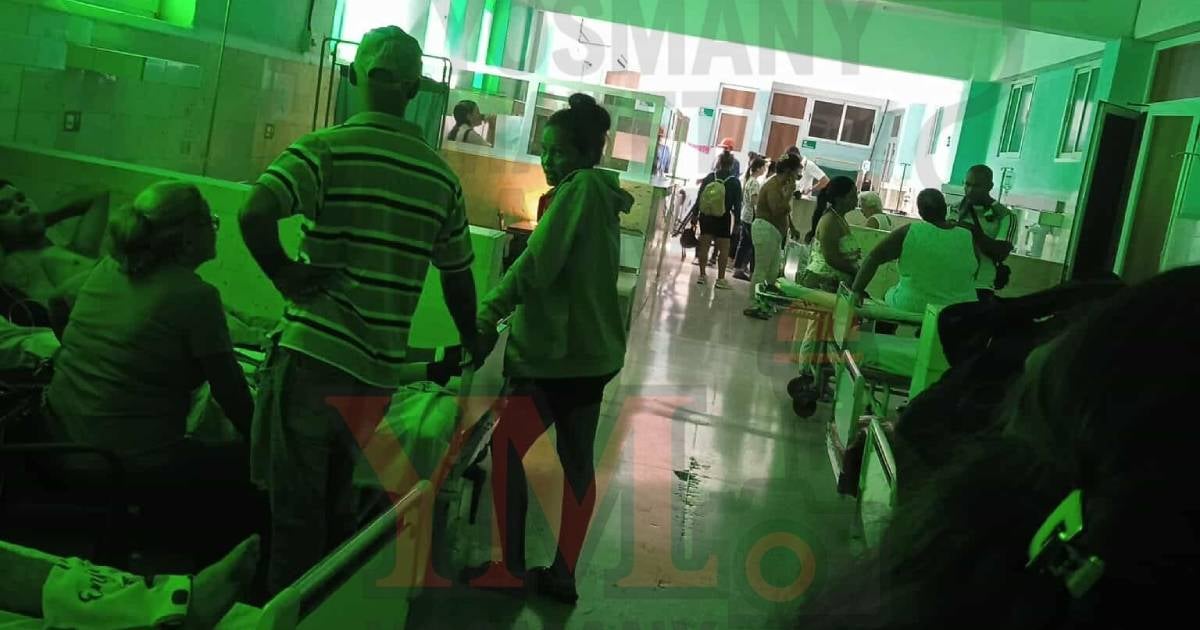
The mass blackout that left Cuba in the dark this Wednesday, which has yet to be resolved, severely impacted hospitals, where there are reports of scenes of chaos and desperation.
In Bayamo, the independent communicator Yosmany Mayeta Labrada warned that the Carlos Manuel de Céspedes Provincial Hospital lost power and that the backup generator failed to respond, forcing them to prioritize only a few wards. “Currently, only some areas have electricity, while the rest remain in the dark,” he warned, as uncertainty engulfed the patients and staff.
From Camagüey, José Luis Tan Estrada, an exiled reporter, described a similar situation at the Oncology Hospital where doctors and patients were using the flashlights on their phones, surgeries were postponed, and a generator took over 20 minutes to start, forcing the air conditioning systems to be shut down.
The Manuel Ascunce Domenech University Hospital in Camagüey issued a statement to try to ease tensions. It acknowledged that there were initial failures but assured that service was restored using emergency generators, although it admitted there were partial interruptions during the power outage.
The population reacted with outrage and sadness. “This is heartbreaking, my God, look at what has happened in a hospital where seriously ill patients are dying,” commented a user on social media, while others reported that healthcare staff have to work under unbearable stress, without medication or minimal conditions.
Meanwhile, the official version tried to convey calm. The Deputy Minister of Public Health, Carilda Peña García, acknowledged that non-urgent surgeries have been suspended, although she assured that emergencies and urgent cases continue to be attended to. She also admitted that there are hospitals with less than 24 hours of fuel, and that the supply of water is one of the main problems.
For its part, the Electric Union reported that this Thursday the National Electric System began to reconnect partially, with the reincorporation of Santiago de Cuba, although provinces like Granma, Guantánamo, and Pinar del Río remain without electricity.
The blackout, the fifth nationwide in less than a year, once again highlighted the precariousness of the energy system and exposed the vulnerability of the hospital network, which in the dark ceases to be a refuge and becomes another scene of fear and uncertainty for thousands of Cubans.
Frequently Asked Questions about the General Blackout in Cuba and its Impact on Hospitals
What was the impact of the blackout on hospitals in Cuba?
The blackout caused chaos in hospitals, where surgeries were canceled and scenes of desperation unfolded. Some hospitals were left without electricity, and the backup generators did not function properly, affecting urgent and emergency medical care.
How did the Cuban government respond to the hospital crisis caused by the blackout?
The Deputy Minister of Public Health, Carilda Peña García, acknowledged the suspension of non-urgent surgeries and assured that emergencies are being prioritized. She stated that the health system is prepared for contingencies, although she recognized issues with water supply and limited fuel in some hospitals.
What measures were taken to address the blackout in the hospitals?
Health response protocols have been activated that include the immediate entry of medical personnel and the inspection of generators, oxygen supplies, and water supply systems. However, the lack of fuel and water complicated the operations of some centers.
How has the energy crisis impacted the Cuban population?
The population has reacted with outrage over the prolonged blackouts, which have exceeded 24 hours in some areas. The testimonies reflect physical and emotional exhaustion, and there are reports of growing inequality in access to essential services, with hospitals and neighborhoods without electricity, while privileged sectors do have power.
Filed under: