
Related videos:
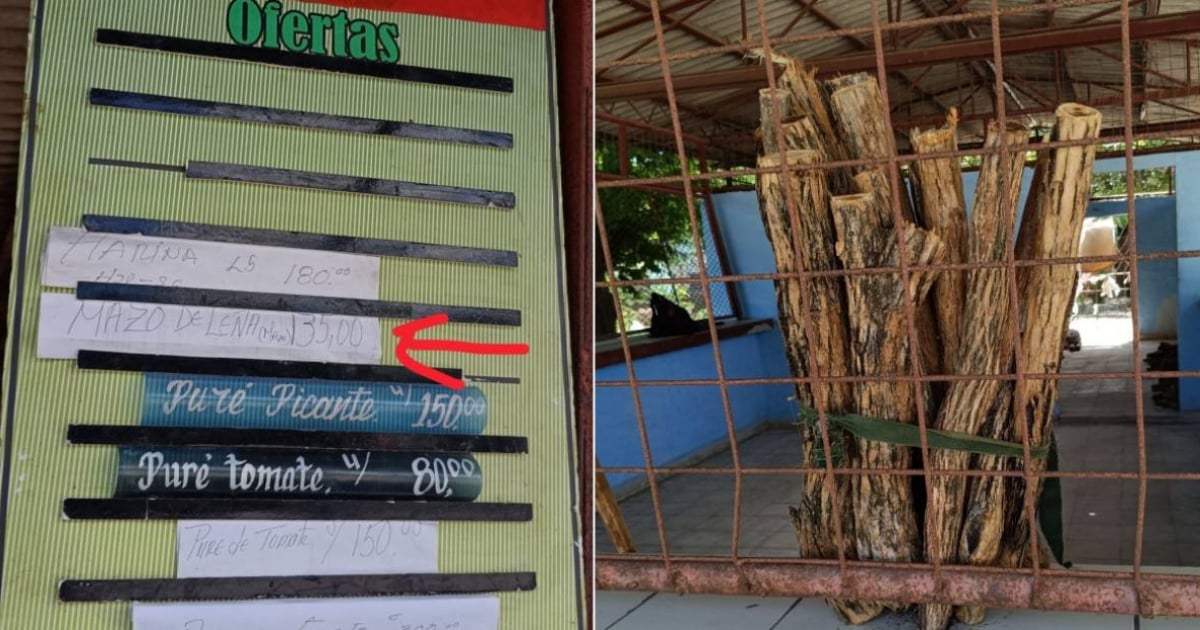
A state-run sales point in the municipality of Jobabo, in Las Tunas, has started to sell bundles of firewood for 135 Cuban pesos as an alternative for cooking food due to the general blackout that left all of Cuba without electricity.
The images were shared by the journalist Yaidel Miguel Rodríguez Castro from Radio Cabaniguán, and they show the logs displayed on a platform, behind a fence, next to a sign with the official price list.
From the "Energy Revolution" to wood-burning stoves
The "Energy Revolution" driven by Fidel Castro has been in disarray in Cuba for years. In the last five years, this decline has accelerated, and there are Cubans who are normalizing the crisis.
"Something is something (as we commonly say)," Rodríguez wrote in his Facebook post along with the poster promoting the firewood for the community.
The sale is led by a unit for "Processing and Marketing of small livestock meat and goat milk products," but those mentioned products were not accessible to the people.
The sale of firewood has generated significant backlash on social media, as it highlights the level of hardship that people have reached in order to survive in Cuba.
Coal at one thousand pesos and rationed gasoline in Jobabo
Rodríguez also reported that local authorities indicated the coal would be sold at 25 pesos per kilogram, but citizens reported that in areas such as La 40, the bag was sold for up to a thousand pesos, a figure that reflects lack of control and speculation amid the crisis.
"The problem is not just the electrical collapse, but the inability of local structures to enforce their own directives," the journalist reported.
He also warned about the rationed distribution of gasoline in the territory: “Urgent notice to the owners of electric plants in Jobabo: Starting at 11:30 a.m., five liters of fuel will be sold to 100 customers, according to the order of registration on the TICKET platform.”
Outrage over the regression: “We’re going backward like the Indians”
Reactions on social media came quickly. The image of the firewood for sale was seen as a symbol of the regression the country is experiencing.
"Japan is aiming for 6G technology, and here they sell us sticks for cooking," commented one user. Another joked, "They might as well sell us a bow and arrow too."
“Never thought we would come to this. Instead of moving forward, we're going backwards,” expressed another citizen, in one of the most shared messages.
An energy crisis without a solution after five years
Cuba has been living under a regime of continuous blackouts for the past five years. The latest collapse of the National Electric System (SEN), which occurred on September 10, left the entire country without electricity due to the unexpected shutdown of the Antonio Guiteras Thermal Power Station (CTE) in Matanzas.
This is the second nationwide blackout of 2025, reflecting a deteriorating system. The Prime Minister, Manuel Marrero Cruz, asked the population for "trust" this Wednesday.
“I am fully convinced that intensive work will be done to provide a prompt response. The instructions have been given. (...) A big hug and trust, as we are doing everything possible and even the impossible to restore the service as soon as possible,” he said.
However, millions of Cubans are still without electricity and without drinking water in their homes. The situation is untenable, and Marrero's statements sound like worn-out promises.
Frequently Asked Questions about the Energy Crisis in Cuba and the Use of Firewood
Why are bundles of firewood sold in Las Tunas?
The sale of firewood bundles in Las Tunas is a response to the widespread blackouts affecting Cuba, forcing people to seek alternatives for cooking due to the lack of electricity and gas. This highlights the precariousness of the energy supply in the country.
What is the impact of using firewood for cooking in Cuba?
The use of firewood for cooking exacerbates deforestation in Cuba and generates a negative environmental impact. The uncontrolled logging of trees and the use of forest products as fuel are common practices due to the energy crisis. This not only affects the environment but also endangers people's health due to the inhalation of toxic fumes.
What alternatives does the Cuban government have to resolve the energy crisis?
The Cuban government has faced criticism for not modernizing the electrical infrastructure or diversifying its energy matrix with renewable sources such as solar or wind. Although solutions like the development of biogas infrastructures have been proposed, effective measures have not yet been implemented to address the long-term energy crisis.
How does coal export affect the Cuban population?
The export of charcoal has caused discontent among Cubans, as the product is scarce and expensive in the national market. Although the government prioritizes exports to obtain foreign currency, the local population suffers from a lack of access to this resource, exacerbating the energy crisis.
Filed under: