
Related videos:
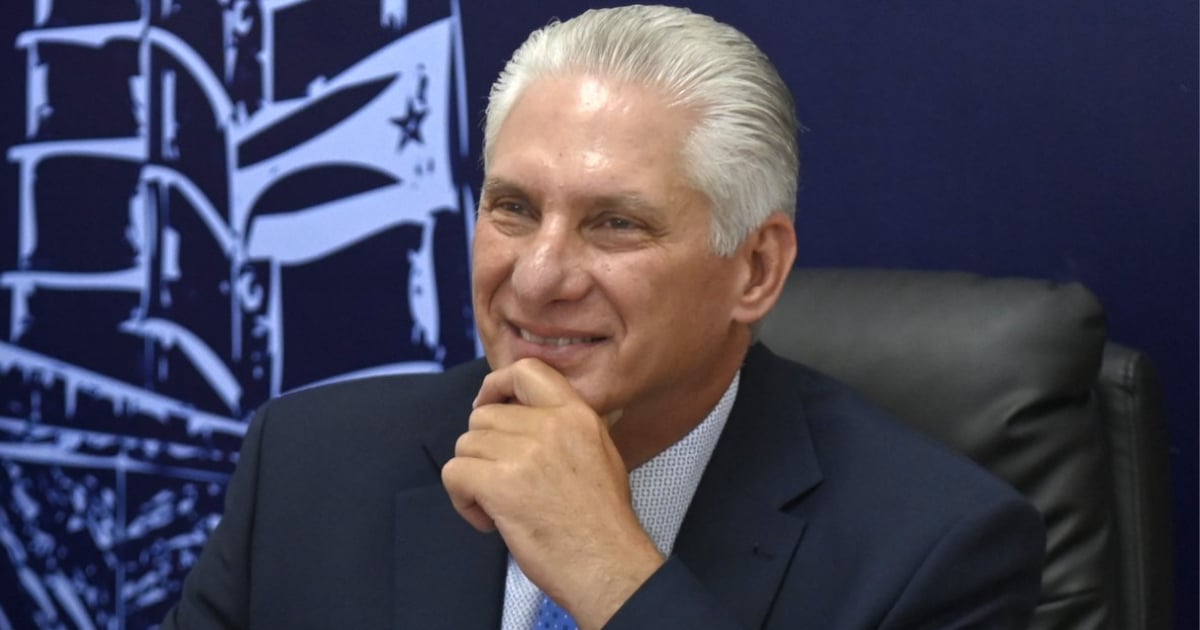
The Cuban leader Miguel Díaz-Canel celebrated this Thursday on X the alleged “rapid recovery” of the Nationwide Electric System (SEN), following the collapse that left the entire island in darkness for over 24 hours, during the second widespread blackout of 2025 and the fifth in less than a year.
"To the teams and workers of Energy and Mines and UNE, our recognition for the record in the recovery of the National Electric System," wrote Díaz-Canel in a message where he reiterated his blame on the "blockade" from the United States and the country's aging plants for the electrical disaster.
However, reality contradicts the official euphoria: millions of Cubans are still without electricity in their homes, despite authorities claiming that the system has been reconnected. The technical reconnection does not mean that the service reaches the population with stability, which continues to live in uncertainty and without hope that the blackouts will come to an end.
A strategy to react, not to prevent
The Prime Minister Manuel Marrero had announced a day earlier that there was “a well-defined strategy” to address the decline of the SEN, although not to prevent it.
Marrero, who appeared at the National Cargo Office, was one of the few visible faces amid the crisis, during which Díaz-Canel remained silent for hours, only commenting on social media about the bombings in Gaza while Cuba remained silent.
When he finally appeared, the leader confined himself to phrases of encouragement such as “we are working hard” or “we remain standing and fighting,” which were perceived as empty rhetoric by a citizenry weary of unfulfilled promises.
The latest collapse of the SEN occurred on Wednesday at 9:14 AM, following the unexpected shutdown of the Antonio Guiteras thermoelectric power plant in Matanzas, the most important in the country, which has just reintegrated into the system.
The reconnection was supported by units such as the one in Mariel, while the provinces gradually connected until the interconnection was completed on Thursday afternoon.
With this, there have now been five national blackouts in less than a year: three in 2024, including the one caused by Hurricane Rafael, and two in 2025, all sharing the same common denominator, which is obsolete infrastructure, lack of investment, and a structural crisis that impacts the daily lives of Cubans.
The human cost behind the "record"
Beyond the official discourse that tries to present as a victory what is actually a symptom of decline, massive power outages have turned into a daily tragedy: loss of food, damaged appliances, an inability to work or study, and entire families subjected to constant uncertainty.
While Díaz-Canel speaks of "record time," millions of Cubans know that the true record belongs to an electrical system that is unable to sustain itself, condemning the country to live amid promises, justifications, and blackouts.
Frequently Asked Questions about the Electric System Crisis in Cuba
What has Díaz-Canel said about the recovery of the National Electric System?
Díaz-Canel has assured that the National Electric System has recovered in "record time", thanking the workers of Energy and Mines and the Electric Union of Cuba for their efforts. However, this statement contrasts with the reality for many Cubans who continue to endure prolonged blackouts.
What is the current situation of the National Electric System in Cuba?
Despite official statements regarding the recovery of the system, the reality is that many Cubans still lack stable electricity. Widespread blackouts have become common, revealing the fragility of an outdated infrastructure and the lack of adequate investment.
How many general blackouts has Cuba experienced in the last year?
Cuba has experienced five general blackouts in less than a year, with three in 2024 and two in 2025. These events reflect the government's inability to maintain a stable and efficient electrical system.
What factors contribute to the energy crisis in Cuba?
The energy crisis in Cuba is due to a combination of outdated infrastructure, lack of investment, and fuel shortages. The government also blames the U.S. embargo, although many critics point to poor internal management as a crucial factor.
How has the Cuban population reacted to the government's statements regarding the electrical crisis?
The Cuban population has reacted with skepticism and indignation to the government's statements. Many feel that the words of the leader do not reflect the reality they face daily, with frequent service interruptions and deteriorating living conditions.
Filed under: