
Related videos:
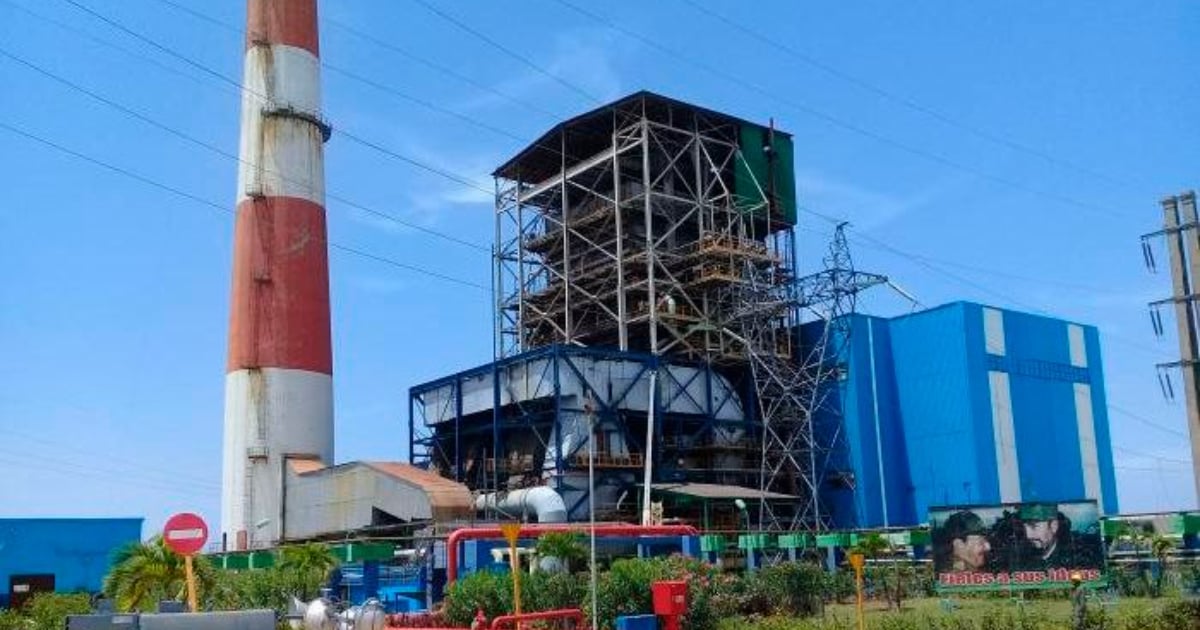
The Antonio Guiteras Thermoelectric Power Plant, located in the province of Matanzas, re-synchronized with the National Electric System (SEN) at 10:22 PM on Thursday, according to the plant's official Facebook profile.
In this new addition to the system, the unit was generating about 210 megawatts (MW), a figure still far from its nominal capacity, but considered crucial for relieving demand amid the current energy crisis.
The announcement comes after several days marked by failures, unexpected disconnections, and unsuccessful attempts to restart, which have left millions of Cubans facing prolonged blackouts, lacking clear information and experiencing increasing strain in their daily lives. La Guiteras, the country's main thermoelectric plant, has been a central figure in a sequence that further confirms the structural fragility of the Cuban electrical system.
On Wednesday, September 10, at 9:14 a.m., the Guiteras went offline automatically due to a false signal of overheated steam in the boiler, according to reports from official media such as the newspaper Girón. This specific failure triggered the automatic protection system of the thermal block and caused a total collapse of the SEN, leaving the entire island without electricity for more than 24 hours. It was the fifth national blackout in less than a year, and the second so far in 2025, highlighting the progressive deterioration of the system under state control.
On Thursday, at 3:41 p.m., a partial synchronization of the Guiteras was reported, following a series of technical repairs that included cleaning of regenerative air heaters, adjustments to feed pumps, and sealing corrections. However, that "joy" was short-lived: just a few hours later, while the Minister of Energy and Mines was addressing the Mesa Redonda to explain the status of the SEN, the plant disconnected again, deepening the feeling of widespread instability.
Despite that second outage, the Cuban government announced that the National Electric System had been restored since Thursday morning, claiming that all provinces were once again connected. However, citizens on social media reported that in many areas there was still no electricity, and that the supposed normalization was not reflected in the daily lives of the population. The lack of transparent information, combined with the precariousness of the infrastructure, has intensified public distrust in official accounts.
Now, with the new synchronization that occurred on Thursday at 10:22 p.m., the authorities hope to partially stabilize the supply, although recent history invites skepticism. The plant has experienced multiple outages since 2024, and each restart has been followed by new interruptions. The plant's director, Rubén Campos Olmo, recently acknowledged that the unit can only start up if it receives stable external power, and that it could not be guaranteed that there would be no damage after each forced shutdown.
Meanwhile, Cubans continue to face the direct consequences of a prolonged energy crisis: nights without ventilation, spoiled food, damaged appliances, an inability to cook, and a digital disconnection that adds to the already existing isolation. Each blackout is not just a figure in technical reports, but an everyday experience that erodes the quality of life and undermines trust in any real solution.
The entry of the Guiteras into the SEN could temporarily alleviate the situation, but it does not address the underlying problem: an outdated national electrical system, lacking sustainable investment, reliant on makeshift fixes, and increasingly vulnerable to minor technical failures that escalate into national disasters.
Frequently asked questions about the energy crisis in Cuba and the Antonio Guiteras thermoelectric plant
Why is the Antonio Guiteras thermoelectric power plant so important for the Cuban electric system?
The Antonio Guiteras thermal power plant is the largest and most strategic facility in Cuba, as its generation capacity is crucial for relieving the country's energy demand. However, its operation is intermittent due to recurring technical problems, highlighting the fragility of the national electrical system.
What are the main causes of blackouts in Cuba?
The blackouts in Cuba are primarily due to the technological obsolescence of the electrical system and the lack of proper maintenance of the power plants. The facilities, especially the Antonio Guiteras, suffer from constant breakdowns and lack of investment, which prevents stable and reliable electricity supply.
How do blackouts affect the daily lives of Cubans?
Prolonged blackouts in Cuba negatively impact the daily lives of citizens, causing food loss, damage to appliances, inability to cook, and difficulties sleeping due to the heat. Additionally, they affect the health of sick or elderly individuals and create feelings of uncertainty and frustration among the population.
What measures has the Cuban government taken to address the energy crisis?
The Cuban government has promised solar projects and battery systems, but the lack of funding and the reliance on outdated thermal plants hinder the implementation of structural solutions. The population continues to face prolonged blackouts, with no clear schedule or significant improvements in the electricity supply.
Filed under: