
Related videos:
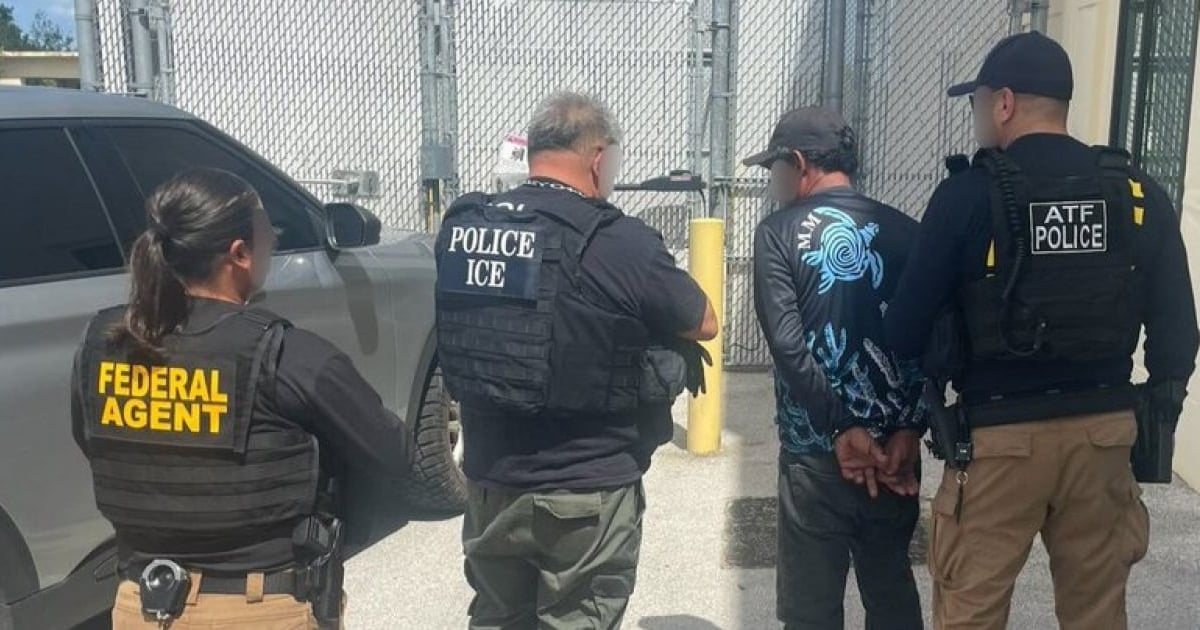
In an operational shift directly impacting immigrants, the Immigration and Customs Enforcement (ICE) agency has ceased requiring its agents to use the so-called "Field Operation Worksheet" (FOW), a form that documented the investigation prior to any arrest.
The measure -confirmed by officials and former agents to NBC News, whose Spanish version was published by Telemundo 51- has raised alarms.
Former operatives, lawyers, and civil rights defenders warn that the elimination of the requirement facilitates less planned mass raids with a greater margin for racial profiling.
For over 15 years, agents were required to complete a form before operations: target's name, physical description, address, employment history, immigration history, and criminal record, etc.
That record not only served to justify the intervention, but it also indicated whether the person might be armed and acted as a record in case of future legal challenges.
The change, which occurred before the summer, was driven by the leadership of the Department of Homeland Security (DHS), which claimed that the FOW was a "waste of time."
Under President Trump's administration, the pressure on ICE to increase the number of arrests has been intense.
According to sources cited by NBC, in May, then-White House Deputy Chief of Staff Stephen Miller urged field offices to increase arrests and threatened to fire those who did not meet the required numbers.
That drive for "results" would have contributed to the policy change: less paperwork, more presence on the streets, and more expansive operations.
The official version from the DHS is that there has not been a decline in investigative diligence, but rather a modernization: the FOW has been replaced by "a simplified technological platform" that gathers the same information electronically.
However, former officials consulted claim that the "sheets" had already been completed digitally for years, so the removal would not have brought about a real improvement; it's just an excuse to expedite operations.
Critics are warning about the practical consequences: raids in parks, neighborhoods, and store parking lots where migrants wait for work, and random detentions to inflate the numbers, without distinguishing between those with criminal records and those without.
"There was a reason to go after Pedro and not Juan. Now they are interested in numbers, and if you are interested in numbers, you do things like wandering around engaging in racial profiling," noted Scott Shuchart, former deputy director of ICE.
Attorney Julia Toro, an expert in immigration law, described the arrests of migrants without any prior investigation to justify them: "It's not as if [the agents] know who they are detaining. These are arbitrary arrests," she stated.
In addition to the risk to civil guarantees, the elimination of the FOW could affect the safety of the agents themselves.
Paul Hunker, former chief counsel for ICE in Dallas, recalled that the forms were also used to document risks and justify the use of force in court; without that administrative record, the legal exposure of the officers can increase.
On the other hand, the lack of prior documentation can complicate coordination with other local agencies and reduce the tactical effectiveness of the operation.
Changes are arriving at a time when raids are anticipated in cities like Chicago and Boston, and there have already been reports of arrests in Los Angeles and Washington D.C. that many witnesses describe as abrupt and widespread.
In summary: the disappearance of the field operations sheet symbolizes a more aggressive and less formalized policy in immigration enforcement.
Frequently Asked Questions about the Removal of the ICE Operations Sheet under the Trump Administration
Why has ICE stopped using the field operations worksheet (FOW)?
ICE has stopped using the field operations worksheet (FOW) to replace it with a streamlined technological platform, according to Deputy Assistant Secretary Tricia McLaughlin. However, former officials argue that this removal has not improved the process, as the worksheets were already being completed digitally and their elimination seems more like an excuse to expedite operations without proper planning.
What are the criticisms regarding the elimination of the FOW in ICE operations?
The criticism focuses on that the elimination of the FOW facilitates less planned, more extensive raids with greater scope for racial profiling. Lawyers and civil rights advocates argue that this can lead to arbitrary detentions and increases the risk of legal and human rights violations. Furthermore, it may jeopardize the safety of agents by lacking the necessary documentation to assess potential threats before operations.
How does the new ICE policy affect migrant communities?
The new ICE policy has intensified fear and uncertainty within immigrant communities. Large-scale raids, particularly in public places such as parks and parking lots, create panic and protests. Arbitrary detentions, which do not differentiate between immigrants with criminal records and those without, have risen significantly, especially in places like Florida, where 36% of those arrested had no prior criminal history.
What role does the Trump administration play in the increase of detentions by ICE?
Under the Trump administration, there has been significant pressure on ICE to increase the number of arrests. Stephen Miller, then the Deputy Chief of Staff at the White House, urged field offices to ramp up detentions, even setting draconian goals of thousands of daily arrests. This approach has fostered a more aggressive and less formalized immigration enforcement policy.
Filed under: