
Related videos:
A recent survey from our newsroom revealed that nearly six out of ten Cubans believe that the United States should implement stricter policies towards the Havana regime.
The result of the survey launched this Friday on the social media of CiberCuba reflects the growing discontent of the population with the government and the perception that current measures are insufficient to push for political and social changes on the island.
The survey was answered by 1,752 people, of whom 58% (1,024 votes) believed that the U.S. should be tougher on the Cuban regime.
On the other hand, 20% responded no (333), and another 22% believed that "the policy towards Cuba is already quite harsh" (387 votes).
The study shows that a significant majority of respondents views international pressure —especially that from Washington— as a necessary tool to weaken the repressive apparatus of the Communist Party.
This opinion contrasts with the official narrative, which blames the U.S. embargo for the economic and social crisis that the country is experiencing.
The data confirms that the public discontent is primarily directed against the regime, not against the United States. For many Cubans, the tightening of American policy could accelerate internal transformations, reduce the control of the security apparatus over the population, and pave the way for greater political and economic freedoms.
What measures has the U.S. implemented against the Cuban regime?
Just after taking office for his second term, Trump and reinstated Cuba on the "list of state sponsors of terrorism." This entails additional financial sanctions and increased international restrictions for Cuba.
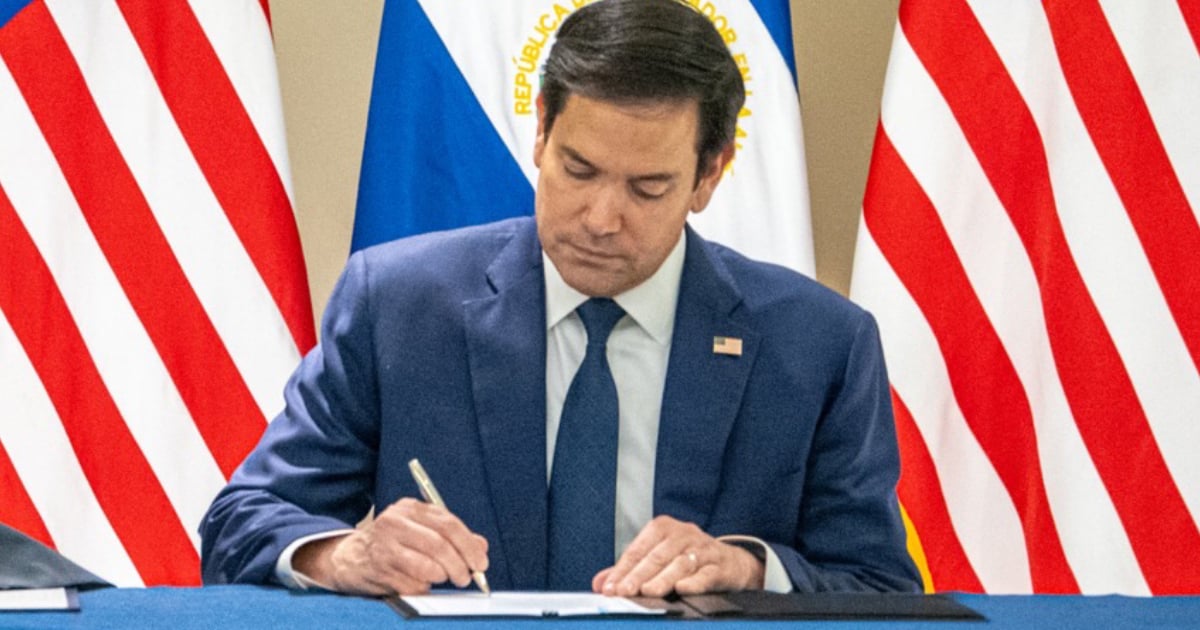
On January 31, 2025, Secretary of State Marco Rubio announced that several Cuban entities, including some controlled by the military conglomerate GAESA, would be re-added to these lists that restrict their interaction with the international financial and commercial system.
In February, Trump signed an executive order that restricts access for "foreign adversary countries", including Cuba, to strategic U.S. technologies such as artificial intelligence, semiconductors, and advancements in biotechnology.
On June 5, 2025, he signed a presidential order to partially limit the entry of nationals from several countries, including Cuba.
It was also announced that entry will be prohibited for Cuban citizens under certain national security conditions.
In September 2025, Trump extended the economic embargo on Cuba for another year, which keeps existing sanctions and commercial and financial restrictions under official regulations in effect.
Frequently asked questions about U.S. policy toward Cuba and the impact of sanctions
What does the majority of Cubans think about the U.S. sanctions against the Cuban regime?
According to a recent survey, almost six out of ten Cubans believe that the United States should implement stricter policies towards the regime in Havana. This reflects a growing discontent with the Cuban government and the perception that current measures are insufficient to provoke political and social changes on the island.
What are the most recent measures taken by the U.S. against Cuba under the Trump administration?
The president, Donald Trump, signed a Presidential Memorandum that prohibits financial transactions with entities controlled by the Cuban armed forces, reinforces the economic embargo, and bans American tourism on the island. These measures aim to weaken the repressive apparatus of the Cuban regime and support civil society.
How has the Cuban government reacted to U.S. sanctions?
The Cuban government has labeled the sanctions as "criminal behavior" and violations of human rights. The regime claims that these measures aim to suffocate the population and hinder the country's economic development. However, the economic collapse in Cuba is primarily due to the government's ineptitude and immobility.
What is the real impact of U.S. sanctions on the Cuban population?
While the regime blames the embargo for the economic difficulties, many Cubans believe that the real "blockade" is internal, created by a system that prohibits free enterprise and freedom of expression. The sanctions aim to weaken the military and security apparatus of the regime, not the Cuban people, promoting changes that benefit civil society.
Filed under: