
Related videos:
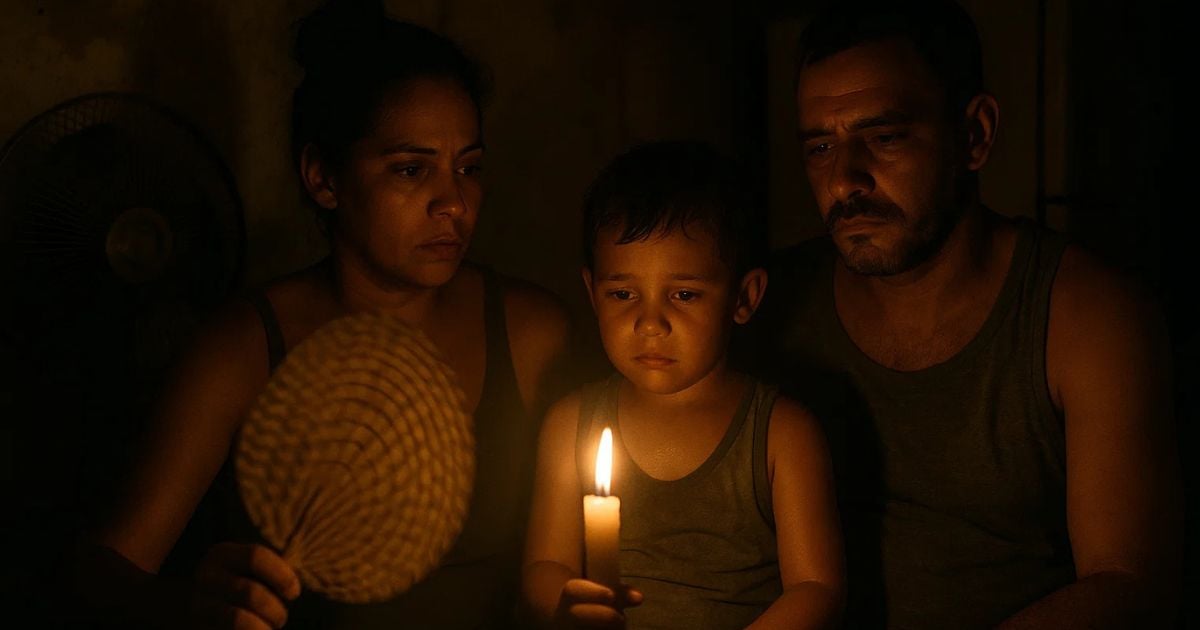
Luis, a single father from Havana, lives with the constant anguish of being unable to provide the basics for his two children: a teenager in Mayabeque and a three-year-old boy in Havana.
The Food Monitor Program, an independent project that documents food insecurity on the island, collected her testimony and that of other Cubans who are battling the harshness of daily blackouts, which not only extinguish the lights but also threaten the stability of thousands of households.
In Mayabeque, Luis's eldest son faces a 12-hour blackout cycle with only four hours of electricity.
Cooking relies on electric pots that don't work without power, or on expensive and adulterated charcoal, which suffocates homes with smoke.
In Havana, although the outages are somewhat minor, they occur at critical hours, such as lunch or dinner, which forces one to improvise baby food early in the morning for the young child.
The crisis is not just material: the lack of electricity also compromises access to water, as families have to wait for the power to turn on pumps and turbines.
Psychological damage is also a factor: the teenager resignedly repeats, "there's no light" while dreaming of emigrating, and the youngest asks innocently every time something goes out: "Did the light go out?"
The situation even affects those who managed to leave the island. Antonia, a three-year-old Cuban girl living in Florida, anxiously asks her grandmother in Cuba: “Grandma, do you have electricity?”
Her case illustrates how blackouts become a trauma that transcends borders.
The prolonged blackouts force parents to cook in the early morning, rearrange schedules, sleep in the heat, or watch the few obtained food items go to waste.
But the most serious issue, independent organizations report, is the impact on child development: malnutrition, anxiety, and a sense of uncertainty that begins to take hold from the earliest years of life.
In light of the government's inefficiency, it is the emigrated family members who bear the responsibility of sending plants, solar panels, batteries, or food.
Even so, they fail to fill a structural void that condemns childhood in Cuba to grow up in darkness and hunger.
Amid the widespread collapse that Cuba is experiencing, prolonged blackouts have severely disrupted the lives of thousands of families, particularly those with young children.
From provinces like Mayabeque, Havana, or Santiago de Cuba, to pediatric hospitals and homes where hope barely remains, children grow up in a reality marked by darkness, heat, and hunger.
In Santiago de Cuba, the electricity crisis has forced many children to sleep in doorways, courtyards, or on balconies as the only way to escape the heat and mosquitoes.
According to reports gathered by independent journalists, blackouts not only disrupt children's rest but also deteriorate their mental and emotional health, plunging many mothers into a cycle of anxiety, guilt, and exhaustion.
This deterioration is not exclusive to urban areas. In rural or impoverished regions, parents whip up meals in the early hours, lose the few foods they manage to refrigerate, and have to rearrange their routines in an effort to maintain some stability amid the chaos.
As a reference, many mothers have shared testimonies about the pain of raising children in scarcity, describing how heat and darkness have turned Cuban childhood into an experience marked by fear and lack.
Moreover, the psychological impact extends to mothers like the protagonist of a recent testimony, who relives her own childhood marked by hunger and poverty as she sees her daughters experiencing the same deprivations today.
Despair, fueled by the lack of institutional responses, has become a generational constant that permeates households across the country.
Frequently asked questions about the energy crisis in Cuba and its impact on the population
How do blackouts affect Cuban families?
Prolonged blackouts severely impact the quality of life for Cuban families. Power outages not only hinder cooking and food preservation but also affect access to water and the emotional stability of households. Children suffer from malnutrition and stress, while parents must reorganize their daily lives to try to meet basic needs during the few hours of electricity available.
What alternatives do Cubans have for cooking during power outages?
Many Cubans resort to outdated and unhealthy methods such as cooking with wood or charcoal. The lack of electricity and liquefied gas has forced families to improvise stoves using recycled materials, which poses risks of fires and health issues due to smoke inhalation. Some also try to cook in the early morning when electricity is available, although these practices are not sustainable in the long run.
What impact does the energy crisis have on Cuban children?
The energy crisis severely affects child development in Cuba. The lack of electricity and adequate food leads to malnutrition, anxiety, and a deep sense of uncertainty among children. Many inherit their parents' worries and experience trauma that can have lasting consequences on their mental and emotional health.
What role do Cuban emigrants play in the current crisis?
Cuban emigrants play a crucial role in supporting their families on the island. They often send resources such as generators, solar panels, and food, trying to alleviate the conditions of their loved ones. However, this aid cannot solve the structural problem facing the country, which requires effective governmental action to ensure basic services for the population.
Filed under: