Cuba was once again plunged into darkness.
On September 10, Cuba experienced a nationwide blackout after the collapse of the National Electric System, leaving much of the country in darkness and highlighting the accumulated problems in electricity generation.
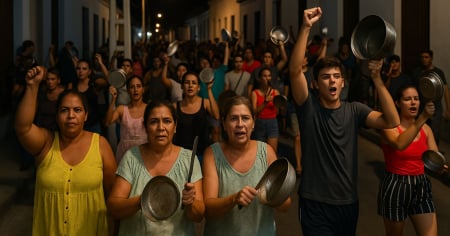
Yesterday, dozens of residents took to the streets with pots and lanterns to protest against blackouts and the crisis. Amidst chants of unity and demands for freedom, the protesters reported having gone more than 24 hours without electricity, with only half an hour of restoration during the day.
Every so often, like a macabre clock, Cuba's National Electric System (SEN) collapses, plunging the entire country into total blackout. It is neither an isolated event nor an exceptional accident: it is a pattern, a repeated sentence that exposes the extreme fragility of Cuba's energy system.
In the last year, Cubans have experienced five total disconnections of the SEN:
- On October 18, 2024, the shutdown of the Antonio Guiteras thermoelectric plant left the entire island in darkness.
- On November 6, 2024, Hurricane Rafael knocked out the power grid and plunged the country into another widespread blackout.
- On December 4, 2024, an automatic shot at Guiteras disconnected the entire system at 2:08 in the morning.
- March 14, 2025, a malfunction at the Diezmero substation caused a complete outage of the national electrical system during peak night hours.
- September 10, 2025, once again the Guiteras: its unexpected outage brought down the entire system and left the whole country without electricity.
Five collapses in less than a year. Five general blackouts that were not the result of a nuclear catastrophe or a meteor, but rather the chronic deterioration of obsolete and poorly managed infrastructure.
Everyday Hell
Five blackouts that were not the result of a nuclear cataclysm or a meteorite...
It's not just a few hours without electricity. Each widespread blackout means spoiled food, hospitals on the brink of collapse, disrupted communications, elderly people unable to use medical equipment, and entire families returning to a medieval darkness. Every time the SEN disconnects, Cuba plunges into an abyss of darkness that seems never-ending.
A repetition that extinguishes hope
The gravity lies not only in the blackout itself but in the constant recurrence, in the certainty that it will happen again. The routine of disaster has normalized the unacceptable. The future is not measured in development projects, but in how many hours of light there will be or how many days it will take for the system to collapse again.
Rumbo sin retorno translates to "Destination without return."
Thus, the island sails in darkness towards a disturbingly clear destination: a hell of eternal gloom, where the only horizon is the repetition of the fall. Each disconnection from the SEN is a brutal reminder that the country is not just in crisis, but seems to have accepted living on the brink of total blackout as normal.
While the SEN continues to fall time and time again, while darkness becomes a routine and the entire country gets used to measuring its days by the hours of electricity, there will be no way out within the same scheme that has brought us here. The general blackouts are not accidents; they are the symptoms of a system corroded to its core.
Therefore, the naked truth is this: only a change of regime can pull Cuba out of this hell of eternal darkness, not only to restore electricity, but also to bring hope back to millions of Cubans. Because what is at stake is not just the missing kilowatt, but the very future of the country.
Article written with the assistance of ChatGPT.
Filed under:
Opinion piece: Las declaraciones y opiniones expresadas en este artículo son de exclusiva responsabilidad de su autor y no representan necesariamente el punto de vista de CiberCuba.