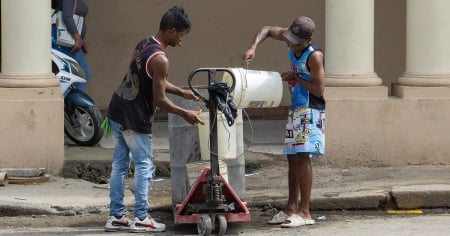
Residents of the El Cerro neighborhood in Havana staged a pot-banging protest on Monday night in response to a power outage that lasted more than seven hours.
According to what was reported by the independent media CubaNet, the power outage began shortly before 2:00 p.m. and was not restored until after 10:00 p.m.
The sound of pots and the shouts of protest echoed around the corner of Tejas as darkness fell over the area. Two police patrols arrived an hour after the demonstration began and remained there until the service was restored.
This is not the first time that residents of this locality have made their voices heard. As the aforementioned media outlet recalled, in November 2024, they held a similar protest after going three days without water or electricity.
The current mobilization is occurring in a context of widespread blackouts that affect 54% of the country during peak hours, according to official figures.
The electrical situation in Cuba worsens day by day. On Tuesday, the Electric Union (UNE) reported a national deficit of 1,990 MW, with an availability of only 1,690 MW against a demand of 3,500 MW. The reasons: multiple breakdowns, units under maintenance, and the chronic shortage of fuel.
In Havana, the Electric Company reported outages in five sectors, resulting in a loss of 200 MW. However, users reported that block 3 was also without power, indicating that the situation could be even more severe.
While the government calls for patience and resilience, the streets of Havana erupt once again with the sound of pots and pans, reflecting the citizens' frustration in the face of an unrelenting energy crisis.
Clanging of Pots, Crisis, and Repression Amidst the Electrical Collapse
The protest in El Cerro is not an isolated event. Just three days earlier, in the early hours of September 14, dozens of residents from Gibara, in Holguín, took to the streets shouting "We want electricity!" and "Freedom!", after more than 24 hours without power.
The social explosion in that coastal town included marches with lanterns, pots, and slogans of popular unity, amidst an energy crisis that had caused the fifth national blackout in less than a year just days earlier.
Although local authorities such as the Secretary of the Communist Party in Gibara, Nayla Marieta Leyva Rodríguez, claimed to have held a "respectful and frank" dialogue with the residents, just a few hours later, the arrests of demonstrators began, contradicting the official narrative of calm and understanding.
Videos on social media showed patrols of the National Revolutionary Police (PNR) making selective arrests, in what activists are calling a “government hunt.”
The events in Gibara and Havana occur in a context of structural collapse of the National Electric System, with demand far exceeding generation capacity and thermoelectric units out of service due to breakdowns or maintenance.
The desperation due to prolonged outages, coupled with the lack of effective responses from the regime, has led to a rise in social discontent that is visible in the streets and documented by citizens on social media. Each new blackout, each pot-banging protest, now echoes the collective frustration of a country on the brink.
Filed under: