
Related videos:
The number of detainees in Gibara, Holguín, after the protests on September 13, has risen to 27 people, as confirmed by the Cuban Observatory of Human Rights (OCDH).
Of those detained, four remain incarcerated, while the others were released on bail but remain under strict surveillance. Protests erupted after several days of power outages and lack of water in the locality of El Güirito, in Gibara, the entity reported on Facebook.
"Gibara is under terror," warned the OCDH, denouncing the repressive atmosphere imposed after the peaceful demonstration.
He said that the operation was led by Captain Diosmel (alias Julio), an officer about 30 years old, known for implementing strategies of control and fear in the area.
The regime has tried to downplay what occurred. The official newspaper Granma stated that "there were no violent events" and that the conflict was resolved through "frank dialogue" with the population.
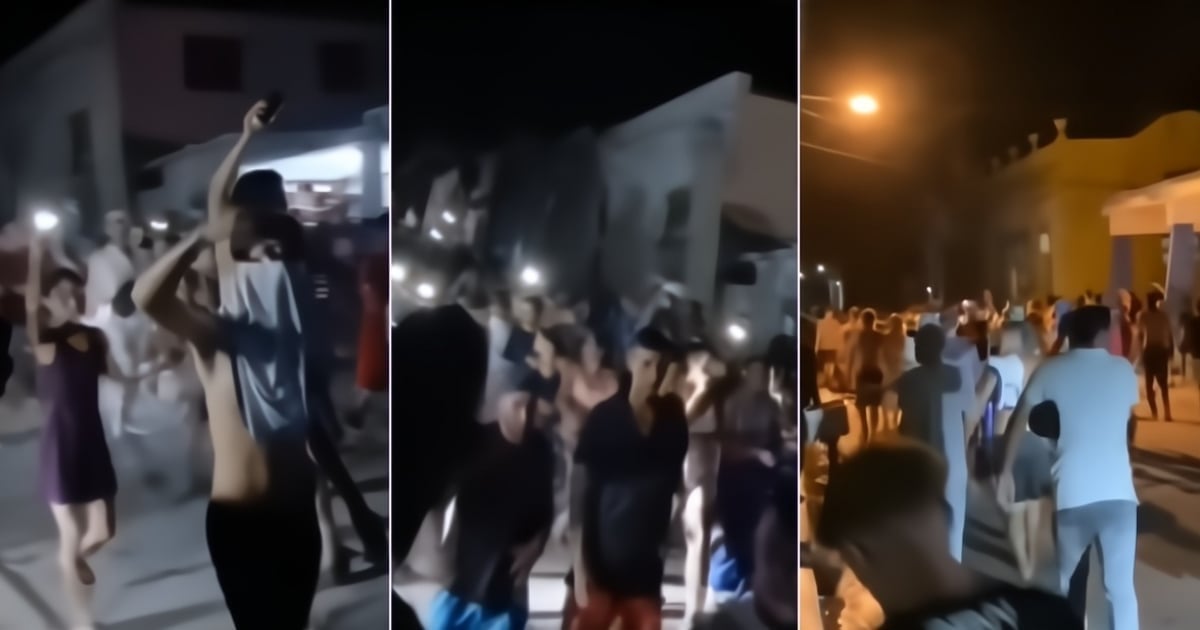
However, videos and testimonies contradict that version and show how the Revolutionary National Police arrested protesters during the early morning hours.
At least seven people had previously been identified as detained, including Pedro José (“Porrón”), Raymundo Galbán (“El Chino”), Dairán Bermúdez (“Chelli”), and Suleidi Aballe.
The program Con Filo and regime spokespersons, such as Michel Torres Corona, echoed the official narrative, denying the repression and attributing the calm to the “revolutionary morale” of the leaders of the Communist Party.
However, other voices, such as that of independent journalist José Raúl Gallego, reported on social media that the official media are deliberately lying.
This is not journalism, it is propaganda, wrote Gallego, noting that the repression was documented in numerous videos and citizen accounts.
Neighbors explained that the protest arose after more than 24 hours without electricity, which also affected access to water. Clanging pots and shouts of “We want electricity and water!” echoed in the streets of Gibara, reflecting the public's frustration in the face of widespread crisis.
The project Represores Cubanos identified two informants from the Department of State Security: Wilder César Tejeda Ruiz and Adrián Pupo Cuesta (alias “El Mocho”), accused of recording protesters and providing the footage that facilitated subsequent arrests.
The repression in Gibara is part of a wider repressive strategy. A day earlier, the regime had begun trial against 16 protesters from Bayamo for events that occurred in 2024, accusing them of "public disorder" and "disobedience."
"They deny the repression in Gibara while imprisoning its neighbors and prosecuting others for protesting in Bayamo. That is the strategy: to deny with propaganda what is in practice repression", denounced Gallego.
The protests in Gibara are a new sign of the accumulated frustration in Cuba. Endless blackouts, food shortages, lack of medicine, and water push the population into the streets, despite the risk of imprisonment.
"In the only country where someone is arrested for saying they are hungry is Cuba.", wrote a user on social media. Another summarized the feelings of many: "They are not criminals; they just ask for what we all need: electricity, water, and food."
Frequently Asked Questions about the Protests and Arrests in Gibara
What was the reason for the protests in Gibara?
The protests in Gibara, Holguín, arose after more than 24 hours without electricity, which also affected access to water, leading to the frustration of the residents. The protestors took to the streets demanding the restoration of these basic services, reflecting the weariness in the face of a widespread crisis in Cuba.
How many people were detained in Gibara after the protests?
According to the Cuban Observatory of Human Rights, 27 people were detained in Gibara following the protests. Four of them remain imprisoned, while the others were released on bail but continue to be under strict surveillance.
How has the Cuban government reacted to the protests in Gibara?
The Cuban government, through official media such as Granma, has downplayed what happened, claiming that there was no violence and that the conflict was resolved through dialogue. However, videos and testimonies contradict this version, showing arrests and police repression.
What role do DSE informants play in the protests in Gibara?
The project Represores Cubanos identified two informants from the Department of State Security, Wilder César Tejeda Ruiz and Adrián Pupo Cuesta, who recorded the protesters and handed the footage over to the authorities. This action facilitated the subsequent arrests of at least seven residents of Gibara.
Filed under: