
Related videos:
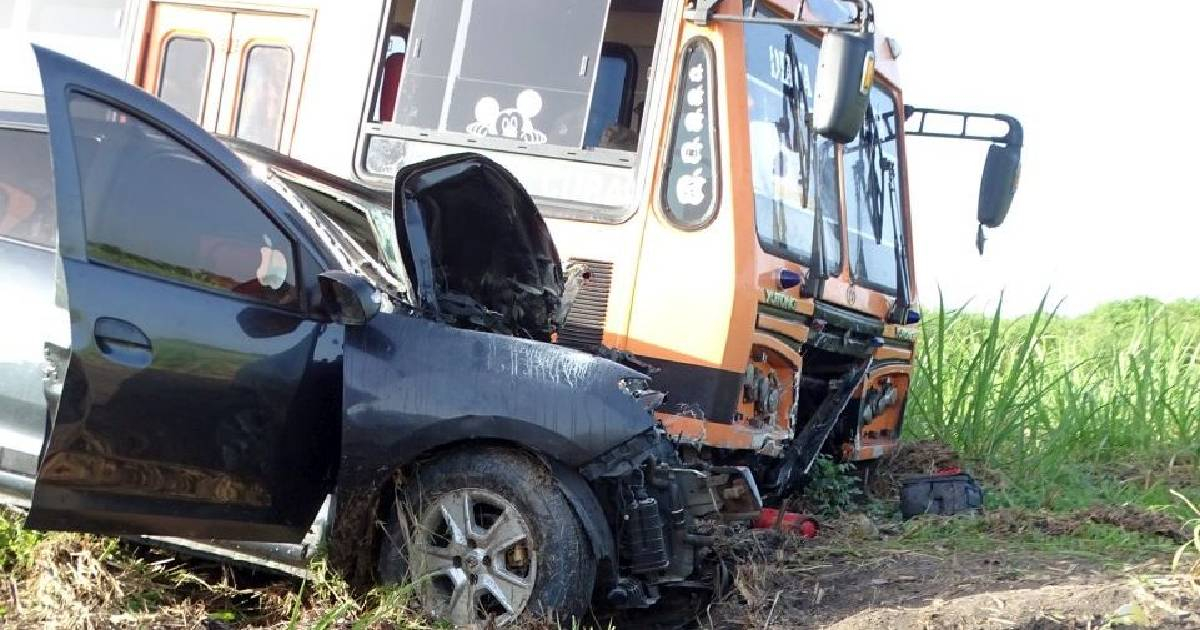
The province of Sancti Spíritus has recorded 154 traffic accidents so far in 2025, resulting in 18 deaths and 149 injuries, as drivers violate regulations, exceed speed limits, and endanger the lives of pedestrians and passengers, which necessitates stricter measures.
Compared to the same period last year, accidents have only decreased in one instance. The number of deaths remains unchanged, while injuries and cases of bruising have increased by 21. This indicates that the operational situation regarding accidents is not favorable and the dangers on the roads in the region persist, reported the official newspaper Escambray.
The highest numbers of victims come from people who drive vehicles, with 50% of them aged between 31 and 50 years.
Accidents are mainly associated with distractions while driving—such as loud music, active DVD screens, and conversations with passengers—speeding, improper overtaking, and violations of Law 109 on Road Safety.
The combination of these offenses keeps the danger level high on the roads and in the cities of the territory, explained Lieutenant Colonel Yester Reyes Marrero of the provincial headquarters of the National Revolutionary Police (PNR).
He added that cars, motorcycles, handmade vehicles, and "riquimbilis" are the most involved in accidents, accounting for 51%. They are followed by three-wheeled bicycles, which are sometimes seen with high-powered trailers or loads that exceed the established limits.
But it is the state vehicles that account for a larger share of accidents, representing 71% of all traumatic incidents.
The most critical sections include the Central Highway from Chambelón to the Roundabout and from Cabaiguán to Guayos, as well as the cities of Sancti Spíritus and Trinidad.
In these locations, there have been 11 of the 18 fatalities and 70 non-fatal injuries, many of which have resulted in permanent consequences.
Similarly, the days of the week with the worst consequences are Monday, Wednesday, and Sunday, it was specified.
Authorities are implementing measures against repeat offenders, including official warnings, vehicle impoundment for periods ranging from 30 days to six months, and confiscation for those who violate the law.
In the case of high-displacement motorcycles, drivers are cited for speeding and noise, prioritizing the protection of children and the elderly in public spaces.
Despite the implementation of control measures, road traffic accidents are a critical issue in Cuba. The National Road Safety Commission reported that, by May 2025, there had been 3,035 accidents in Cuba, resulting in 2,670 injuries and 290 fatalities.
The government continues to blame human factors while avoiding addressing structural causes such as the deterioration of roads, inadequate signage, and the public transportation crisis, which forces many to resort to risky means of transport.
The consumption of alcoholic beverages and the violation of traffic laws are also common causes of traffic accidents. Additionally, there is a need to reinforce both the mandatory breaks for professional drivers and the structural maintenance of bridges and road signage at high-risk points.
These factors are compounded by the widespread deterioration of old cars still in use in Cuba, along with the poor condition of the roads, a combination that proves fatal and contributes to the increasingly deadly accidents reported in the country.
The Cuban government has acknowledged that 75% of the country's roads and highways are in a condition ranging from fair to poor. This situation poses a significant challenge for the communist regime, as it directly impacts the quality of life for citizens and the provision of essential services.
In the case of Santiago de Cuba, official figures reveal that almost 70% of the more than 6,000 kilometers of provincial roads are in fair or poor condition, despite the 70 million pesos allocated this year for their maintenance, an amount that is insufficient to reverse the collapse.
Recently, residents of Sagua la Grande, in the province of Villa Clara, reported on social media the critical condition of a stretch of road that looks as if it has been struck by an earthquake, which is nothing more than a reflection of the neglect of infrastructure in Cuba.
One of the most recent incidents occurred the day before yesterday, near Paradero de Camarones, in the province of Cienfuegos, where Diosmiley Llerena Suárez, the first secretary of the Communist Party in the municipality of Cruces, as well as Efrén Delgado, who was driving the official vehicle they were traveling in, lost their lives.
Although the official statement avoided specifying the causes, the Facebook user La Tijera gathered testimonies from witnesses who claim that the Greely car in which the official was traveling was speeding, estimated at 150 km/h, despite the fact that it was raining heavily in the area at that time.
Frequently Asked Questions about Accidents in Sancti Spíritus and the Road Situation in Cuba
How many traffic accidents have occurred in Sancti Spíritus in 2025?
As of now, 154 traffic accidents have been recorded in Sancti Spíritus in 2025, resulting in 18 fatalities and 149 injuries. Despite the measures implemented, traffic incidents continue to be a serious problem in the province.
What are the main causes of traffic accidents in Cuba?
The main causes of traffic accidents in Cuba include distractions while driving, speeding, and noncompliance with traffic regulations. Moreover, the poor condition of the roads and the deterioration of vehicles significantly contribute to road accidents in the country.
What measures are being taken to reduce traffic accidents in Sancti Spíritus?
The authorities have implemented measures such as official warnings, vehicle impoundment, and confiscation for frequent offenders. The protection of children and the elderly is also prioritized, and stricter controls are applied to high-displacement motorcycles due to excess speed and noise.
What role do state vehicles play in the accident rate in Sancti Spíritus?
State vehicles account for 71% of accidents in Sancti Spíritus, highlighting them as one of the main contributors to accidents in the region. This situation underscores the need to improve the management and maintenance of these vehicles.
How does the condition of the roads affect accidents in Cuba?
75% of the roads in Cuba are in a condition ranging from fair to poor, which increases the risk of accidents. The deterioration of the roads, along with the lack of proper signage, significantly contributes to the high accident rate in the country.
Filed under: