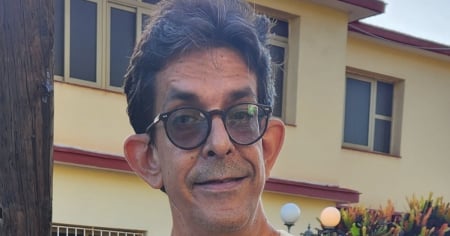
The Cuban comedian Ulises Toirac surprised his followers with the release of a song titled "The Lights Will Shine Again," a piece that, beyond its apparent simplicity, metaphorically reflects the exhaustion, sadness, and weariness accumulated by Cubans after years of an unresolved crisis.
The work, shared on Facebook and with over 19 thousand views, uses artificial intelligence modulations based on the voices of the Irish group The Corrs.
According to Toirac himself, the voices heard in the song are recreations of the sisters Andrea and Sharon, members of the group.
A metaphor for darkness in Cuba
The lyrics oscillate between despair and the longing for a different future.
It speaks of a country where "nothing makes sense" and where "youth has been lost," but at the same time insists that "the lights will shine again."
This duality resonates with the feelings of a population that, amidst endless blackouts, never-ending lines, shortages, and repression, has nearly lost all hope that anything might improve.
In phrases like "waking up suffocates you" or "you feel like you're going to be caught," many see a portrayal of daily life under a system that shuts doors and stifles hopes.
And although the chorus tries to uplift spirits with the promise that "life will take off if you fight until the end," the audience's reception makes it clear that the song touches a raw nerve.
Echoes of emotion and discouragement
The comments on Toirac's post are a barometer of how the topic resonates with ordinary people.
A retiree confessed that although she finds the song beautiful, she feels that due to her age, she will not see Cuba "shine" again.
A habanera wrote that the lyrics are "full of feeling and sadness, just like our Cuba without hope for tomorrow."
Others reacted with irony to the immediate reality.
A UCI graduate commented: "The song is beautiful, but with the thermoelectrics in such bad shape, it's going to take a while to see those lights."
And another user expressed a phrase whose meaning resonated in many messages: "May the lights shine and those who create darkness in Cuba be silenced."
Between nostalgia and the desire for change
Many internet users admitted to crying when they heard the song, which reflects the reality of life on the Island today: a blend of resignation and a yearning for hope in a context that worsens daily.
With "The lights will shine again," Ulises Toirac has captured in words and chords the sentiment of an entire country: a people who feel trapped in darkness, who doubt there is a future, but who still need to hold on to the idea that one day, somehow, the lights will return.
Frequently asked questions about the song by Ulises Toirac and the situation in Cuba
What message does the song "Las luces van a volver a brillar" by Ulises Toirac convey?
The song "The Lights Will Shine Again" conveys a message of hope and longing for change amid despair, reflecting the fatigue and sadness of Cubans due to the ongoing crisis in the country. Through metaphors, Toirac emphasizes the duality between the current hopelessness and the faith in a better future.
How has the song been received by the Cuban public?
The song has resonated deeply among Cubans, as reflected in the comments on social media. It has stirred a mix of emotions, from sadness and nostalgia to a desire for change. Many people find themselves identifying with the images depicted in the lyrics, which portray their daily life under challenging conditions.
What does the metaphor of darkness symbolize in Ulises Toirac's song?
The metaphor of darkness in the song symbolizes the current situation in Cuba, marked by blackouts, shortages, and repression. It represents the mood of a population that has lost faith in the future due to the harsh living conditions, yet still holds on to the hope that a positive change is possible.
How does the song relate to Ulises Toirac's previous criticisms of the Cuban government?
Ulises Toirac has been a critical voice against the Cuban regime, and his song falls within that tradition of protest. The song reflects the same criticism of the inaction and failed policies of the government that Toirac has expressed in his comments on social media. Both the song and his previous critiques share the theme of the collapse of daily life in Cuba and the desire for change.
Filed under: