
Related videos:
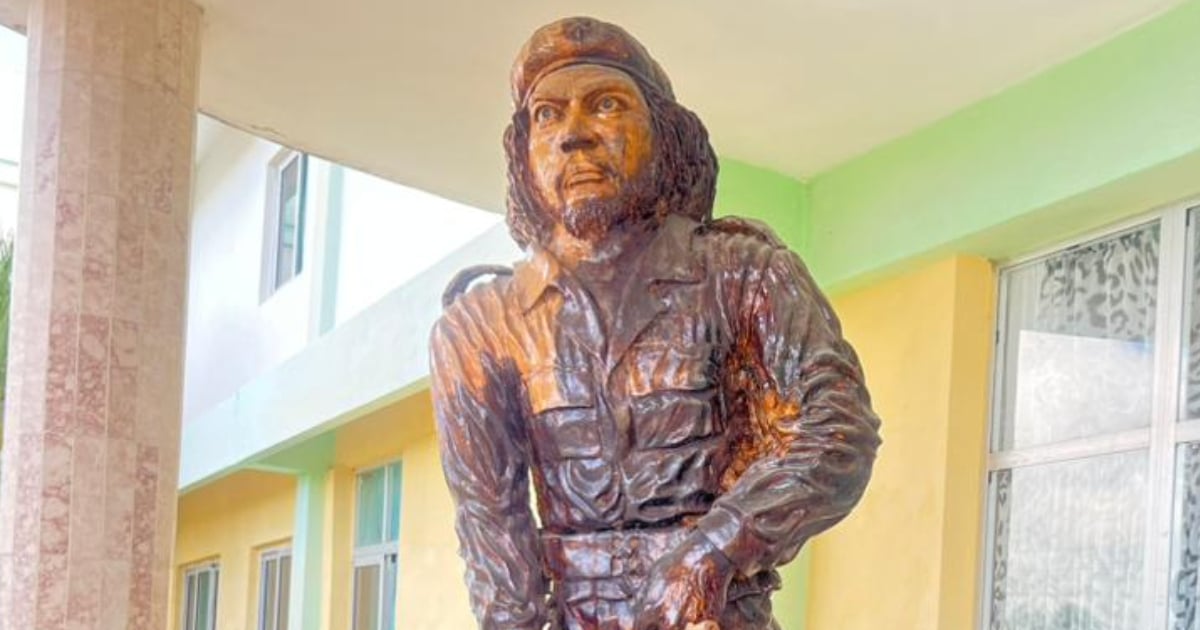
A statue dedicated to Ernesto Che Guevara in Granma province sparked a wave of reactions on social media, not exactly out of admiration, but rather due to the flood of mockery it provoked.
The statue, located in the polyclinic named after the guerrilla fighter in the Vado del Yeso community of the Río Cauto municipality, was quickly nicknamed "the Neanderthal Che" due to its rustic and distorted appearance, which lacks any epic quality and resembles a caricature.
The piece, as reported online, has been in place for several years, but it was only after a visit from lawmakers to Parliament that it resurfaced with recent photos. And with that, the inevitable embarrassment followed.
The Cuban regime insists on filling every corner of the Island with statues, busts, and murals of its heroes and martyrs, in a nationalistic propaganda campaign that has been ongoing for more than six decades.
But the result can be grotesque: sculptures that look like they’ve come straight out of a 90s video game or a school workshop.
Independent journalist José Raúl Gallego remarked ironically: "Granma's situation with the sculptures is serious. The Neanderthal Che is a trick."
Later, he compared the work to Silvestre Cañizo, the hunchbacked and deformed character from the memorable soap opera "Tierra Brava," and concluded with irony: "I knew I had seen him before..."
Other colleagues joined the wave of criticism.
Ernesto Morales noted that the sculpture is not new, but has been at the polyclinic for "almost 15 years," although several users claim it was installed about four years ago.
Mario J. Pentón, for his part, was more biting: "The Neanderthal Che looks like he stepped out of a caveman version of The Jetsons. And the shotgun... that shotgun looks like it’s from PlayStation 1! Who was the artist, a Minecraft apprentice?"
Citizen comments did not lag behind. "Sculpture of Che inaugurated in Granma. They call him the Neanderthal Che. Ah! Tell me something about the shotgun," wrote a resident of Havana.
The official journalist identified as Liberato Cimarrón later clarified that the figure was made by a patient who is an amateur sculptor and that it was donated to the polyclinic.
According to him, the initial intention was to represent a generic guerrilla fighter, although the uniform and posture revealed that it was a reference to Che.
Due to the uproar it has caused, the piece has reportedly already been removed and even destroyed.
"I think it was fine to take it down, but not to destroy it. (...) It didn't meet the requirements to be in a formal public space, but at the very least, we should respect the person who created it with good intentions," he clarified.
Regardless of how it happened, the truth is that the work ultimately became a source of laughter and memes, yet another symbol of the weariness of a regime that has made Guevara's image an obligatory icon, repeated ad nauseam in schools, hospitals, plazas, and offices.
In its obsession to keep the legend of the "hero" alive, Castroism ends up offering statues that seem like parodies, reflecting a system trapped in its own failed propaganda.
In the end, the sculpture of the "Che Neandertal" merely confirmed what many Cubans feel: the official propaganda no longer inspires respect, but rather laughter.
In its efforts to erect altars to the guerrilla fighter turned myth, the government ends up offering pieces that appear to be taken from a school fair or a cheap video game.
Ironies of history: Che, who in life imposed fear and violence, has today been reduced in Cuba to a stone caricature that evokes laughter on the Internet.
Frequently Asked Questions about the Che Guevara Sculpture in Granma and its Impact on Social Media
Why was the sculpture of Che Guevara removed in Granma?
The sculpture of Che Guevara in Granma was removed due to the wave of mockery it provoked on social media for its rustic and distorted appearance, which was labeled as "The Neanderthal Che." The figure, which had been donated by an amateur sculptor, did not meet the requirements to be displayed in a formal public space, although the original intention was to represent a generic guerrilla fighter.
What reaction did the sculpture of Che generate on social media?
The sculpture generated a significant amount of mockery and memes, with users describing it as a cartoon. It was dubbed "The Neanderthal Che" due to its unrefined and cartoonish appearance, provoking ironic comments and criticisms towards the Cuban regime for its insistence on saturating the island with visual propaganda of its heroes, even if the result is grotesque.
What is the political background of the Che sculpture and its impact on Cuban propaganda?
The sculpture of Che Guevara is a reflection of the weariness of Cuban official propaganda, which has been repeated ad nauseam and now inspires not respect but laughter. The Cuban regime has tried to keep the legends of its heroes alive through statues and murals, but ironies like this sculpture have turned iconic figures into objects of mockery, thus demonstrating the disconnect between the government and public perception.
What other political figures have been the subject of similar mockery in Cuba?
In addition to the sculpture of Che, figures like Miguel Díaz-Canel and Lis Cuesta have been targets of ridicule on social media. Images of Díaz-Canel holding a Black doll and Lis Cuesta's comments on social media have sparked ironic and derogatory reactions, reflecting the symbolic weariness and disconnection of the official discourse from the reality of the Cuban people.
Filed under: