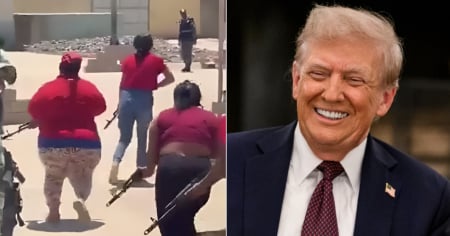
The White House confirmed on Monday that it received a letter from Venezuelan leader Nicolás Maduro in which he expresses his openness to dialogue, but whose reading, according to spokeswoman Karoline Leavitt, is filled with “many lies.”
“Frankly, I believe there were many falsehoods that Maduro repeated in that letter, and the administration's position has not changed: we still view Maduro's regime as illegitimate,” stated Leavitt at a press conference, as reported by the agency EFE.
The spokesperson also recalled that the President of the United States "has shown a willingness to use all necessary means to stop the illegal trafficking of deadly drugs coming from the Venezuelan regime to our country."
Maduro's letter: "fake news" and accusations against Colombia
The letter sent by Maduro to President Donald Trump was released by official media in Caracas and aimed to dismantle what he repeatedly referred to as “fake news” regarding his alleged links to drug trafficking. The Venezuelan leader even used the term up to five times, adopting the expression popularized by Trump himself.
In the text, Maduro directly blamed Colombia and the government of Gustavo Petro for being “the true epicenter of drug trafficking in the region.” To support his claim, he stated that 87% of the cocaine produced in the neighboring country leaves through the Pacific, while only about 5% crosses through Venezuelan territory.
The Chavista leader also stated that Venezuela has "neutralized 402 aircraft" linked to drug trafficking so far this year and has seized more than 70% of the shipments that attempted to cross the common border.
Military tension and a blow to an ally
The letter arrives amid rising military tension in the Caribbean, where Washington has reinforced its presence with destroyers, nuclear submarines, and F-35 planes, under the pretext of combating the so-called "Cartel of the Suns," which the United States claims is led by Maduro.
The accusations against Colombia are surprising given the political context. Petro has been one of the few Latin American presidents to openly defend the Chavist regime, even denying the existence of the Cartel of the Suns. His support cost him criticism in the U.S. Congress, where lawmakers accused him of “collaborating with a narcoterrorism cartel.”
Maduro's shift, pointing to Bogotá as responsible for regional drug trafficking, is seen by analysts as a low blow to his main ally and a sign of international isolation.
“President, I hope that together we can defeat these fake news that cloud a relationship that should be historic and peaceful, as our Liberator Simón Bolívar always envisioned,” Maduro wrote at the close of his letter to Trump.
Meanwhile, the White House has already made it clear that it does not buy the narrative: it sees the Chavista regime as illegitimate and accuses it of flooding the United States with deadly drugs.
Frequently Asked Questions about Nicolás Maduro's Letter to Donald Trump and the Tensions between the U.S. and Venezuela
What did Nicolás Maduro's letter to Donald Trump contain?
Nicolás Maduro's letter to Donald Trump contained accusations of "fake news" regarding his alleged ties to drug trafficking and blamed Colombia for being the epicenter of drug trafficking in the region. Maduro also defended his government, stating that Venezuela is a territory of peace and free from illicit activities.
How did the White House respond to Maduro's letter?
The White House, through its spokesperson Karoline Leavitt, described Maduro's letter as filled with “many lies” and reiterated its position that Maduro's regime is illegitimate. The Trump administration also emphasized its willingness to use all necessary means to stop drug trafficking coming from Venezuela.
What measures is the United States taking against the Maduro regime?
The United States has intensified its military deployment in the Caribbean, strengthening the presence of destroyers, submarines, and fighter jets, with the aim of combating drug trafficking associated with the Maduro regime and the so-called "Cártel de los Soles". Additionally, it has raised the reward for the capture of Maduro to 50 million dollars.
What is Colombia's stance on Maduro's accusations?
Colombia, under the leadership of Gustavo Petro, has defended the Chavista regime and denied the existence of the "Cartel de the Suns." However, Maduro's accusations against Colombia represent a low blow to his main regional ally and have generated criticism in the U.S. Congress due to the apparent collaboration with a drug terrorism cartel.
What impact could the escalation of tensions between the U.S. and Venezuela have on the region?
The escalation of tensions could have a significant impact on the region, with the risk of direct military intervention by the U.S. Additionally, the potential downfall of Maduro could destabilize other allied authoritarian regimes, such as that of Cuba, and exacerbate the migration crisis on the continent.
Filed under: