
Related videos:
The government of Donald Trump has intensified its military deployment in the Caribbean Sea in recent weeks, citing a campaign against drug trafficking. However, analysts and officials consulted by the New York Times agree that the true objective is to increase pressure to remove Venezuelan President Nicolás Maduro from power.
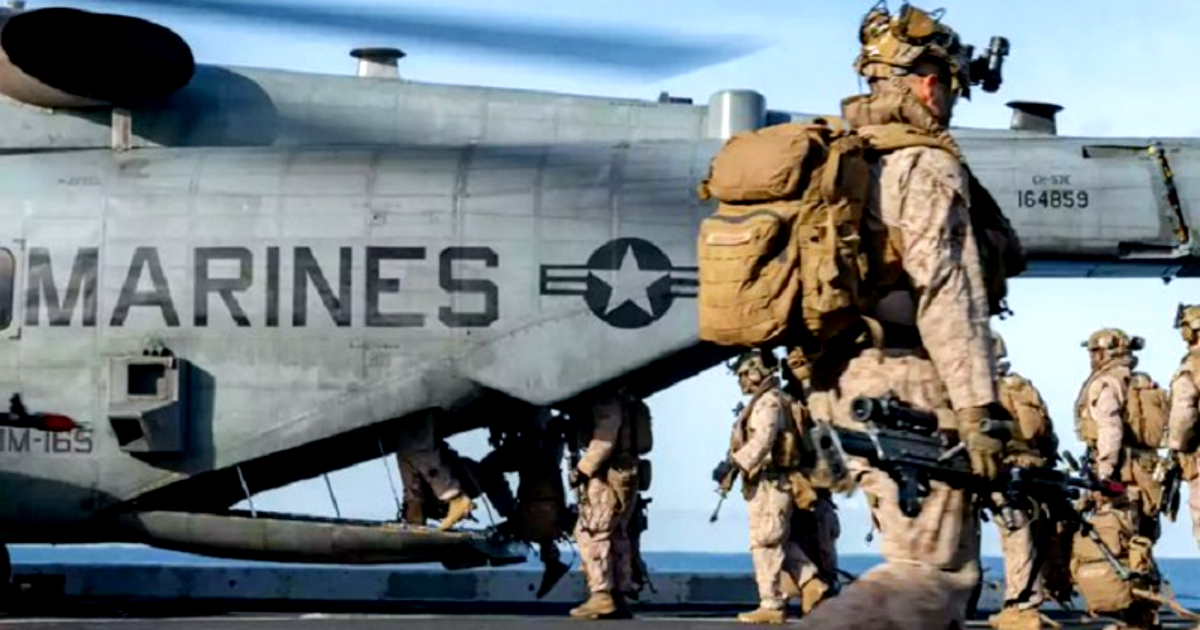
The U.S. presence in the region includes eight warships, an attack submarine, several P-8 surveillance aircraft, and ten stealth fighters F-35, recently relocated to Puerto Rico to deter flights by Venezuelan aviation and to be prepared in case Trump orders air strikes. In total, approximately 4,500 military personnel are part of the operation, according to Pentagon sources.
The Secretary of State, Marco Rubio, was clear in his statements: “We will not allow a cartel, disguised as a government, to operate in our own hemisphere”. Rubio reminded that Maduro faces accusations in the United States and labeled him as “a fugitive from U.S. justice”.
Since early September, the American military has destroyed three vessels that, according to Washington, were transporting drugs to the United States. However, the Venezuelan president denounced it as an "atrocious crime" against unarmed civilians, accusing the White House of wanting to start a war.
Military experts believe that the deployment extends beyond anti-drug operations. Retired Admiral James G. Stavridis, former head of Southern Command, described it as “a clear signal that the Trump administration is serious about provoking a regime or behavioral change from Caracas”.
The Secretary of Defense, Pete Hegseth, announced that there will be more attacks in the coming weeks against what he referred to as "narcoterrorists," while on social media he asserted that the United States "will track them down, kill them, and dismantle their networks throughout the hemisphere."
The increase in military presence has raised regional concerns. Elizabeth Dickinson, an analyst at the International Crisis Group in Colombia, warned that attacks on alleged drug trafficking boats “are being interpreted as warning shots that could lead to a larger escalation.”
In parallel, Democratic lawmakers in Washington have criticized the legality of the attacks. Congressman Jim Himes described the use of lethal force without conclusive evidence against alleged traffickers as “morally reprehensible and strategically unwise.”
Although the White House insists that this is a drug enforcement operation, the buildup of forces and the administration's rhetoric indicate a broader strategy against Maduro.
The memory of U.S. military interventions in Latin America, such as the invasion of Panama in 1989 to capture Manuel Noriega, reinforces fears that the region may be on the brink of a new episode of direct confrontation.
Diplomatic escalation and new alliances
The military reinforcement of the United States in the Caribbean does not occur in a vacuum, but rather in the midst of a growing climate of tension between Washington and Caracas.
Despite Trump recently denying having discussed a "regime change" with his military advisers, his actions and the rhetoric of his administration suggest a clear hardening against the illegitimate government of Nicolás Maduro.
In parallel, Venezuela has sought to strengthen its international alliances. Maduro has tightened cooperation with Cuba and other political and economic partners, in an effort to project support against what he perceives as an "imperialist threat" from the United States.
This dynamic is further compounded by the ultimatum issued by Trump, who demanded the immediate repatriation of prisoners and psychiatric patients reportedly sent from Venezuela to U.S. territory. The president warned that, should his demand not be met, Caracas would face "incalculable" repercussions.
These episodes reveal that the confrontation transcends the military realm and extends into the diplomatic and political sphere, placing the region in a situation of maximum tension and at risk of an escalation with unpredictable consequences.
Filed under: