
Related videos:
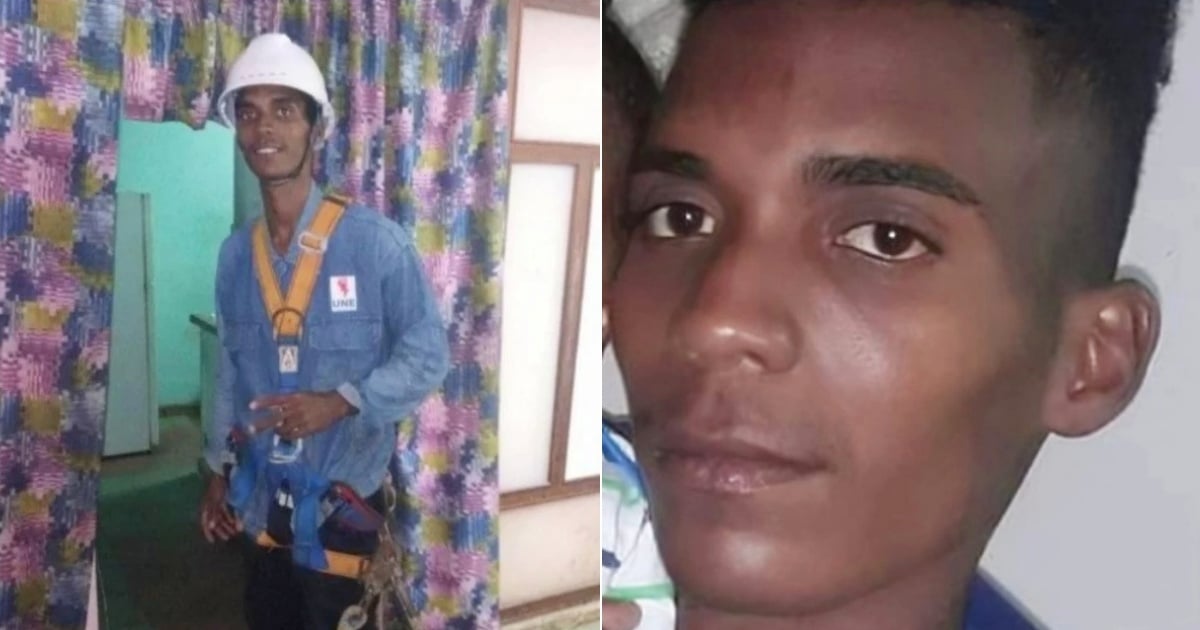
Four gang members were sentenced to prison terms ranging from 11 to 22 years for the brutal attack that, in January 2024, left young lineman David Enrique Perdomo Álvarez, an employee of the Electric Company in Santiago de Cuba, mutilated in his right hand.
A year and eight months of pain and waiting. That was the time it took for the Cuban judicial system to bring the members of the feared "Banda 59" to trial, responsible for a machete attack that not only robbed David of the ability to continue his trade, but also of the simplest gesture: hugging his son.
The information was documented from the outset by independent journalist Yosmany Mayeta Labrada, who brought the case to light after speaking directly with the victim and their family.
A night that changed everything
In the early morning of January 7, 2024, David Enrique, then 26 years old, had finished his work shift and decided to share some beers with acquaintances at a kiosk in the neighborhood, in the Reparto Abel Santamaría, known as El Sala’o.
He never imagined that would be the last night he would use both hands.
Around 5:40 a.m., upon leaving the kiosk, he was ambushed by more than ten young men armed with machetes and stones, members of a gang known as the “Banda 59 de Micro III.”
He was chased, knocked down, and brutally attacked. A machete blow severed his right hand, and he also sustained deep wounds to his shoulder and collarbone.
They also stripped him of his wallet and other belongings, but the worst came afterward: the emotional impact of facing his son without being able to embrace him as before.
“When he saw me like this, my boy asked me: ‘Dad, what happened to you?’... and when I tried to hug him, he stepped back. He looked at me in the mirror and cried a lot. He even said to me: ‘Dad, I’ll give you my hand so you can keep working’”, David recounted during the trial, as revealed by the aforementioned source.
The weight of a trial
After months of waiting and an investigation marked by silence, the trial against five members of the "Banda 59" finally took place this week.
The provincial court handed down sentences for attempted murder, serious injuries, and illegal possession of weapons.
The sentences were as follows, according to Mayeta Labrada:
Wilmer: 22 years of imprisonment.
Dayron Elvis: 16 years old.
Alexander Sosa: 14 years old.
Diosvanis: 13 years old.
Brian: 11 years old.
The prosecutor maintained that the attack constituted an assassination attempt and not merely a case of injury, as the defense tried to argue.
The court supported the prosecutor's view, acknowledging the seriousness of the crime and its irreversible consequences.
In addition, the defendants will have to pay compensation of 113,000 Cuban pesos to the victim.
Impunity in question
Beyond the verdict, the judicial process exposed an alleged network of cover-ups and institutional permissiveness.
Yosmany Mayeta specified that residents of the neighborhood claimed that the authorities were aware of the activities of the "Banda 59," but never took decisive action.
“The sector chief had a relationship with the mother of one of the gang members, and they always let them go even if they were caught committing crimes,” a resident reported.
The community acknowledges that the criminal acts of this gang were frequent and well-known, but the reports went unheard.
This pattern of complicity and institutional omission contributed to the fact that the attack on David not only occurred, but also took so long to go to trial.
David's case is not an exception. It reflects a Santiago de Cuba battered by youth violence, where armed gangs enforce their will under the passive gaze of the authorities.
In neighborhoods like El Sala’o, Micro III, or Altamira, machetes replace dialogue and fear takes the place of coexistence. The population lives amidst threats, reprisals, and distrust, while the police act slowly or with suspicious ties.
Youth violence in Cuba has structural roots: inequality, lack of opportunities, family disintegration, and an almost complete absence of effective preventive policies.
Open wounds, delayed justice
Since the attack, David had to give up his job as a lineman. He now works as a maintenance technician, facing the physical and emotional limitations imposed by his amputation. Despite the pain, he remains steadfast in his faith.
"I leave everything in God's hands. The only thing I ask for is that justice is served and that no worker has to suffer what I went through," he said in statements made a few months ago.
During his stay at the Juan Bruno Zayas Clinical Surgical Hospital, he received countless displays of solidarity. Even musicians from his community composed a song for him.
David left the hospital surrounded by his parents and siblings, grateful to be alive, but with an indelible scar. For him and many others, the sentence against his attackers comes too late, does not repair the damage, and does not prevent new cases from occurring.
The trial closed one chapter, but it did not resolve the underlying issue. In Santiago de Cuba, fear persists, violence endures, and the victims continue to multiply.
Frequently Asked Questions about the Case of David Enrique Perdomo Álvarez and the Violence in Santiago de Cuba
What sentences did the gang members receive for the attack on David Enrique Perdomo Álvarez?
Four gang members from the “Banda 59” were sentenced to prison terms ranging from 11 to 22 years. Wilmer received a 22-year sentence, Dayron Elvis 16 years, Alexander Sosa 14 years, Diosvanis 13 years, and Brian 11 years, for attempted murder, serious injuries, and illegal possession of firearms.
What was the consequence of the attack for David Enrique Perdomo Álvarez?
David Enrique Perdomo Álvarez lost his right hand after being brutally attacked with machetes by the "Banda 59." This attack left him unable to continue his work as a lineman, in addition to facing a significant emotional blow from not being able to hug his son like before.
What did the trial reveal about the actions of the authorities in the case of the "Banda 59"?
The trial revealed a network of cover-ups and institutional permissiveness. Residents reported that local authorities were aware of the activities of the "Banda 59" but did not act decisively, allowing its members to continue committing crimes without facing any consequences.
How does youth violence affect the community in Santiago de Cuba?
Youth violence has created an atmosphere of fear and distrust in Santiago de Cuba. Armed gangs impose their rule in neighborhoods like El Sala’o, Micro III, and Altamira, while authorities act slowly or are linked to the aggressors, leaving the population in a state of constant vulnerability.
Filed under: