
Related videos:
A 21-year-old man, identified as Yordan Revé Abrahante, lost his life after being stabbed during a confrontation in Havana. The perpetrator, identified as Gabriel Peña Oviedo, was sentenced to 25 years in prison.
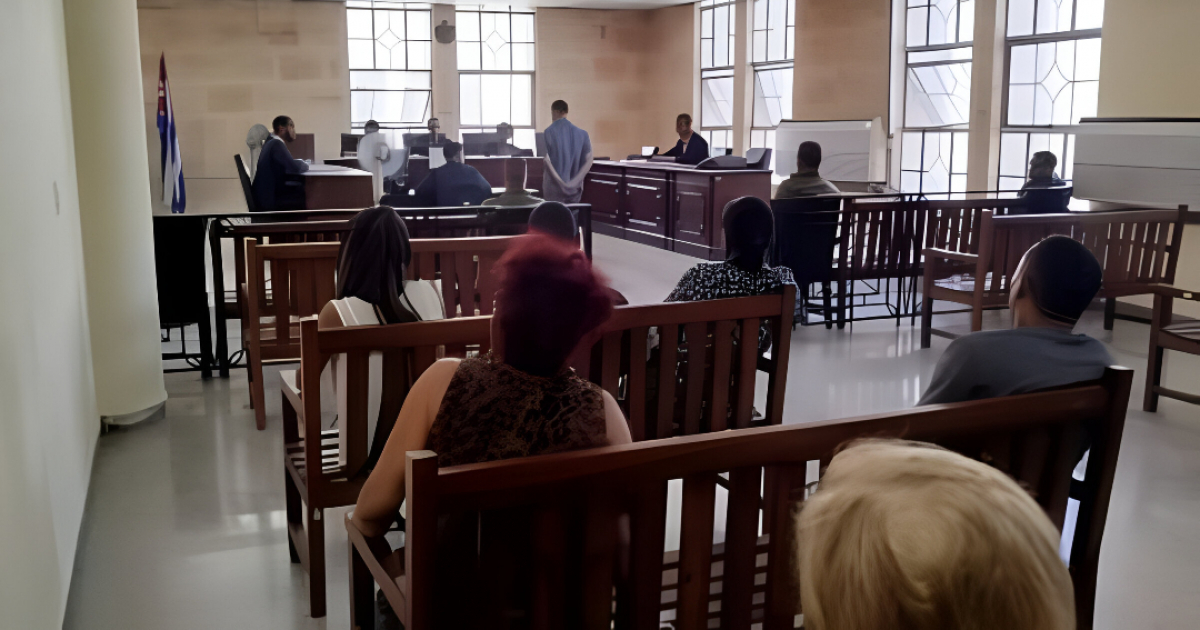
The information was confirmed by the Ministry of the Interior (MININT), which shared an published by the Provincial People's Court of Havana, detailing the results of the oral and public trial held on September 23, related to case number 133 of 2025.
According to the report, Peña was found guilty of murder after it was established that, under the influence of alcohol, he was involved in a violent family confrontation in which the victim was also present.
In the midst of the altercation, without saying a word, the accused used a knife to attack the young man, resulting in his immediate death and leaving him lying in the street.
The court took into account the social behavior of the accused, the severity of the actions, the impact on the community, and the pain caused to the victim's family.
He also assessed that the act irreparably violated the most fundamental right of every person: life.
The authorities assured that during the criminal proceedings, all procedural guarantees and due process established by the Constitution and the current Criminal Procedure Law in Cuba were respected.
Both the defendant and the prosecution have the right to file a cassation appeal against the judgment.
The 25-year prison sentence against Gabriel Peña Oviedo for the murder of Yordan Revé Abrahante sparked intense debate among users on social media. None of the comments collected expressed agreement with the judicial decision.
“Twenty-five years is the maximum severity, but with good behavior, he could be eligible for parole after 15. Those who commit murder deserve the death penalty,” opined Dqva Jaime, reflecting the concern that the punishment may not serve as a deterrent.
In the same vein, Gustavo Lázaro Comet Rueda questioned the proportionality of the punishment: “Twenty-five years in prison for taking a life; this leniency in our laws is what contributes to the ongoing increase in violence in Cuba.”
Other users criticized the coherence of the legal system. Luis Castillo recalled the implementation of the so-called Law of Dangerousness and pointed out that "procedural rights in Cuba may exist in the law books, but they are not applied."
There were also those who called for harsher penalties. “It should have been life imprisonment; it’s murder, and he left him lying in the street,” expressed Nadia Tocabens.
Similarly, Yoan Pérez Montero questioned: “Until when will our laws continue to pardon these scourges that take away the peace from families?”
For Pedro Deleon, the only solution is "the death penalty, except in cases of self-defense."
Meanwhile, Yaylin Morales maintained that the punishment fell "below expectations" and called for maximum security sentences.
The discomfort was also reflected in more blunt expressions, such as that of Elier González Milian, who described the sentence as insufficient and stated: “You kill a person in cold blood and in ten years you’re free.”
Recently, the Cuban regime exhibited remarkable diligence in a high-profile criminal case, particularly because it involved a police officer.
It was about the murder of a police officer in Caibarién, whose alleged perpetrator was apprehended just a few days after the crime was confirmed. The arrest occurred after a swift investigation led by the Ministry of the Interior.
The case drew significant media and state attention, especially after the funeral of the fallen officer, a police captain, which was a public event attended by dozens of people and covered by official media.
The Attorney General's Office of the Republic quickly issued a statement, revealing the identity of the detainee and highlighting the seriousness of the incident in an official informative note that confirmed the charges.
Frequently Asked Questions about the Murder Case in Havana and Violence in Cuba
Who is responsible for the murder of the young man in Havana?
The person responsible for the murder is Gabriel Peña Oviedo, who was sentenced to 25 years in prison for stabbing Yordan Revé Abrahante during a family altercation.
What factors did the court consider in imposing the 25-year sentence?
The court considered the severity of the events, the impact on the community, and the pain caused to the victim's family, as well as the social behavior of the accused. Additionally, it was taken into account that the act violated the victim's right to life.
How is the Cuban regime addressing violence and murders on the island?
The Cuban regime has faced criticism for its opacity and lack of effective action in cases of violence. The government does not officially recognize the term "femicide" nor has it classified it in its Penal Code, which has limited the prevention and protection of victims. However, trials have taken place with severe sentences, although often without transparency or full legal guarantees.
What is the situation of violence in Cuba in 2025?
In 2025, Cuba has experienced an increase in cases of violence, with at least 25 femicides reported by independent platforms to date. Urban violence and crimes of passion have also risen, causing concern and outrage among the population.
Filed under: