
Related videos:
The U.S. government denied the necessary authorizations for the delegation of the Cuban regime to travel to Washington D.C. and participate in the 62nd Governing Board of the Pan American Health Organization (PAHO), which began this Monday in the U.S. capital.
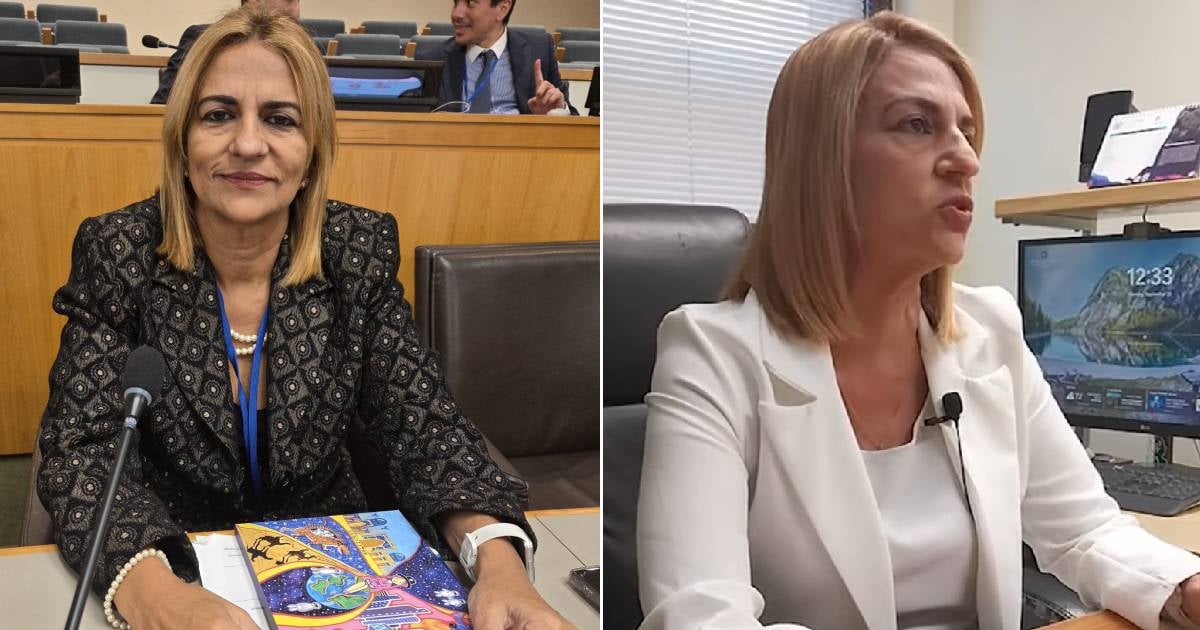
According to statements to Prensa Latina, the First Deputy Minister of Public Health Tania Margarita Cruz denounced that Washington “took advantage of the need for a travel permit” to prevent her participation as the head of the Cuban delegation, as she is in New York, as part of the delegation attending the High-Level Segment of the 80th UN General Assembly.
“This action constitutes discriminatory treatment against Cuba, a country that is a full and active member of the OPS,” declared the official, who also posted about the topic on the social media platform X.
"Far from fulfilling its obligations as a host country, the United States is taking advantage of that condition to try to silence Cuba's voice," he added.
In addition to the deputy minister, another member of the delegation was unable to travel due to a visa denial, as explained.
The communist official took the opportunity to defend the international record of the so-called "Cuban medical cooperation," highlighting that thousands of professionals from the island have worked in countries in the region and that the Cuban healthcare system has been praised by the WHO and PAHO.
However, these statements overlook the frequent criticisms faced by medical missions regarding labor exploitation practices, political control, and the appropriation of wages by the Cuban state.
The exclusion of the delegation occurs in a context of sustained political tensions between Washington and Havana, in which the United States has maintained a firm stance regarding the refusal to grant automatic diplomatic privileges to regime officials, even at multilateral events.
The Board of the OPS meets once a year and gathers health ministers and authorities from across the continent to discuss regional health strategies. The proceedings of this edition will conclude next Friday, October 3.
Visas denied amid tensions
In April 2025, a group of students from the National School of Art (ENA) in Cuba was unable to attend a highly anticipated cultural exchange with students from Berkeley High School (BHS) in California, due to the denial of their visa applications to enter the United States.
Furthermore, the Cuban women's volleyball team will not attend the NORCECA Final Four due to the , which is similar to what happened with the delegation scheduled for the 2025 World Masters Indoor Athletics Championship.
Frequently Asked Questions about U.S. Visa Denials for Cuban Officials
Why did the U.S. deny visas to the Cuban regime's health delegation?
The U.S. government denied the necessary authorizations for the Cuban regime's delegation to travel to Washington D.C. and participate in the 62nd Directing Council of the Pan American Health Organization (PAHO). The United States has maintained a firm stance regarding the refusal to grant automatic diplomatic privileges to officials of the Cuban regime, which is set against a backdrop of ongoing political tensions between the two countries.
What is the reason behind the U.S. visa restrictions on Cuban officials?
The U.S. accuses the Cuban regime of using medical missions as a scheme for forced labor and has imposed these restrictions as part of a broader strategy to pressure the Cuban regime. Washington and human rights organizations have reported that these missions violate international labor standards, as they withhold salaries and restrict the mobility of professionals.
How does the Cuban regime respond to these restrictions from the U.S.?
The Cuban regime has condemned these actions as an act of discrimination and aggression by the United States. Regime officials defend medical missions as "legitimate and compassionate", asserting that they will continue to send medical brigades abroad despite sanctions and international criticism.
What impact do these restrictions have on Cuba-U.S. relations?
Visa restrictions are part of a broader context of political and economic tensions between Cuba and the United States. These actions reinforce the U.S. stance against the Cuban regime, increasing diplomatic tensions and further complicating bilateral relations. They affect not only government officials but also Cuban students and athletes seeking to participate in events in the U.S.
Filed under: