
Related videos:
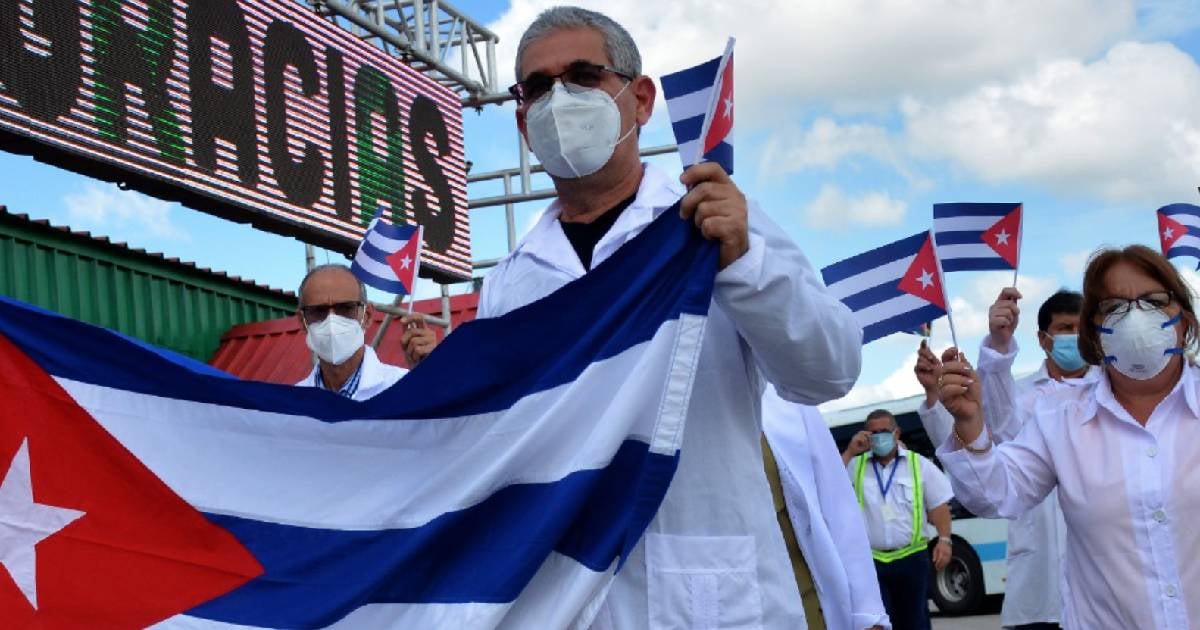
The government of Granada announced significant changes to the "Cuban Workers Program," after receiving pressure from the United States government to review the working conditions in which the professionals sent by the Havana regime operate.
In an official statement, the Ministry of Foreign Affairs, Trade and Export Development explained that following high-level consultations between Grenadian and Cuban officials in Havana, it was agreed that all professionals from the island providing services in the country will work under the same conditions as their counterparts.
The conversations were led by the Minister of Foreign Affairs, Joseph Andall, and the Minister of Health, Phillip Telesford. The Grenadian government expressed gratitude for Cuba's cooperation in accepting the amendments and acknowledged Washington's role in initiating the review of the program.
The "Cuban Workers Program" has been key to sustaining Grenada's healthcare system, but the measure signifies an important shift in its management: it seeks greater transparency, labor equity, and local control, in line with U.S. demands.
Bahamas seeks approval from the U.S. to pay Cuban doctors directly
In parallel, Bahamas is awaiting approval from Washington to implement a new system that would allow Cuban doctors to sign direct contracts with the local Ministry of Health, bypassing the mediation of the Cuban Medical Services Marketing Agency (CSMC), the state entity that has controlled and withheld most of their salaries for decades.
According to the media Caribbean Life, Bahamian Health Minister Michael Darville confirmed that the agreements have already been sent to the United States for review. If approved, the doctors would receive 100% of their salaries, a radical shift from the current scheme, under which they only receive 15% of the 12,000 dollars per month that the Bahamas pays for each one, with the remainder going to the regime.
Several former collaborators have reported that even when they received money in their own bank accounts, they were forced to transfer it to accounts controlled by the Cuban state, in a mechanism that Washington has termed "forced labor" and "human trafficking."
Pressures from Washington and Caribbean crossroads
The review of these programs is part of a diplomatic offensive by the U.S., which intensified under the administration of Donald Trump and continues under the current Secretary of State, Marco Rubio.
Washington has warned of migration sanctions and visa revocation for officials from Caribbean countries that maintain abusive schemes with Cuban medical brigades.
The Bahamas, Antigua, and Guyana were among the first countries to accept changes to avoid penalties.
Doctors caught between three fires
In June, the government of Nassau announced the cancellation of current contracts with the Cuban brigades, offering new direct agreements to those who wish to remain in the country.
Currently, about 35 Cuban professionals—comprising ophthalmologists, nurses, and laboratory technicians—continue to work in the Bahamas, where they are essential for addressing the shortage of local staff.
Most
Frequently Asked Questions about the Cuban Doctors Program in the Caribbean
Why did Granada decide to modify the program of Cuban doctors?
Granada modified the program for Cuban doctors following pressure from the United States, which urged a review of the working conditions of Cuban professionals in the country. The aim is to ensure that professionals from the island work under conditions equal to those of their local counterparts, seeking greater transparency and labor equity.
What changes are expected in the payment to Cuban doctors in the Bahamas?
The Bahamian government is awaiting approval from the United States for Cuban doctors to sign direct contracts with the local Ministry of Health. This will allow Cuban doctors to receive 100% of their salary without the mediation of the Cuban Medical Services Marketing Company (CSMC), marking a significant change compared to the current system where they only receive 15% of their salary while the rest is withheld by the Cuban regime.
How has the United States influenced the review of Cuban doctor programs in the Caribbean?
The United States has exerted diplomatic pressure for Caribbean countries to reevaluate the programs involving Cuban doctors, describing these schemes as forced labor and human trafficking. Washington has warned of immigration sanctions and visa revocations for officials from countries that maintain abusive practices with the Cuban medical brigades, resulting in countries like the Bahamas and Grenada reconsidering their agreements with Cuba.
Why is it considered that Cuban doctors are in a situation of labor exploitation?
Cuban doctors are considered to be in a situation of labor exploitation because the Cuban regime retains a large portion of their salaries and subjects them to coercive conditions. Despite the high amounts paid by countries like the Bahamas, doctors only receive a minimal fraction of those payments, while the rest is withheld by the Cuban state, which has been denounced as a form of forced labor.
Filed under: