
Related videos:
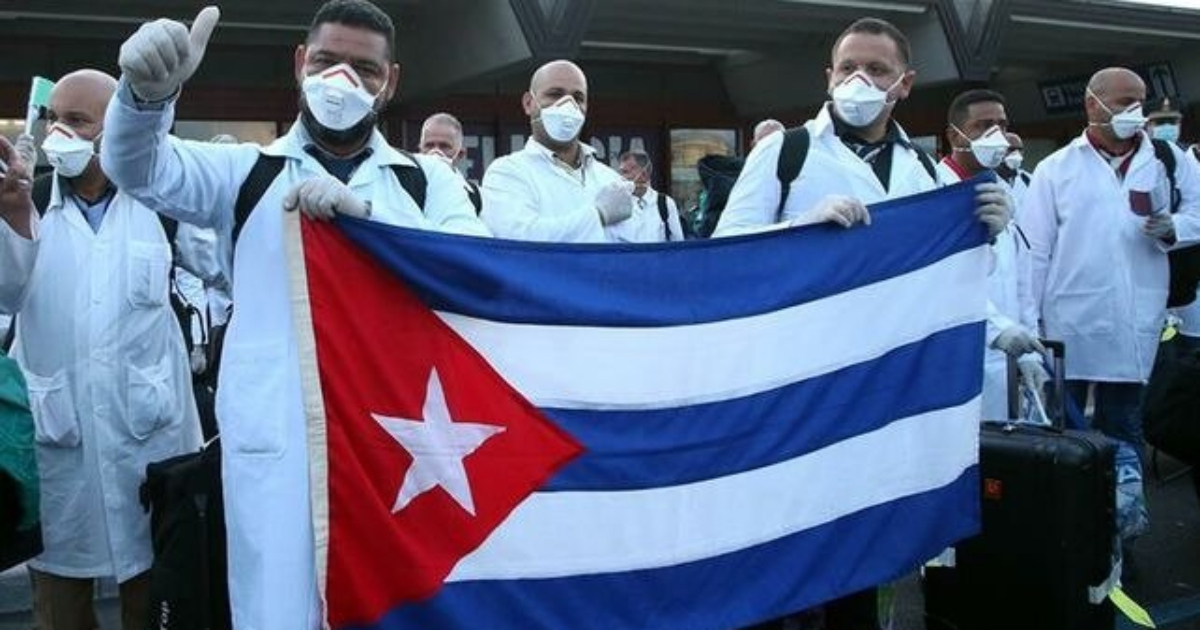
The Prime Minister of the Bahamas, Philip Davis, will lead a delegation this Monday to meet with senior officials from the United States to discuss two key issues: the hiring of Cuban doctors in the archipelago and the recent visa restrictions imposed by Washington on officials linked to Cuban medical missions.
According to the press secretary of the Bahamas, Keishla Adderley, the meeting is in response to the concern expressed by U.S. Secretary of State Marco Rubio regarding compensation for Cuban doctors, whom he accuses of being victims of "human trafficking," reported the agency EFE.
Rubio has defended the decision to restrict visas for officials related to these medical missions, which Washington considers a form of labor exploitation.
According to a report from the project Archivo Cuba, based on unofficially leaked contracts, the Havana regime retains between 83.9% and 91.6% of the money that Bahamas pays for each Cuban health professional. The collaborators receive only a small monthly stipend, while the bulk of the payments goes to the Comercializadora de Servicios Médicos Cubanos (CSMC), a Cuban state entity.
For example, the contract stipulates that the Bahamas pays up to 12,000 dollars monthly for each "specialist medical advisor", of which only 1,200 reaches the worker. In the case of health technicians or computer engineers, the Caribbean nation disburses 5,000 dollars a month, but the stipend received by the Cuban professional barely amounts to 990 dollars.
In addition to these payments, there are additional benefits such as housing, transportation, health insurance, English courses, and administrative expenses, which increase the total cost per worker above the local average salary. Currently, more than 100 Cubans work in hospitals and health institutions in the Bahamas, such as Princess Margaret and Rand Memorial.
The report also highlights that many professionals are bound by restrictive clauses that prevent them from accepting freelance contracts, require them to maintain confidentiality, and even subject them to disciplinary sanctions from Cuba. It also points out that some work without valid immigration permits and are compelled to participate in political demonstrations organized by the Cuban embassy.
In a recent tour undertaken by Marco Rubio across several Caribbean countries to address the situation of Cuban medical missions, he described these missions as an "atrocious practice" and called for a case-by-case review of the existing agreements, citing potential violations of human and labor rights.
Washington has included this scheme in its assessments on human trafficking and has imposed visa restrictions on implicated officials. The annual report from the State Department estimates that the Cuban regime generates over 4.9 billion dollars annually by exporting medical services, in a system that it describes as “coercive and exploitative.”
Despite the complaints, in December 2024, the Minister of Health of the Bahamas, Dr. Michael Darville, and the Director of the Public Hospitals Authority, Dr. Aubynette Rolle, publicly reaffirmed the "positive" nature of the agreement with the Cuban regime, expressing their interest in expanding bilateral healthcare cooperation.
Additionally, during the V International Cuba-Health Convention 2025 in April, Dr. Michael Darville met with his Cuban counterpart José Ángel Portal Miranda, with whom he assessed actions from both ministries to follow up on mutually beneficial topics.
Frequently asked questions about hiring Cuban doctors in The Bahamas and visa restrictions by the U.S.
Why does the United States consider the hiring of Cuban doctors as human trafficking?
The United States classifies the hiring of Cuban doctors as human trafficking because it accuses the Cuban regime of retaining between 83.9% and 91.6% of the salaries paid for these professionals, limiting their freedom of movement and subjecting them to conditions of labor exploitation. The U.S. government maintains that this model represents a modern form of slavery, where doctors do not receive their salaries directly and their labor rights are violated.
What is the position of the Bahamas on Cuban medical cooperation?
Despite the reports of labor exploitation, Bahamas has described the medical cooperation with Cuba as "positive". In December 2024, the Minister of Health of Bahamas and the director of the Public Hospital Authority reaffirmed the beneficial nature of the agreement with the Cuban regime and expressed their interest in expanding bilateral health cooperation.
What measures has the United States taken regarding Cuban medical missions?
The United States has imposed visa restrictions on officials linked to Cuban medical missions and warns countries that hire these services about the risk of becoming complicit in human trafficking. Moreover, the U.S. government insists that agreements must be transparent and that Cuban doctors should have the same labor rights as local professionals.
How does the export of medical services affect the Cuban regime?
The export of medical services is a significant source of income for the Cuban regime, generating over 4.9 billion dollars annually. However, this practice has been internationally criticized for the coercive and exploitative conditions imposed on Cuban doctors, which has led some nations to reconsider their agreements with Cuba.
Filed under: