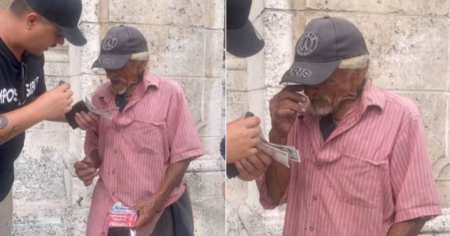
A new video by Cuban creator @emprendedesdecuba shows the bleak situation on the streets: piles of garbage, unsanitary conditions, and the sale of beef bones to the public from a truck.
“I'm living in Cuba, yes, my love, it's not the Middle East or Afghanistan or anything like that, it's Cuba, my love, yes, you're not mistaken,” he says while recording an improvised dump in the middle of the street. “The island that many portray as a tourist paradise, but the daily reality for Cubans is this: piles of garbage on every corner, diseases, mosquitoes, zero hygiene.”
The island that many describe as a tourist paradise, but the daily reality for Cubans is this: mountains of garbage on every corner, diseases, mosquitoes, and zero hygiene
In her forced walk through the surroundings, one scene stands out: a truck selling beef bones. “I went over there and I couldn't believe it, a truck selling beef bones, yes, my dear, just as you heard, beef bones, very expensive, but on top of that it hardly had any meat,” she recounts.
The comments on social media reflect sadness, resignation, and bitter humor. One user expressed, “It hurts me to see how the entire Cuban people are made to suffer, but thank God you are a fighting warrior.” Another wrote, “The strength and resilience of Cubans is on another level.” There were also phrases like: “If you're afraid, buy a dog.”
This testimony is not isolated. In another previous recording, the same user showed heaps of garbage and puddles of sewage in the streets of Havana, while denouncing the high cost of basic food items and the informal sale of low-quality products. In that video, she also warned about the health risks: “How can there not be dengue, my love? It’s not just dengue; it’s chikungunya, gorongonga, and purongonga… there are diseases that nobody even knows what they are.”
On another occasion, she explained that she had to pay 23,000 pesos for pork and 9,000 for a gas cylinder: “You don’t live here, you survive, and it’s not just about the meat, it’s my entire love, it’s everything.”
The sale of beef bones to the population in Cuba is not a new phenomenon. From trucks parked right on the street, there have been documented scenes where the bones are offered to the public without refrigeration, outdoors, with workers not wearing gloves and in unsanitary conditions.
In Las Tunas, a resident reported that “they are bones without any meat, and the only thing they are good for is the broth,” and that the ribs had been completely scraped before being given to the community.
In another recording, an elderly Cuban expressed her gratitude for being able to buy some bones at five pesos per pound, and mentioned that she would accompany them with cassava or malanga: “And I thank God for finding that.”
The background of this situation is even more serious. For years, it has been known that most of the beef produced in Cuba is allocated for tourism. The remaining products sold to the local population are bones, entrails, and low-quality hamburgers.
In the midst of institutional neglect, reports like this become an act of courage and a way to document a reality that the official narrative seeks to mask or silence.
Frequently Asked Questions about the Situation in Cuba
What is the sanitation situation on the streets of Cuba?
The sanitation situation in Cuba is dire, with piles of garbage and puddles of sewage on the streets of Havana and other areas of the country. This has led to a proliferation of mosquitoes and diseases, and the state's management has been ineffective in addressing these issues. The population faces high health risks due to these conditions.
What foods are sold to the population in Cuba?
In Cuba, beef bones are sold to the population, often at high prices and in unsanitary conditions. Most of the beef is allocated for tourism, leaving the people with low-quality options such as bones and offal.
How does the economic crisis affect professionals in Cuba?
The economic crisis in Cuba has led to qualified professionals living in precarious conditions. Salaries are insufficient to cover basic needs, and many rely on remittances sent by family members abroad. Economic inequality is evident, with sectors such as tourism enjoying privileges over professionals.
What is the reality of access to basic food in Cuba?
Access to basic food in Cuba is limited and expensive, with high prices that exceed salaries. This has turned food into a daily challenge for Cubans, who often cannot ensure even a single complete meal per day.
Filed under: