
Related videos:
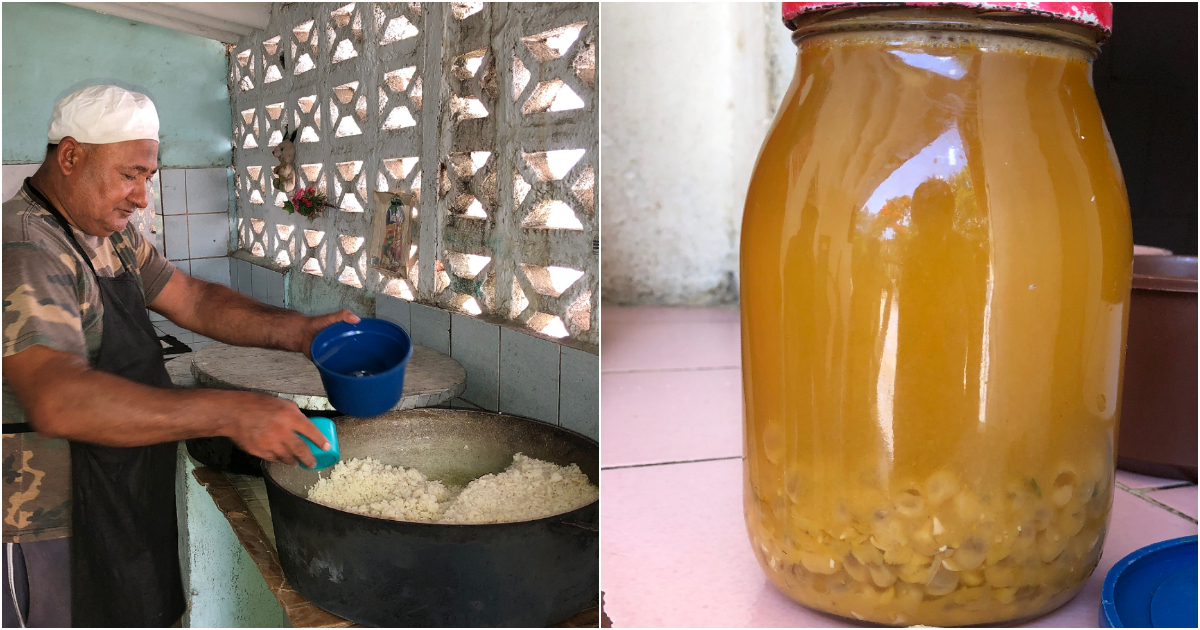
The cafeterias of the Family Attention System (SAF) in the province of Holguín, which provide food to impoverished people, especially the elderly, offer rice and peas almost daily, with limited portions and hardly any substantial meals, while the distribution of supplies fails and the diners experience constant hunger.
The diners at the Villa Nueva and La Guantanamera units in the city of Holguín agree that the service is insufficient and the menus are repetitive.
Heremio Torres, a retiree with visual problems, reported that the chicken only appears when there are official visits, while Professor Mauri Herrera criticizes that they survive for whole weeks on rice and pea stew, as reflected in a comprehensive report published by the official newspaper ¡Ahora!
Norge Tamayo Ferraz, administrator of the El Crisol unit, confirmed that the quality of the food received often does not meet the established standards, while Ramón Pérez, one of the diners, described the grains in the broth as “marbles.”
The major difficulty is that we cannot continue surviving for several weeks on just a small pot of pea soup, or rather broth; a bit of rice, and a soft drink made from syrup. We need to have another form of attention and a more direct priority from those responsible for this sensitive program and from those in charge of supporting it, but also from other organizations, and even the new economic players could extend their helping hand, emphasized Herrera.
Furthermore, the reality of the kitchens is dire. Chefs face "inhumane conditions" to prepare everything over makeshift wood stoves, without liquefied gas for over a year, and they have to soften low-quality grains for hundreds of diners.
The purchase of root vegetables, greens, or spices becomes nearly impossible due to high prices and set limits.
The food supply relies on companies such as the Wholesale Food Company (EMPA) and Acopio, which deliver amounts far below what is requested.
In August, out of 9.2 tons of peas, only four arrived, which forced the provision of just one daily serving or only white rice, "with the main dish's presence being quite sporadic, mainly consisting of eggs and croquette dough," the source noted.
Delays in the procedures for registering new beneficiaries worsen the situation: octogenarians like Santiago Soler wait months for approval while those already registered receive limited rations.
Queues continue after the daily delivery, demonstrating that hunger also affects those who are not formally registered in the system.
Although officials from the Ministry of Economy and Planning and Mincin assure that efforts are being made to balance resources and prioritize the SAF, distribution consistently fails, and the quality of food does not meet minimum standards.
According to ¡Ahora!, in the 14 municipalities of the eastern province there are 121 centers of this type serving over 6,000 people. The provincial capital has 14 SAF units, established by a resolution from the Ministry of Domestic Trade (Mincin) to supplement daily food intake and ensure the nutritional requirements of low-income individuals and those in special situations, “at reasonable prices,” he added.
Thus, the SAF in Holguín show that, despite the official intention to protect the most vulnerable, the utopia of dignified nourishment remains a chimera.
The official newspaper Granma highlighted in 2020 that the SAF “was established in 1998 to support a vulnerable sector of society,” and that “many of those who benefit from this special food service are elderly people” and “low-income individuals who access these facilities to supplement their diet.”
In 2021, as a consequence of the failed Ordering task, the price of food rations in these facilities increased from two to 26, which prompted numerous criticisms on social media.
On that occasion, it was reported that more than 77,000 elderly individuals and people with disabilities had to give up the menu offered at community dining halls, due to the shocking price increase, as they could not cope with the rise in minimum pensions, which were set at 1,528 pesos.
With the new pension increase announced by the government and effective from September 2025, the apparent improvement for retirees, who now receive a minimum of 4,000 CUP, becomes a symbolic figure when translated to the exchange rate prevailing in the streets.
With the dollar at 420 CUP, the euro at 477.5 CUP, and the MLC at 200 CUP, the 4,000 pesos of pension barely amount to 9.5 dollars or less than 9 euros on the black market. This means that, even after the adjustment, the minimum pension in Cuba does not reach what in most countries is equivalent to a single day's worth of basic expenses.
Every day, images of elderly people searching through the trash for food are becoming more common, as independent organizations are warning about the .
At the end of April, a report from the official newspaper Girón in Matanzas revealed the misery in which thousands of retirees live who, after decades of work, are forced to survive on the streets.
The content creator Sheyla, from Matanzas, showcased in a video what a retired person in Cuba can purchase with their monthly pension of 1,500 Cuban pesos, equivalent to about three dollars at the informal exchange rate, amidst the deep economic crisis the island is experiencing.
The Cuban YouTuber Iván Valdés Permuy, known as Listillo Cubano on social media, took to the streets of Havana distributing cash to elderly individuals who revealed their pensions, and with his actions highlighted the miserable amounts received by tens of thousands of retirees on the island after a lifetime of work.
Orlando Regueiro Castellano, an 83-year-old man from the municipality of Baraguá in Ciego de Ávila, explained a few days ago that he has no money for food and walks the streets asking for “a little piece of bread,” with most people unable to help him.
Similarly, the humanitarian project Aliento de Vida shared weeks ago testimonials from elderly individuals with minimal resources, who publicly expressed three wishes each, requests that, far from being luxurious, boil down to everyday foods that are impossible to afford on a retirement pension in Cuba.
Frequently asked questions about the food crisis in Holguín and the Family Care System (SAF)
What is the Family Care System (SAF) in Cuba?
The Family Attention System (SAF) is a program created by the Ministry of Domestic Trade of Cuba aimed at providing food to low-income individuals and those in special circumstances at affordable prices. However, it currently faces serious deficiencies in the quality and quantity of the food provided, as evidenced by the dining halls in Holguín.
What is the current situation of the SAF dining facilities in Holguín?
The dining halls of SAF in Holguín are offering repetitive and low-quality menus, with meager servings of white rice and hard peas, and minimal presence of main dishes. This situation is due to the lack of adequate supplies and poor management in food distribution, affecting more than 6,000 people who rely on these services.
What problems do the cooks in the SAF cafeterias in Holguín face?
The cooks in the SAF cafeterias face inhumane conditions for food preparation, as they have been without liquefied gas for over a year and must use makeshift wood stoves. Additionally, they have to contend with low-quality grains, making it difficult to prepare suitable meals for the diners.
How does the economic crisis affect retirees and vulnerable individuals in Cuba?
The economic crisis in Cuba has left many retirees and vulnerable individuals in a state of extreme hardship. The minimum pensions, even after recent increases, do not cover basic needs, forcing many to search for food in the trash or rely on the charity of others. The situation is particularly critical in community dining halls, where the quality and quantity of food are insufficient.
Filed under: