
Related videos:
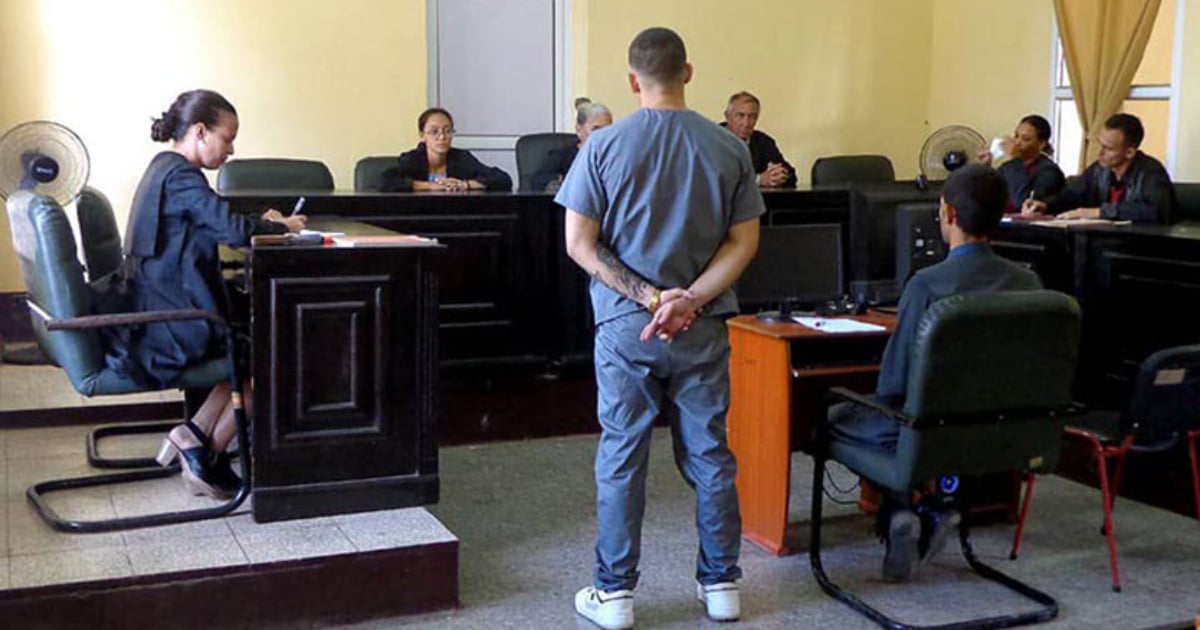
A court in Ciego de Ávila sentenced a young couple for the cultivation and concealment of marijuana in a public trial described by the authorities as "exemplary," held in the context of the IV National Exercise for Crime Prevention.
According to the newspaper Invasor, the judicial process took place at the Provincial People's Court of Ciego de Ávila and concluded with a seven-year prison sentence for the accused for cultivating Cannabis sativa, and four years for his wife, who was sanctioned for complicity. Both reside in the municipality of Venezuela.
During the search conducted by law enforcement at the defendants' residence, three marijuana plants were seized, weighing a total of 66.72 grams, in a vegetative state.
According to the ruling issued by the court in case 118 of 2025, the personal characteristics of the defendants, their social behavior, and the harmfulness of the crime were taken into account. Both the convicted individuals and the prosecution have the right to appeal to the Supreme Court if they do not agree with the decision.
This case is part of a national judicial offensive driven by the Cuban regime. In Las Tunas, a citizen was sentenced to 15 years in prison for marijuana trafficking as part of this same repressive campaign.
Similar sentences have also been reported in other provinces: in Holguín, two men and a woman received sentences of up to eight years in prison for drug-related offenses, while a court in Havana sentenced a defendant to 15 years in prison for trafficking cocaine and synthetic drugs.
These trials have taken place alongside what the government refers to as a "zero tolerance" policy. However, according to several analyses, such as the one published in another case from Holguín that was also presented as a landmark trial, these sentences serve more as social warnings than as independent judicial processes.
Even the official language itself has generated controversy. At a recent hearing in Holguín, the aim of deterring individuals with "criminal potential" was acknowledged, a phrase that contradicts the fundamental principles of modern criminal law and reinforces the perception that these trials are part of a strategy for social control rather than effective justice.
Despite the tightening of penalties, drug use and trafficking—especially of synthetic substances such as the so-called "químico" or "papelillo"—continues to rise on the island. According to official figures from the Ministry of the Interior, more than 1,500 people have been arrested for drug-related offenses in the past year, highlighting the limitations of the Cuban government's repressive approach.
Frequently Asked Questions About Exemplary Drug Trials in Cuba
What are exemplary trials in Cuba?
Exemplary trials in Cuba are judicial processes aimed at sending a deterrent message to society, demonstrating that certain behaviors will be severely punished. However, in the Cuban context, these trials function more as tools of social control rather than as independent judicial processes, as they are used to punish not only proven acts but also individuals for their "potential criminality."
What are the penalties imposed in drug trials in Cuba?
In Cuba, the penalties for drug-related offenses are severe. For example, in the case of Ciego de Ávila, a man was sentenced to seven years in prison for cultivating marijuana, and his wife received four years for complicity. Sentences can reach up to 20 years in prison or more, depending on the severity of the crime, as seen in drug trafficking cases in other provinces.
How does the Cuban regime's "zero tolerance" policy affect drug trafficking?
The Cuban regime's "zero tolerance" policy has resulted in increased severity of sentences for drug-related offenses, aimed at demonstrating firmness against drug trafficking. However, despite these measures, the consumption and trafficking of drugs, particularly synthetic substances, continue to rise on the island, suggesting that the repressive approach has not been effective in eradicating the problem.
What impact do exemplary trials have on Cuban society?
Exemplary trials in Cuba have a significant impact on society, as they act as mechanisms of social warning and political control. By imposing severe penalties, the government aims to deter the population from engaging in criminal activities, but it also reinforces social control over vulnerable communities, without addressing the structural causes that lead to crime, such as poverty and unemployment.
Filed under: