
Related videos:
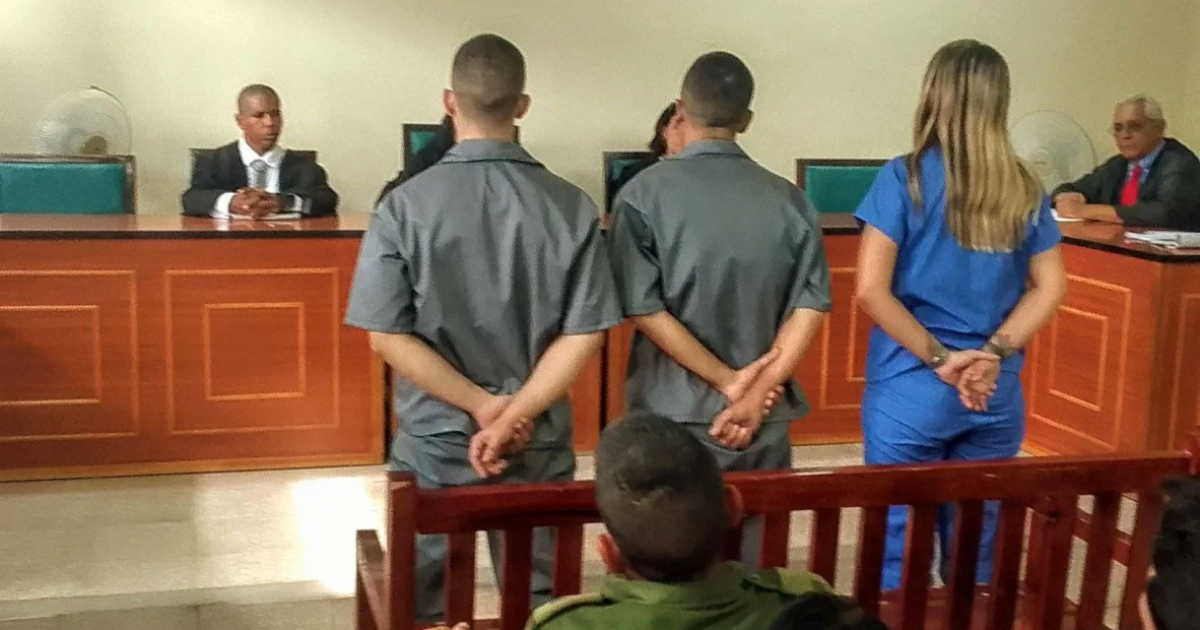
The Provincial People's Tribunal of Holguín sentenced three citizens this week—Beatriz Reyes Mederos, Alexis Alberto Hernández Pupo, and Ismael González Medina—to prison sentences ranging from six to eight years for offenses related to possession, trafficking, and consumption of drugs.
The ruling, issued at the judicial headquarters of the municipality of Banes, was presented by the official press as an "exemplary trial," in line with the zero-tolerance policy promoted by the Cuban regime.
According to the information released by the local station , González Medina was sentenced to eight years of imprisonment, while Reyes Mederos and Hernández Pupo were each sentenced to six years.
In addition, they were subjected to the deprivation of public rights, a prohibition on leaving the country, and the confiscation of what was seized during the process.
A propaganda process
The court assured that the trial was conducted with all the "legal guarantees" and emphasized that the prosecution substantiated the charges with testimonial, documentary, and expert evidence.
As usual, the case turned into a propaganda act of the regime.
The state media emphasized its "educational" nature, repeating the government’s narrative that insists on portraying these sentences as part of a national crusade against the rise of drugs.
Official pages highlight that the process in Holguín had a "prophylactic and preventive" approach, even going so far as to discuss sanctioning individuals with "potential for criminal behavior."
Such formulations, which contradict the principles of modern criminal law, demonstrate how Cuban courts operate more as tools of social control than as independent judicial institutions.
A campaign across the Island
The case of Banes is part of a series of mass trials with the same focus.
In Havana, on September 22, the Provincial Court sentenced José Alberto Ducá Valón to 15 years in prison for selling cocaine and synthetic drugs.
In Matanzas, another young man is awaiting sentencing after confessing to having bought and sold narcotics, despite having no prior criminal record, with the Prosecutor's Office requesting seven years in prison.
All these processes are part of a national campaign for zero tolerance against drug trafficking, a judicial offensive aimed at demonstrating firmness towards the phenomenon of drug use and trafficking, especially synthetic cannabinoids, commonly known as "químico" or "papelillo".
The other side: rise of consumption and police failure
Despite the severe sentences, the problem continues to grow.
The Ministry of the Interior (MININT) itself revealed that in the past year, more than 1,500 people have been arrested for drug-related cases and that the use of synthetic substances has reached unprecedented levels in Cuba, especially among young people.
Far from eradicating the phenomenon, draconian penalties demonstrate the failure of the government's repressive approach.
The government takes a tough stance in judicial processes, but does not address the structural causes: the social crisis, the lack of opportunities for young people, and the corruption that allows drugs to circulate with increasing ease.
While the regime turns each trial into a public spectacle to instill fear and discipline the population, the reality in neighborhoods and cities shows that the so-called zero tolerance policy does not stop the growth of drug trafficking or consumption, and that the problem continues to expand, with an increasingly high cost for Cuban families.
Frequently Asked Questions about Exemplary Trials and Drug Policy in Cuba
Why are drug trials in Cuba considered "exemplary"?
Drug trials in Cuba are labeled as "exemplary" because they aim to send a deterrent message to society, demonstrating that certain behaviors will be harshly punished. These processes operate more as tools of social control than as independent judicial institutions, reflecting the regime's strategy of using fear and repression as methods of political and social control.
What are the penalties imposed in the Holguín case for drug offenses?
In the case of Holguín, Ismael González Medina was sentenced to eight years in prison, while Beatriz Reyes Mederos and Alexis Alberto Hernández Pupo received sentences of six years each. In addition to imprisonment, they were also deprived of public rights, prohibited from leaving the country, and had their seized belongings confiscated during the process.
How does the "zero tolerance" campaign against drugs affect Cuba?
The "zero tolerance" campaign has led to an increase in draconian penalties and the holding of mass trials across the island, aimed at demonstrating a tough stance against drug trafficking and consumption. However, this strategy has been criticized for failing to address the structural causes of the problem, such as the social crisis, lack of opportunities, and corruption, resulting in a continuous rise in drug trafficking and consumption in Cuba.
What is the current situation regarding drug consumption in Cuba?
Drug consumption, especially of synthetic substances, has reached unprecedented levels in Cuba, particularly affecting young people. Despite severe penalties and anti-drug operations, the phenomenon has not been eradicated, highlighting the failure of the government's repressive strategy. The Ministry of the Interior has reported over 1,500 drug-related arrests in the past year, illustrating the severity and scope of the problem.
Filed under: