
Related videos:
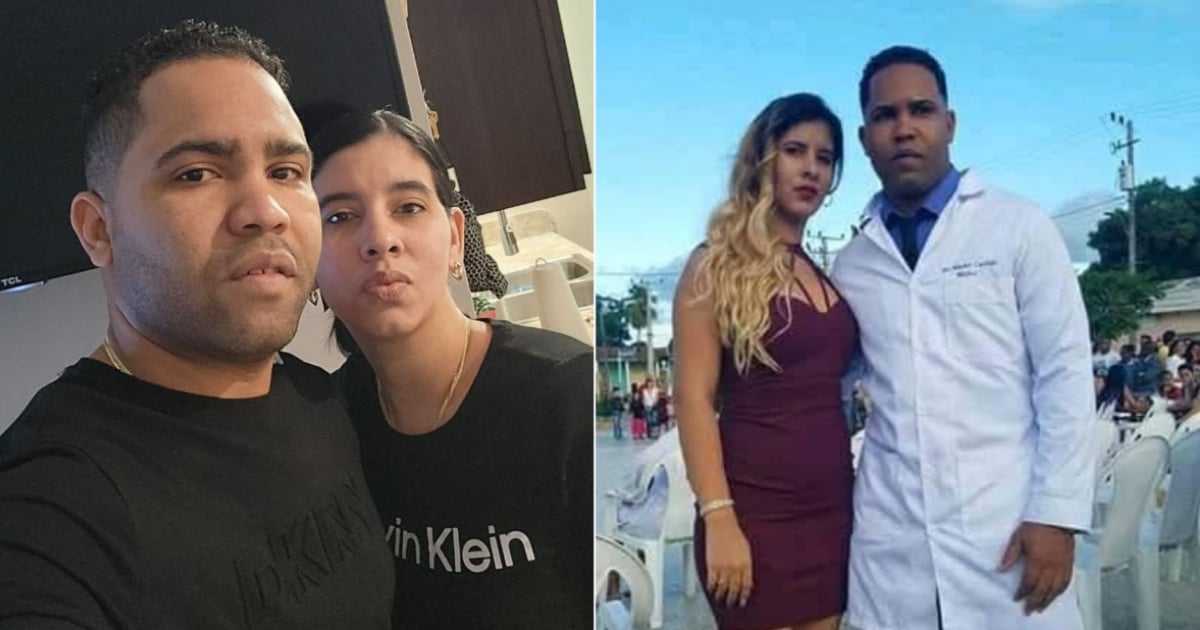
After years of uncertainty and hard work, a couple of Cuban doctors from Guantánamo has taken an important step in rebuilding their professional careers in the United States.
It is about Delia Cardosa, a specialist in geriatrics, and her husband Héctor, an intensivist physician, who, along with their three children, settled in the state of Kentucky, where they have managed to integrate into the healthcare system as Physician Assistants (PAs).
The couple, upon arriving in the United States, received an I-220A form and went through a complex path to reach this goal.
For almost three years, they faced the challenges of reintegrating into the professional sphere in a country with strict requirements for the validation and certification of health professionals trained abroad.
Their journey has been marked by personal and professional sacrifices, but also by the conviction that they could rebuild their lives in an environment where effort and perseverance are rewarded.
The journey of Cuban doctors in the United States
The case of Delia and Héctor reflects the process that many Cuban doctors must undergo to integrate into the U.S. healthcare system.
Becoming a physician assistant does not equate to practicing as a doctor in the United States, but it represents a viable and quicker alternative for entering the healthcare job market, while also allowing individuals to utilize the training they received in Cuba.
The process begins with the evaluation of academic credentials, in which accredited agencies like WES (World Education Services) validate that Cuban degrees are equivalent to a university degree in the country. Subsequently, the interested individual must meet the admission requirements for a master's program in Physician Assistant Studies, accredited by the ARC-PA.
These programs require, among other prerequisites, proficiency in English, validated science courses in the U.S. system, documented clinical experience hours, and occasionally the passing of the GRE exam.
The master's program lasts between two and three years, including theoretical training and clinical rotations in hospitals across the country.
After graduating, future PAs must pass the national certification exam (PANCE) and obtain the appropriate state license in order to practice.
Once employed, they work in hospitals, private clinics, or community centers, always under the supervision of a physician.
An alternative to the barriers of the system
The path to practicing fully as a doctor in the United States is even more complex, which is why many professionals choose to become Physician Assistants, allowing them to re-enter their field and maintain their connection to medicine.
The achievement of Delia Cardosa and Héctor not only represents personal relief after years of sacrifice but also serves as an example of resilience for hundreds of Cuban doctors who arrived in the United States with the I-220A and face the challenge of rebuilding their professional lives in such a competitive context.
Frequently Asked Questions about Cuban Doctors and the I-220A Process in the United States
What is the I-220A form and what is its importance for Cubans in the U.S.?
The I-220A form is a document for parole used by the U.S. Immigration Service to allow certain migrants, including many Cubans, to remain in the country while their immigration status is resolved. Although it does not guarantee immediate legal status, it allows beneficiaries to temporarily settle in the U.S. and seek alternatives to regularize their situation.
How can Cuban doctors validate their degrees in the United States?
To validate their degrees in the United States, Cuban doctors must undergo a process that includes the evaluation of their academic credentials by accredited agencies such as WES (World Education Services), completing a master's degree in Physician Assistant Studies, and passing exams like the PANCE. This path allows them to integrate into the healthcare system as physician assistants, offering a faster option to enter the job market while utilizing their prior training.
What is the difference between being a physician assistant and a doctor in the U.S. for a Cuban?
Being a physician assistant does not equate to practicing as a physician in the U.S., but it is a viable alternative for Cuban doctors seeking to quickly integrate into the healthcare system. As physician assistants, they can work under the supervision of a physician, leveraging their previous medical training while adapting to U.S. requirements.
What challenges do Cubans face with the I-220A form in their immigration process?
Cubans with form I-220A face a migratory "limbo," as this document does not guarantee permanent legal status or immediate immigration benefits. The process can be long and complex, with cases taking years to resolve, leading to uncertainty and difficulties in accessing stable employment and full rights.
Filed under: