
Related videos:
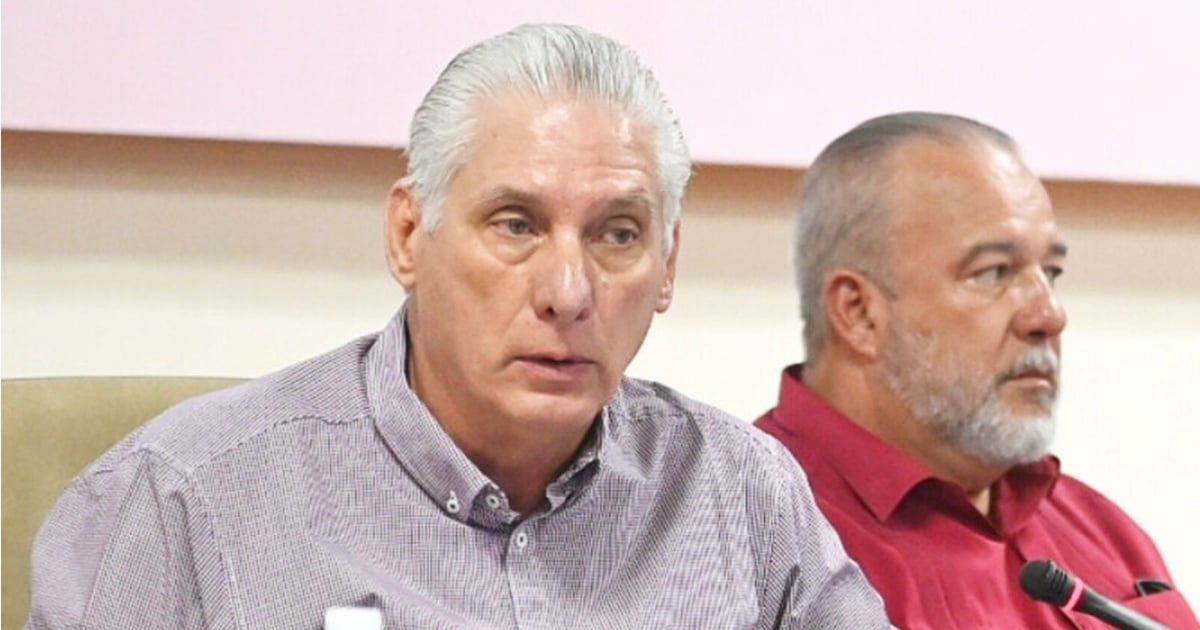
The ruler Miguel Díaz-Canel warned that the Government will take measures against those who block public roads during protests in the capital, labeling the public disorder as “unacceptable.”
The message was delivered during a follow-up meeting regarding the water, electricity, and waste crisis affecting Havana, and comes after several days of neighborhood tension and complaints about basic services.
The demands of the population are legitimate, but they must be made in the designated places: in the Party, in the institutions of the Government and the State. No one is authorized to block a public road because it disrupts essential services for our own people; measures will be taken in this regard. Public disorder is unacceptable,” said the leader, in a statement that comes after several days of civic tension.
Díaz-Canel stated that "all organisms, institutions, and party structures" are focused on the capital and acknowledged that the problems "are substantial" and "cannot be resolved over a weekend", calling for systematic effort in the work. He also admitted to "accumulated organizational problems" identified in the current support operation.
Among the announced control measures, he ordered inspections of non-state sector centers to verify compliance with electricity consumption plans and warned that "any place that fails to meet its plan will be closed." He also requested the establishment of a control system for the fuel allocated to the capital.
Regarding water supply, it was directed to prioritize areas with the longest duration of impact and to involve the population in cleaning and beautification efforts, as well as to mobilize workplaces to support their communities in these tasks.
The approach criminalizes citizen protest —a safety valve in a context of shortages— and shifts the focus away from the underlying issues: prolonged blackouts, intermittent water supply, and accumulation of waste in entire neighborhoods.
Greater crisis, greater repression
Miguel Díaz-Canel chaired an extraordinary meeting at the Provincial Committee of the PCC in Havana on Friday, accompanied by ministers, military leaders, and senior officials from the Political Bureau, following the protests and pot-banging that shook the capital the day before.
In the session, the leader announced the formation of task forces that will be comprised of local authorities and grassroots organizations to “directly address” community demands.
It also mobilized resources and forces from the Revolutionary Armed Forces (FAR) and the Ministry of the Interior (Minint), reinforcing the military presence in managing the crisis.
The regime's statements come two days after dozens of Cubans took to the streets in Havana following several consecutive days of severe blackouts and water shortages.
Blackouts have been continuous and widespread throughout the city, with outages lasting up to 24 hours, leading to a growing social discontent.
Several citizens have expressed their frustration over the lack of solutions and the repetition of the same official explanations, while facing scorching temperatures, mosquitoes, water shortages, and the inability to perform everyday tasks such as cooking or washing.
Frequently Asked Questions About the Protests and the Crisis in Cuba Under Díaz-Canel's Government
Why does Díaz-Canel threaten Cubans who protest?
Díaz-Canel has threatened to take action against those who block public roads during protests, describing public disorder as "unacceptable." Despite acknowledging the legitimacy of demands for inadequate basic services like water and electricity, the Cuban leader insists that protests must occur in the places designated by the government. This stance aims to maintain control and minimize the visibility of criticism against his administration.
What measures is the Cuban government taking in response to the crisis of basic services?
The government has mobilized the Revolutionary Armed Forces (FAR) and the Ministry of the Interior (Minint) to strengthen military presence and has formed work teams with local authorities to address community demands. Additionally, inspections have been ordered for non-state sector facilities to verify compliance with electricity consumption plans, and there is an effort to prioritize water supply in the most affected areas. However, these measures are seen more as control and repression than as effective solutions to the crisis.
How does the energy crisis affect the daily lives of Cubans?
The energy crisis in Cuba has resulted in prolonged blackouts that can last up to 24 hours, severely affecting the daily lives of citizens. These power outages prevent people from performing everyday tasks such as cooking, washing, and storing food, and impact essential services such as healthcare and education. The lack of electricity and potable water also increases the spread of diseases and creates growing social discontent.
What has Díaz-Canel declared about social inequalities in Cuba?
Díaz-Canel has acknowledged that the partial dollarization of the Cuban economy has widened the gaps of social inequality. Although this measure was presented as necessary to improve the availability of foreign currency, it favors those who have access to capital resources or receive remittances, leaving the majority of Cubans at a disadvantage. This admission reflects the severity of the economic and social crisis facing the country.
Filed under: