
Related videos:
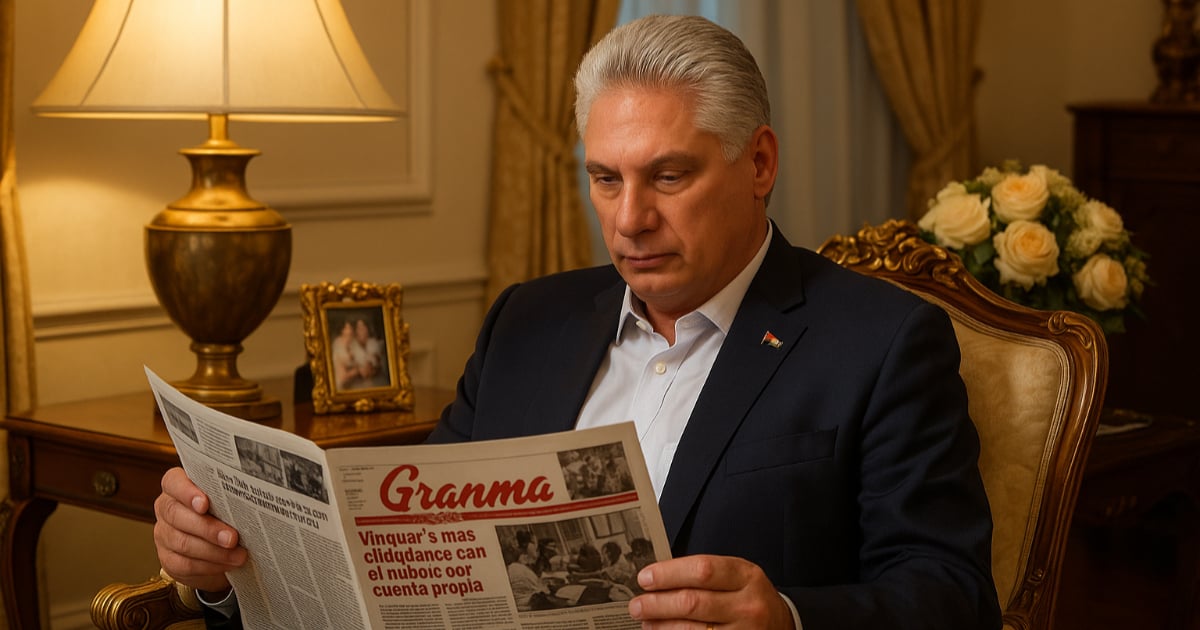
The president Miguel Díaz-Canel proclaimed today that the newspaper Granma is the “main voice of the Revolution” and urged that it be transformed into the “flagship” of Cuban journalism in light of current media challenges, a gesture that sparked a strong critical reaction on social media.
In a message on his account on X, the leader recalled the birth of the medium on October 3, 1965, and defended its institutional role, emphasizing the challenge of adapting in “times of multimedia and intensified media warfare.”
The editorial of Granma also commemorated the anniversary on the social network itself, accompanied by images of the newspaper "in the mystique" of dictator Fidel Castro (1926-2016).
Several users ridiculed the newspaper with criticisms describing it as a propaganda outlet incapable of reflecting the country's real issues.
"The best toilet paper in the town of Cuba," stated one forum member, while several others questioned its credibility.
Other comments framed the discussion in terms of material shortages and public management, pointing to the government for failed policies that have impoverished the population and left them lacking basic services such as electricity, water, and medicine, a situation that the official press denies or downplays.
Some of the messages indicated that independent press—persecuted by the regime—exiles, foreign media, and citizens on social media are the ones truly documenting issues that the official press is not free to reflect and analyze.
Recently, the Political Bureau of the PCC appointed Yoerky Sánchez Cuéllar as the new director of Granma, after he served as the head of Juventud Rebelde.
Sánchez, 41 years old, is not only a journalist but also a deputy in the National Assembly, a member of the Central Committee of the PCC, and a member of the Council of State.
The change is nothing more than a mere swapping of positions within the regime's media machinery, where leadership roles in the state press do not rely on journalistic outcomes, but rather on political loyalty.
The movement comes more than a year after the departure of Yailín Orta Rivera from the direction of Granma.
Her dismissal was never officially announced, although in May 2024, when she had already been out of office for two months, internal sources confirmed to the portal CubaNet that her management had led to the departure of journalists and a tense atmosphere in the newsroom.
The influencer Alexander Otaola then reported that she was accused of theft and embezzlement of resources, including car parts, complete vehicles, and hundreds of boxes of chicken intended for the feeding of the newspaper workers.
Orta, who previously led Juventud Rebelde, headed Granma from December 2017 until she was temporarily replaced by Dilbert Reyes Rodríguez, until Sánchez was officially appointed as the new director.
In April 2024, Díaz-Canel emphasized his interest in making the official PCC organ the most widely read digitally in the country, during a visit to the newspaper's headquarters.
The leader took a tour of the newspaper's facilities where, according to an official report, there was "intensive construction activity between 2023 and the early months of 2024 that restored comfort and beauty to the main work areas, now with a more modern approach to the configuration of the spaces."
Frequently asked questions about the role of the Granma newspaper and the situation in Cuba
What is the role of the Granma newspaper according to Díaz-Canel?
President Miguel Díaz-Canel regards Granma newspaper as the “main spokesperson of the Revolution” and has urged to transform it into the “flagship” of Cuban journalism in light of current media challenges. This approach emphasizes the propagandistic role of the outlet, aligned with the interests of the Communist Party of Cuba.
What criticisms does the newspaper Granma face?
Granma faces criticism for being seen as a propaganda tool that does not reflect the real problems of the country. Users on social media have described the newspaper as unable to address material shortages and the ineffective public management in Cuba. Furthermore, the lack of press freedom in the country limits its ability to report independently.
Who is the new director of the Granma newspaper?
Yoerky Sánchez Cuéllar has been appointed the new director of the Granma newspaper. Previously, he led Juventud Rebelde and is also a member of the National Assembly, a member of the Central Committee of the PCC, and part of the Council of State. His appointment reflects a reshuffling within the regime's structure, where political loyalty prevails over journalistic outcomes.
How has the Cuban population reacted to the regime's propaganda?
The Cuban population has expressed discontent with the regime's propaganda, especially in the context of the current crises. Criticism on social media highlights the disconnect between the official discourse and the daily reality of Cubans, who are facing blackouts, shortages of food and medicine, and rampant inflation. The official narrative is often ridiculed and rejected by many citizens.
Filed under: