
Related videos:
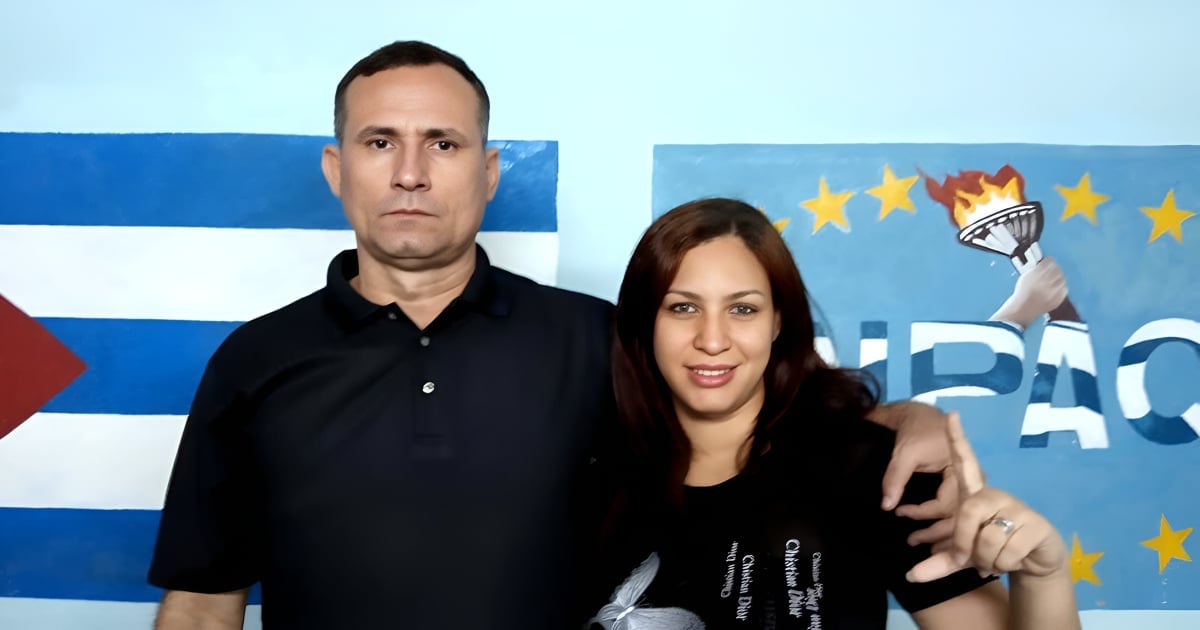
The wife of Cuban opposition leader José Daniel Ferrer, Nelva Ismarays Ortega, was detained and threatened this Monday after protesting against the authorities' refusal to grant her a conjugal visit at the Mar Verde prison in Santiago de Cuba, where the opposition leader remains incarcerated.
According to the complaint published by Ana Belkis Ferrer García, sister of the leader of the Patriotic Union of Cuba (UNPACU), who used her profile on Facebook, the refusal came from Captain Liván Laguart Riquelme, identified as the “chief of the collective or reeducator” of the number 15 unit of the prison. In the absence of explanations regarding the decision, Nelva staged a protest in front of the prison.
Detention in front of the prison
Around 12:30 p.m., repressive agents arrived at the scene. Among them was Mario Raciel Soularys Garcés, on a motorcycle, accompanied by an officer who identified himself as Sub-Lieutenant Carlos, as well as a police patrol with two agents from the PNR.
The officers informed him that he had to accompany them to the Versailles Research and Operations Center—known to activists as the "torture center" in Santiago de Cuba—to "provide an explanation" regarding the denied visit.
She was taken there and remained inside the patrol car for about half an hour, under the sun, before being taken to an office where several agents were present, including Major Raúl and another individual who was recording the scene with a camera.
Threats from social media posts
During the interrogation, the agents warned him that this was "the final warning" regarding his social media posts about the Ferrer case and his criticisms of the Cuban authorities.
They were informed that if new videos or messages denouncing the situation appeared, the process for the family's departure and for Ferrer himself would "reverse," and she could potentially be imprisoned.
Nelva was released around 2:00 p.m., after receiving multiple threats, without any explanation being offered regarding the denial of the conjugal visit.
The painful decision of Ferrer
Last Friday, José Daniel Ferrer revealed that he accepted to go into exile, a decision he describes as painful, made under extreme pressure from the regime, and motivated by the need to protect his family.
Through a handwritten letter dated September 10, 2025, Ferrer denounces a series of systematic abuses and reaffirms his commitment to the fight for Cuba's freedom.
Ferrer explains that he decided to leave the country before the assault on his home on April 29, when he was returned to prison after the revocation of his parole.
It also points out that the State Security has demanded he take advantage of exile to discredit the struggle for freedom, including the manipulation of his image.
Additionally, according to the complaint, they intended for me to ask the United States and the Catholic Church to resume negotiations with the regime.
Ferrer is blunt: “I want to make it very clear that if my life and the life of my family depend on me asking for such things, I would prefer my death in this Nazi-style concentration camp (...). I am ready to die, but not to live without honor, without dignity.”
Frequently Asked Questions about the Situation of José Daniel Ferrer and His Family
Why was José Daniel Ferrer's wife arrested?
Nevla Ismarays Ortega, wife of José Daniel Ferrer, was detained for protesting against the refusal of the Cuban authorities to allow her a conjugal visit at the Mar Verde prison. The authorities transferred her to the Investigations and Operations Center of Versailles, where she was threatened due to her social media posts critical of the Cuban regime.
What does José Daniel Ferrer denounce about his situation in prison?
José Daniel Ferrer has reported systematic abuses, torture, and inhumane conditions in the Mar Verde prison. Through letters and messages, he has revealed pressures to accept exile and discredit the fight for Cuba's freedom, in addition to facing constant threats against his family.
What is the position of the Cuban regime regarding Ferrer's situation?
The Cuban regime has used Ferrer's situation as a tool for political negotiation. Despite international pressures, they have maintained strict conditions regarding his potential release, seeking to gain diplomatic advantages while allegations of human rights violations continue.
What actions has the international community taken in the case of José Daniel Ferrer?
The international community has condemned Ferrer's imprisonment and has demanded his immediate release. Organizations such as Amnesty International and governments like that of the United States have denounced the inhumane conditions of his detention and have called for urgent action to protect his rights and those of his family.
Filed under: