
Related videos:
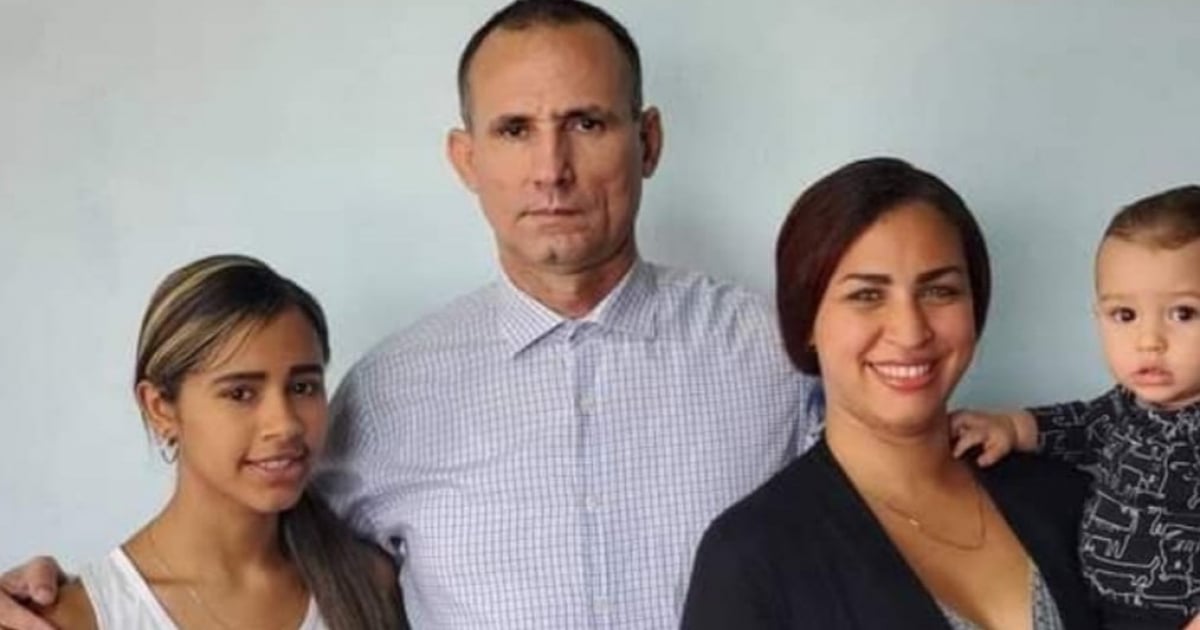
Nelva Ismaray Ortega, wife of opposition leader José Daniel Ferrer, reported that the regime is blocking his departure from the country and is subjecting him to psychological torture.
In an interview with Mario J. Pentón for Martí Noticias, Ortega stated that the founder of UNPACU is under “psychological pressure and systematic torture” after accepting the forced exile imposed by the regime.
"This decision was made for the safety of her family and because of all the horror she has experienced in prison. She has been beaten, humiliated, threatened, and deprived of food and medicine. She has had to survive in inhumane conditions, alongside common criminals and under the watch of state officials," she stated.
Ortega explained that for months the family has been "waiting to be given a date to leave, but they continue to withhold our documents and pressuring him to make statements favorable to a dialogue between the regime and the United States, something he will not accept."
"Everything has been dirty, everything has been a game to tarnish our dignity. Even under these conditions, he remains steadfast in his principles and will not give in," he added
She also reported that her husband is "pale, with many signs of torture and bedbug bites," and that the rains have flooded his cell.
“He prefers to die rather than surrender, but the situation is critical. This week, the regime must decide whether to allow him to leave the country; if they do not, he will accept staying in prison,” he said
“They have taken almost everything from us, but not our morale,” he concluded.
Forced exile of José Daniel Ferrer
This week, from the Mar Verde prison in Santiago de Cuba, Ferrer revealed that he accepted to go into exile, a decision he describes as painful, made under extreme pressures from the regime, and motivated by the need to protect his family. Through a handwritten letter dated September 10, 2025, Ferrer denounces a chain of systematic abuses and reaffirms his commitment to the fight for the freedom of Cuba.
"For years I have been subjected to brutal beatings, torture, humiliation, threats even of death, and other cruel, inhuman, and degrading treatment," begins the letter, handwritten and published by his family on social media. "My family has also been the target of the most ruthless persecution," he adds, attributing this violence to the regime's attempts to force him into exile or to renounce his activism.
A decision marked by pain and frustration
Ferrer explains that he decided to leave the country before the assault on his home on April 29, when he was returned to prison following the revocation of his parole. “Even before the last assault on my home on April 29 of this year, I had decided to go into exile to keep my wife and children safe,” he states. “I made this decision for the safety of my family and because of the frustration I felt upon confirming, after leaving prison, the disunity, sectarianism, and lack of effectiveness of the opposition both inside and outside of Cuba.”
It also points out that State Security has demanded that he take advantage of exile to discredit the struggle for freedom, including the manipulation of his image. "They have been producing videos and recordings with the intention of making publications that cast doubt on our commitment to the struggle (...), videos and audios to portray us as supposed agents of tyranny."
They even pressured him to marry on a symbolic date for the Castro regime: “They exerted strong pressure with the intention of having me marry my beloved partner, Nelva Ismarays Ortega, on the birthday of the deceased dictator.”
Furthermore, according to the complaint, they intended for me to ask the United States and the Catholic Church to resume negotiations with the regime. Ferrer is emphatic: “I want to make it very clear that if my life and that of my family depend on my asking for such things, I would rather die in this Nazi-style concentration camp (...). I am ready to die, but not to live without honor, without dignity.”
Inhumane conditions and cruel treatment
The opposition leader details that he lives in extreme conditions: "I survive among common criminals capable of any crime and under the orders of the prison chief Vladimir Pineda, who brutally hates me, and the political police." He claims that he suffers "theft of my food and hygiene products, ordered by the regime's thugs" and that the threats against his wife and children "have been greater than at any previous time in prison."
These statements align with recent accusations from his sister Ana Belkis Ferrer, who claimed that in prison, his bags with food and hygiene products have been stolen, he is kept ill without medical care, and he is forced to share a cell with violent prisoners and infiltrators. “Only the immense love I feel for my family and my commitment to non-violent struggle have made it possible for me to remain calm, to gather patience, and not to defend myself (...) with the methods that any human being would have employed in such extreme circumstances,” Ferrer wrote.
Exile, not as an escape but as a strategy
Although he laments the deterioration of the opposition and the complicity of the free world, Ferrer insists that his departure will not be a surrender: “I will leave Cuba only with my dignity and honor held high, and not for long.” He issues a symbolic and patriotic warning: “I was going to leave just as Maceo and many mambises did, to return at the right moment like Martí, Gómez, and Maceo did. But I will not leave under the pressures and dirty tricks of the henchmen of tyranny.”
Despite claiming that he has lost faith in many opponents, he assures that "I still have a lot of faith in the good fighters that remain." He concludes with an unwavering promise: "I will continue to fight until achieving victory or dying in the attempt to see Cuba free."
He was released in January 2025 under a parole regime that he himself refused to sign, deeming it illegitimate and incompatible with his commitment to the fight for Cuba's freedom. "I do not accept those conditions; give me 30 more years of sanctions (...). They leave me in this concentration camp," Ferrer declared at the time, reaffirming that he would not accept any measures that implied capitulation or legitimization of the regime. "I have sacrificed my life and my family, whom I deeply love, to fight for my people. I will never abandon the struggle," he asserted after his release, before being imprisoned again three months later.
On April 29, 2025, the Supreme People's Court revoked his release and sent him back to prison. The return was justified by alleged absences from the court, although various observers have denounced the process as politically motivated.
The case of Ferrer has generated increasing international concern. The United States Department of State has demanded his immediate release, while Amnesty International has identified him as a prisoner of conscience subjected to torture.
Frequently Asked Questions about José Daniel Ferrer's Situation and His Fight Against the Cuban Regime
Why did José Daniel Ferrer decide to accept exile?
José Daniel Ferrer accepted forced exile under extreme pressure from the Cuban regime to ensure the safety of his family. The decision was made after years of abuse and persecution by the regime, which attempted to coerce him into abandoning his activism for the freedom of Cuba.
What have been the conditions of José Daniel Ferrer's incarceration?
José Daniel Ferrer has been subjected to inhumane conditions in Mar Verde prison, where he has faced beatings, torture, deprivation of medical attention, and confinement in cells infested with insects. Moreover, he has been forced to share space with common prisoners used as psychological pressure.
What has Ferrer reported about the Cuban regime during his imprisonment?
José Daniel Ferrer has denounced a chain of systematic abuses by the Cuban regime, including beatings, torture, and death threats. He has also highlighted the persecution of his family and the attempts to manipulate his image and discredit his fight for the freedom of Cuba.
How has the international community reacted to Ferrer's situation?
The international community has expressed its concern for the situation of José Daniel Ferrer, demanding his immediate release. The United States and Amnesty International, among others, have condemned his arrest and the inhumane conditions of his imprisonment, while activists and politicians have supported his decision to go into exile.
Filed under: