
Related videos:
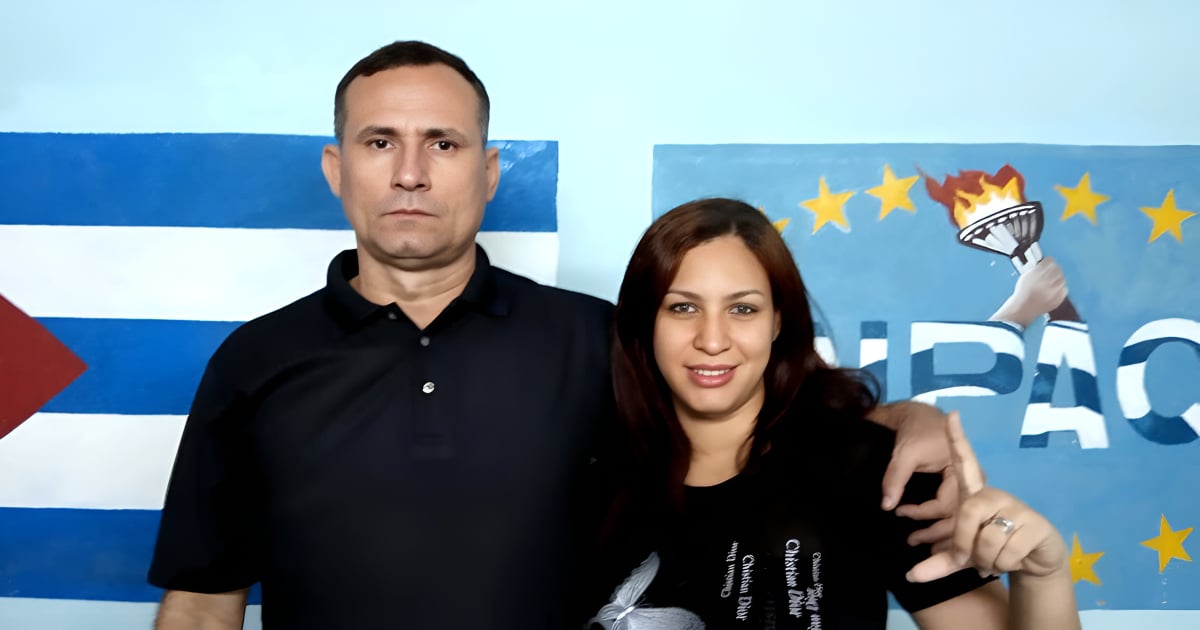
The Cuban opposition leader José Daniel Ferrer García, head of the Patriotic Union of Cuba (UNPACU), could be released soon as part of a political negotiation between the Cuban regime and international actors, according to sources close to his family and recent statements on social media.
However, the process —which would involve his exile along with his family— remains in an uncertain state due to the conditions that Havana would be trying to impose on his alleged interlocutors in exchange for his departure from the country.
In a message posted on her official X account, the sister of the opposition member, Ana Belkis Ferrer García, denounced that the dictatorship "has done everything possible and impossible to obtain certain benefits that they obviously have not achieved, nor will they achieve," while expressing gratitude for the numerous expressions of support received after her letter from prison was disseminated.
"We demand justice, freedom, and life for my brave brother and all the detained and political prisoners," added the activist, who has been responsible for denouncing and raising awareness about the situation her brother and other political prisoners face in Mar Verde prison in Santiago de Cuba.
Ferrer, 54 years old, accepted to go into exile after more than two years of confinement and torture. In a letter dated September 10, 2025, he revealed that his decision was made "under extreme pressure from the regime" and motivated by the need to protect his wife and children.
"I am ready to die, but not to live without honor, without dignity," he wrote from his cell, describing inhumane conditions and a context of constant harassment.
Recently, his family, particularly his wife Nelva Ismarays Ortega, reported that the Cuban authorities are preventing his departure from the country and subjecting the opposition figure to “psychological torture” while they prolong negotiations to gain diplomatic advantages.
Ortega assured that the regime is trying to pressure Ferrer to make statements favorable to a possible dialogue between Cuba and the United States, which he has firmly rejected.
Tradition of exchanging prisoners for concessions
The maneuver fits into a long tradition of the Cuban regime using political prisoners as bargaining chips during times of isolation or diplomatic crisis.
Over six decades, Havana has conditioned releases or exiles on negotiations with third countries, particularly with the Vatican, Spain, and the United States.
In 2010, for example, the government of Raúl Castro released 52 prisoners from the “Group of 75” —imprisoned during the Black Spring of 2003— following an agreement mediated by the Catholic Church and then Spanish Foreign Minister Miguel Ángel Moratinos. The majority were sent directly into exile in Madrid, on the condition that they leave the country.
A similar strategy was repeated in subsequent years when Cuban authorities managed the release and exile of prominent dissidents, such as Eliécer Góngora (UNPACU), Jorge Luis García Pérez “Antúnez” (Civic Resistance Front 'Orlando Zapata Tamayo'), or the independent journalist José Luis García Paneque, in operations carefully presented as “humanitarian” gestures.
In practice, these releases addressed the political needs of the regime, which sought to alleviate international pressures or facilitate diplomatic contacts with the West.
Ferrer’s case seems to follow the same logic: a partial release—under the guise of forced exile—used as a bargaining chip in the face of potential international overtures or diplomatic mediation.
However, unlike previous episodes, the current situation is more uncertain: the government of Donald Trump and his Secretary of State, Marco Rubio, have hardened their stance towards the dictatorship and rejected any negotiations that involve concessions to Castroism.
Rising international pressure
The situation of the opposition leader has generated a wave of condemnation in recent weeks. Congresswoman María Elvira Salazar described the regime as “cruel and cowardly,” while her colleague, Mario Díaz-Balart called him a “hero” and assured that he will be welcomed as such by the Cuban exile community.
On her part, Rosa María Payá, a promoter of the civic platform ‘Cuba Decide’ along with Ferrer, emphasized that “to save oneself is an act of resistance, it is to defend the dignity of an entire people.”
The Ferrer case has thus become a new source of tension between the Cuban regime and the international community. The government's refusal to finalize his release reinforces the perception that Havana uses the suffering of political prisoners as a tool for diplomatic pressure.
Meanwhile, Ferrer's family continues to wait for news. "They have taken away almost everything from us, but not our spirit," Nelva Ismarays Ortega recently stated.
In his words resonates the echo of decades of political repression in Cuba, where a man's freedom continues to depend on the negotiations of a totalitarian state that views human dignity as a tool for change, not as a right.
Filed under: