
Related videos:
A Cuban woman who is part of the migrant caravan heading to Mexico City stated that despite the challenges, being in Mexico is a privilege, nothing compared to what she experienced on the Island.
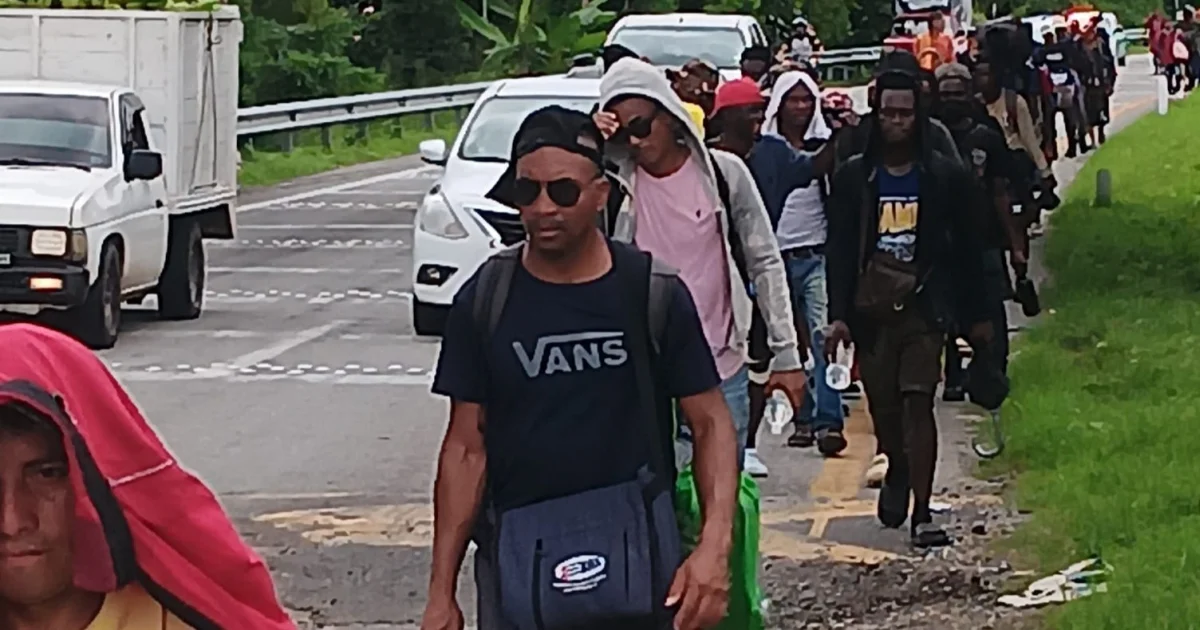
Estela Matus is one of the 1,500 people who left Tapachula due to lack of employment and low wages, and is now traveling to Mexico City in search of better opportunities and recognition of her rights.
"Being in Mexico makes us feel privileged, we are not to blame for the lack of jobs in Tapachula," he told NVI Noticias Chiapas.
"Cuba is ugly and there is a lot of police abuse against Cubans. We cannot have a business because they take it away from us; only the ministers live well," he added.
Migrants expressed their gratitude to the Mexican authorities for the welcome they received but warned that the slow pace of the Mexican Commission for Refugee Assistance (Comar) puts their rights at risk.
Many claim to have been in the process for months, even over a year, without receiving any response. They allege that they received repeated denials, while private lawyers offered to "resolve" their cases in exchange for payments ranging from 10,000 to 22,000 pesos, which they describe as a corruption scheme.
For Estela, traveling in a caravan represents a form of collective protection against the precariousness they face at the southern border. The group has traveled more than 30 kilometers under high temperatures and heavy rain.
The caravan, accompanied by the National Guard and local authorities, received humanitarian aid in Mapastepec. Civil Protection, Municipal Health, and the Migrant House distributed water and food, in addition to setting up rest areas in the dome of the Santa Cruz neighborhood.
Despite this, migrants reported abuses, discrimination, and precarious working conditions at the southern border.
"All we want is to work legally; there is no employment in Tapachula," said the Cuban Osver Pérez to RTV Noticias Morelos.
Other testimonies depict the despair they felt before joining the march.
Daniel González, who had been in Tapachula for over a year and a half, recounted having received two rejections for asylum despite completing the necessary procedures. "If you pay a lawyer at the Comar, the permit magically appears," he stated, pointing out the alleged corrupt practices in the local offices.
The Cuban Lidia Álvarez denounced discrimination against her community and the inability to pay the fees demanded by some facilitators: "Here we have no hope, we just want the opportunity to legalize our status."
Although the official discourse often portrays these caravans as a journey to the United States, most Cubans claim that their goal is different: to settle in Mexico.
They aim to reach the center or north of the country, in cities like Mexico City or Monterrey, where they hope to find employment and stability.
"We don't want to go anywhere; we want to live here in Mexico," several of them have repeated.
The context in Cuba, marked by economic crisis and political repression, has driven a massive outflow of migrants.
For those in the caravan, Mexico represents an alternative for a dignified life in the face of the tightening of immigration policies in the United States.
As Brian Balcón, one of the organizers, summarized: "We are determined to leave Tapachula, we can't live here because there is a lot of xenophobia, there are no jobs, and the jobs we do get are for up to 12 hours for 150 pesos a day."
The caravan continues on its journey with the hope that in the Mexican capital, their demands will be heard and their cases reviewed with fairness.
Meanwhile, their walk not only reveals the shortcomings of Tapachula as a city of migratory containment but also highlights the urgency of ensuring transparent and dignified processes for those seeking a better life in Mexico.
Frequently asked questions about the Cuban migrant caravan in Mexico
Why do Cuban migrants consider it a "privilege" to be in Mexico?
Cuban migrants consider it a "privilege" to be in Mexico because, despite the difficulties, the situation is better than in Cuba, where they face repression and a lack of opportunities. In Mexico, although they are fighting to legalize their status, they find relief from the repression and police abuse on the island.
What are the main difficulties that Cubans face in Tapachula?
In Tapachula, Cubans face a lack of employment, high living costs, and discrimination. They also complain about the slow processing of asylum and refugee applications with the Mexican Commission for Refugee Assistance (COMAR), as well as corrupt practices that hinder their migratory regularization.
What are Cubans seeking by mobilizing in a caravan towards Mexico City?
Cubans seek to regularize their immigration status and access better job opportunities in cities like Mexico City or Monterrey. The caravan is also a way to pressure authorities to expedite the processes that will allow them to work and settle legally in Mexico.
What complaints have Cuban migrants made about the asylum process in Mexico?
Cuban migrants have reported corruption and improper charges by lawyers and authorities in the asylum process. They claim that, although they meet the requirements, their applications are denied unless they pay large sums of money to intermediaries, creating an unequal and opaque process.
Why have some Cubans chosen to stay in Mexico instead of going to the United States?
Due to the tightening of immigration policies in the United States, many Cubans have chosen to stay in Mexico. They believe that Mexico offers an opportunity to settle, work, and live legally, which presents a more viable alternative given the difficulties of crossing north.
Filed under: