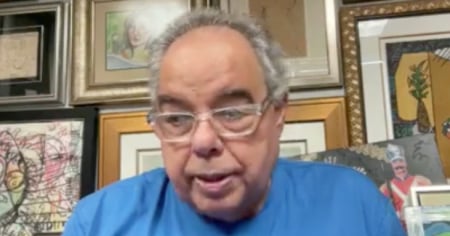
Immigration expert lawyer Willy Allen III advises Cubans with an I-220A to maintain a "low profile" because he is convinced that the Trump Administration knows that by December of this year, 2025, arguments are expected to be presented in favor of classifying this immigration status as a parole. This opens the door for them to take advantage of the Cuban Adjustment Act, as the vast majority have been in the United States for a year and a day.
This situation, in her opinion, is what has led the agents of the Immigration and Customs Enforcement (ICE) to intensify the arrests and deportations of Cubans because once the I-220A is considered parole by the judicial ruling expected in January 2026 or at least in the first quarter of 2026, thousands of Cubans will be able to regularize their immigration status.
In an interview with CiberCuba, Allen III emphasized that at this time, those without legal residency in the United States are at risk and may be detained and deported. In this context, if ICE sees the opportunity to carry out arrests, it will take advantage of it to meet the goal set by the Administration to arrest 3,000 immigrants per day.
"It's something very sad. It's a tragedy that is happening," said the son of the esteemed lawyer Willy Allen, who works at the offices his father has in Florida and Kentucky.
In response to CiberCuba's question about whether it is advisable to report if the person I-220A is the victim of a minor crime, Willy Allen III expressed confidence in the protective laws of the United States, but recommends, as a precaution, to report the incident by phone or through someone who has legal residency in the country.
This way, one can avoid being a victim of an arrest, like that of a Cuban father with an I-220A who went to his son's school in Orlando to report that the child had been a victim of an attempted kidnapping, and when the police arrived, they called ICE and detained him upon verifying that he did not have a 'green card'.
The family contacted CiberCuba to report an extreme case that, in Willy Allen III's opinion, should not have happened.
The lawyer argues that all I-220A will be legalized "sooner or later," but has clarified several times that the process will be slow, just like it was for the Cubans who arrived in the United States in the 1980s, following the Mariel boatlift. In that case, it took almost nine years to regularize their immigration status.
Willy Allen III conducted an in-depth study of the I-220A during his university years, and he asserts that there are solid arguments to consider it a parole, especially since judges are applying Matter of Q.Li and Matter of Yahure Hurtado. Both rulings significantly limit the possibility for a detained I-220A immigrant to wait for trial on bail. In this context, if they consider that Q.Li and Hurtado are valid to deny bail, then they must also be valid to consider that entry with I-220A is a parole.
Filed under: