
Related videos:
Selling pizzas without a license, raising pigs without documentation, or preparing croquettes before heading to the hospital are everyday ways of surviving in a Cuba sustained by the informal economy.
Daily life in Cuba largely depends on the informal economy, and in the face of a state that does not guarantee food, supplies, or basic services, families sustain themselves through practices outside the realm of legality.
Thus denounced Food Monitor Program (FMP), a project monitoring food insecurity in Cuba, through a thread on platform X that depicts the reality of three Cuban citizens.
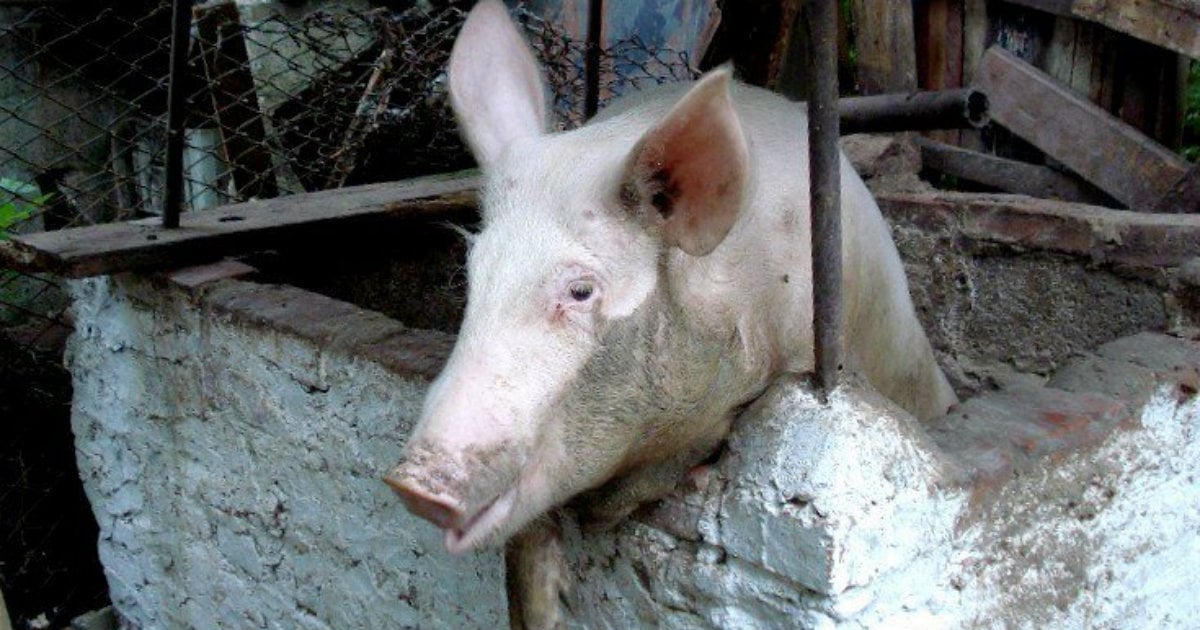
Abdiel is a pig farmer. He has no documentation and operates in secrecy because the state does not provide him with feed or basic materials to raise animals.
To legalize himself—he insists—would expose him to abusive taxes, arbitrary controls, and inspections designed, in his view, “to take away your animals.”
On the other hand, he mentioned that he invests between 8,000 and 12,000 pesos in food and medicine for raising the animals, and receives between 10,000 and 20,000 pesos, depending on the breed of the animal.
"This is not easy: you don't sleep avoiding thefts, you don't rest looking for food, and you're always chasing the animal. But that's how we all eat," he emphasized to FMP.
Renán worked as a pizza maker until he lost his license for buying flour from illegal sources, a common practice among workers in the food industry due to the lack of a wholesale market.
The same goes for cheese and oil, materials that he obtains on the black market, through "contacts" in bakeries.
In that sense, he stated: "If you start asking where everything comes from, you'll starve, because no one will sell to you."
To complete the picture, he wakes up early to bake his pizzas according to the power outage schedule, using charcoal or electricity when available.
Diana is a doctor, but her salary is not enough to support her retired parents, so before going to the hospital, she makes homemade croquettes that she later sells door to door.
Her routine is quite exhausting: she cooks with whatever she has on hand—beef bones, chicken, pork, or fish heads—mixes it with flour from the black market, and seasons it with whatever is available at home.
Additionally, he emphasized that for such a small and local activity, it is not worth obtaining a patent, because "it would be more expense than income."
She forms packages of eight croquettes and sells them for around 400 pesos. To make matters worse, she can't store the merchandise due to power outages that prevent proper refrigeration, which turns her into a "slave" to the routine.
The stories of Abdiel, Renán, and Diana converge at a common point: the informal economy as the only viable means of survival.
According to FMP, they represent three distinct faces of creativity and the autonomy needed to merely survive in a country suffocated by precariousness, bureaucracy, and fear.
Their testimonies reveal how Cubans survive in the informal economy without questioning the origin of the food they buy, sell, or transform, in the absence of the State.
In recent months, life in Cuba has become even more challenging, characterized by scarcity, blackouts, and inflation that drives thousands of people into the informal economy.
Various reports reflect that the population perceives that the current situation is even worse than during the Special Period, with a widespread loss of purchasing power and shortages affecting all sectors.
Recently, the prolonged power outages and the lack of fuel have worsened the crisis.
According to testimonies gathered about the worst summer in years, the unbearable heat, power outages, and repression against neighborhood protests have made daily life a severe challenge for many Cuban families.
Desperation is also reflected in stories that shake us. In Santiago de Cuba, a boy was forced to sell chicken bouillon cubes to help his mother sustain the household, a fact that portrays the extent of the food crisis and the deterioration of the social fabric on the island.
Meanwhile, ordinary citizens are trying to survive with what little they have. A Cuban showed the empty contents of her refrigerator to highlight the precarious situation faced by most households, where meat, dairy products, and even basic condiments are scarce.
Frequently Asked Questions about the Informal Economy in Cuba
How does the informal economy affect daily life in Cuba?
The informal economy is essential for survival in Cuba due to the state's inability to provide basic food and services. Many families rely on unregulated activities to get by, creating a parallel economy that supplements the shortcomings of the official system.
Why do Cubans turn to the informal economy?
In the absence of resources provided by the State, Cubans turn to the informal economy to meet their basic needs. Informality is a response to precariousness and excessive state control, which imposes abusive taxes and restrictions that hinder formal economic activity.
What challenges do those participating in the informal economy in Cuba face?
Those participating in the informal economy face risks of inspections and penalties, in addition to everyday challenges such as power outages and insecurity. The lack of access to legal resources and the need to operate in secrecy complicate their work and personal situations.
What is the impact of child labor on the informal economy in Cuba?
The economic crisis and migration have increased the involvement of children and adolescents in informal work, impacting their development. Child labor has become normalized as part of a survival strategy in an environment of rising poverty and a lack of educational and recreational opportunities.
Filed under: