
Related videos:
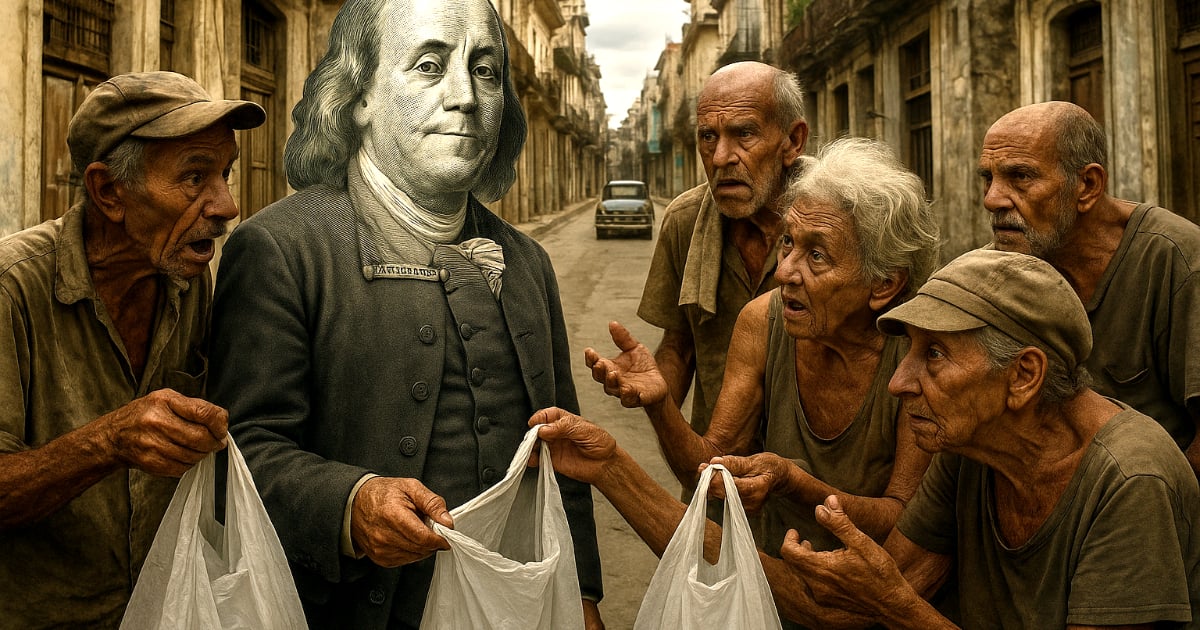
The recent increase in minimum pensions in Cuba, effective since September, has once again been neutralized by the ongoing decline in the value of the Cuban peso in the informal foreign exchange market, where the dollar and the euro have reached new historical highs.
The minimum amount established by the Resolution 14/2025 —4,000 Cuban pesos (CUP)— currently amounts to 8.9 dollars, 7.9 euros, or 19 MLC, according to the informal rates in effect this Wednesday, October 8.
Informal exchange rate in Cuba Wednesday, October 8, 2025 - 05:00
- Exchange rate of the dollar (USD) to Cuban pesos CUP: 450 CUP
- Exchange rate of the euro (EUR) to Cuban pesos CUP: 505 CUP
- Exchange rate from (MLC) to Cuban pesos CUP: 210 CUP
This value represents a significant reduction in the purchasing power of retirees, just one month after receiving the increase.
Although in July, when the measure was announced, the dollar was priced at 385 CUP and the euro at 426 CUP, allowing the 4,000 CUP to be equivalent to more than 10 dollars, today that same pension has lost more than 15% of its real value.
The adjustment would benefit, according to figures from Prime Minister Manuel Marrero Cruz, more than 1.3 million pensioners, which is 79% of the total. Of these, 82% would see their pension doubled, while the rest would receive partial increases until reaching 4,000 pesos.
However, even this effort proves inadequate in the face of the voracity of the informal market and the rampant inflation that the government of Miguel Díaz-Canel has been unable to control despite his many calls to "produce" or his pathetic efforts to cap prices.
According to estimates from the Cuban Citizen Audit Observatory (OCAC), at least 30,000 CUP per month are needed for basic nutrition. This means that the minimum pension barely covers one-seventh of that basket, not accounting for medications, transportation, or services.
The contrast with the actual price of essential goods worsens the situation. A liter of oil can cost over 3,500 CUP; powdered milk and chicken are sold in MLC or dollars; and the markets in pesos, which are understocked, force retirees to turn to the informal sector, where prices fluctuate in line with currency exchanges.
The national currency, lacking backing or stability, has lost nearly 70 CUP against the dollar and almost 80 CUP against the euro since July. This constant depreciation means that with each passing week, the real value of pensions diminishes, rendering the government's efforts to "protect vulnerable sectors" ineffective.
The Vice President Salvador Valdés Mesa openly admitted: “With an average salary of 6,000 CUP, one cannot live.” Even less so with a pension that barely touches 9 dollars a month.
In practice, retirees in Cuba survive thanks to support from family members abroad or the informal economy. Without remittances, old age becomes a trap of chronic poverty.
The informal market continues to set the real economic trend in the country. In just ten days, the dollar gained another 30 CUP and the euro rose by 27.5 CUP, confirming the accelerated loss of purchasing power of the CUP. This behavior undermines any attempt by the regime to stabilize the real income of Cubans.
If this trend continues, retirees will see the value of their pensions further decrease in the coming months. Projections indicate that the dollar will exceed 470 CUP by December, and the euro will surpass 530 CUP, which could leave the minimum pension at just 8.5 dollars or less.
In the midst of this situation, the official discourse of “leaving no one behind” sounds increasingly disconnected from reality. Elderly individuals who dedicated their lives to the revolutionary project now face their old age in abandonment, with symbolic pensions that are insufficient to live on.
The gap is even more shocking when observing how national resources are concentrated in conglomerates controlled by the military elite, while retirees must stand in endless lines to collect a pension that barely amounts to a few dollars, becoming irrefutable evidence of the structural economic failure of the Cuban socialist model.
Filed under: