
Related videos:
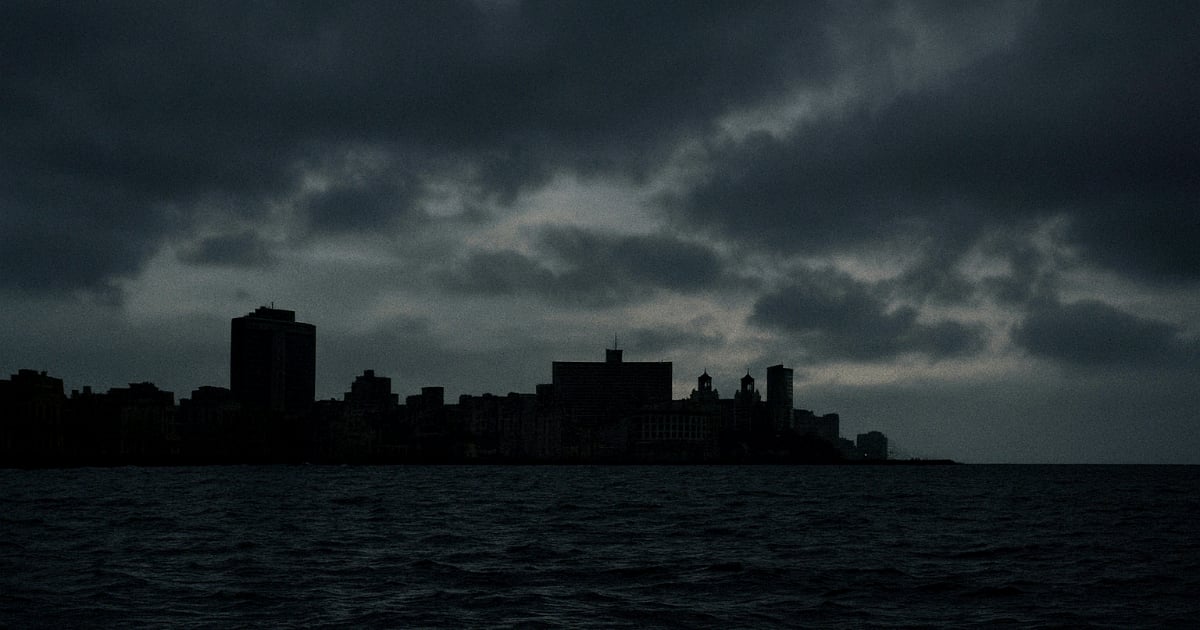
Cuba is once again facing widespread blackouts that affect large parts of the country, a consequence of a persistent deficit in electricity generation that reflects the government's inefficiency in ensuring a stable supply for the population.
The Electric Union (UNE) reported in its update that on Thursday the system was affected for 24 hours, with outages extending into the early hours of today.
The highest recorded impact reached 1,722 megawatts (MW) at 7:50 PM, a figure higher than the planned 1,590 MW, due to the failure of two units from the Mariel and Renté thermoelectric plants to come online on time, highlighting issues of management and planning.
At 6:00 AM this Friday, the system's availability was 1,696 MW against a demand of 2,678 MW, resulting in a deficit of 1,013 MW. Starting at noon, the impact will be slightly lower, at 1,000 MW.
During peak hours, the situation will worsen significantly: despite the expected entry of block 1 of the CTE Ernesto Guevara in Santa Cruz, the availability of 1,746 MW will not be able to meet a demand of 3,350 MW.
This results in a deficit of 1,604 MW, which would ultimately translate to an impact of 1,674 MW.
The energy crisis is exacerbated by malfunctions in three units of the Felton, Mariel, and Renté power plants, while three other blocks from the Santa Cruz and Carlos Manuel de Céspedes power plants in Cienfuegos are out of service for maintenance.
In addition, thermal limitations left 462 MW without generation capacity, and issues with the supply of fuels and lubricants affected an additional 525 MW.
On the other hand, the Electric Company of Havana reported that on Thursday, the service was disrupted for 11 hours and 35 minutes, with a maximum impact of 104 MW at 7:50 PM.
The service was restored at 2:02 AM.
"Although it was planned, it was NOT necessary to affect blocks 6 and 4 as scheduled between 10:00 AM and 2:30 PM. Likewise, blocks 1, 3, and 2 were also not affected between 2:00 AM and 8:00 AM," he detailed on Facebook.
The company reminded that the impacts depend solely on the demands of the SEN.
The lack of foresight and the inability to guarantee basic supplies reflect a chronic pattern of negligence in state administration.
Although the 32 photovoltaic solar parks in the country contributed 2,731 MWh, with a peak of 522 MW during the average hours, this figure is insufficient to cover the system's deficit and highlights Cuba's reliance on outdated and poorly managed technologies.
The inability to coordinate thermal power plants, combined with maintenance and supply issues, turns the electricity crisis into yet another symptom of the government's failure to manage strategic resources and ensure the well-being of the population.
Blackouts not only impact daily life but also strike industrial production and basic services, further weakening an already fragile economy.
Meanwhile, the government seems to prioritize propaganda over addressing structural problems, leaving millions of Cubans without reliable access to electricity and exposing the country's vulnerability to an outdated and poorly managed electrical system.
Frequently Asked Questions about the Energy Crisis in Cuba
Why is Cuba facing massive blackouts?
Cuba faces massive blackouts due to a persistent deficit in electricity generation. This deficit is due to the government's inefficiency in ensuring a stable supply, compounded by breakdowns in thermal power plants, maintenance issues, and outdated electrical infrastructure. Furthermore, the lack of fuel and lubricants has left many distributed generation plants out of service.
What is the extent of the electricity deficit in Cuba?
The electrical deficit in Cuba has reached significant figures, exceeding 1,700 MW on several occasions. During peak hours, the deficit can reach up to 1,810 MW, leading to prolonged and widespread blackouts across the country.
How does the energy crisis affect daily life in Cuba?
Power outages seriously affect daily life in Cuba, impacting industrial production, basic services, and the well-being of the population. The lack of electricity affects homes, hospitals, schools, and economic activity in general. Citizens are facing prolonged outages that disrupt food refrigeration, access to drinking water, and essential services, worsening the quality of life and increasing social discontent.
What role do renewable energies play in Cuba's energy crisis?
Renewable energies in Cuba still have a limited role in the country's energy matrix. Photovoltaic solar parks contribute a small fraction of the total needed and are not enough to offset the deficit in the electrical system. Despite efforts to increase renewable capacity, the dependence on outdated and poorly managed technologies remains a significant obstacle to resolving the energy crisis.
Filed under: