
Related videos:
Amid the serious health and production crisis facing Cuba, dozens of people were mobilized this Saturday in various locations across the country: in the east, for the coffee harvest; in the capital, to tackle the waste crisis.
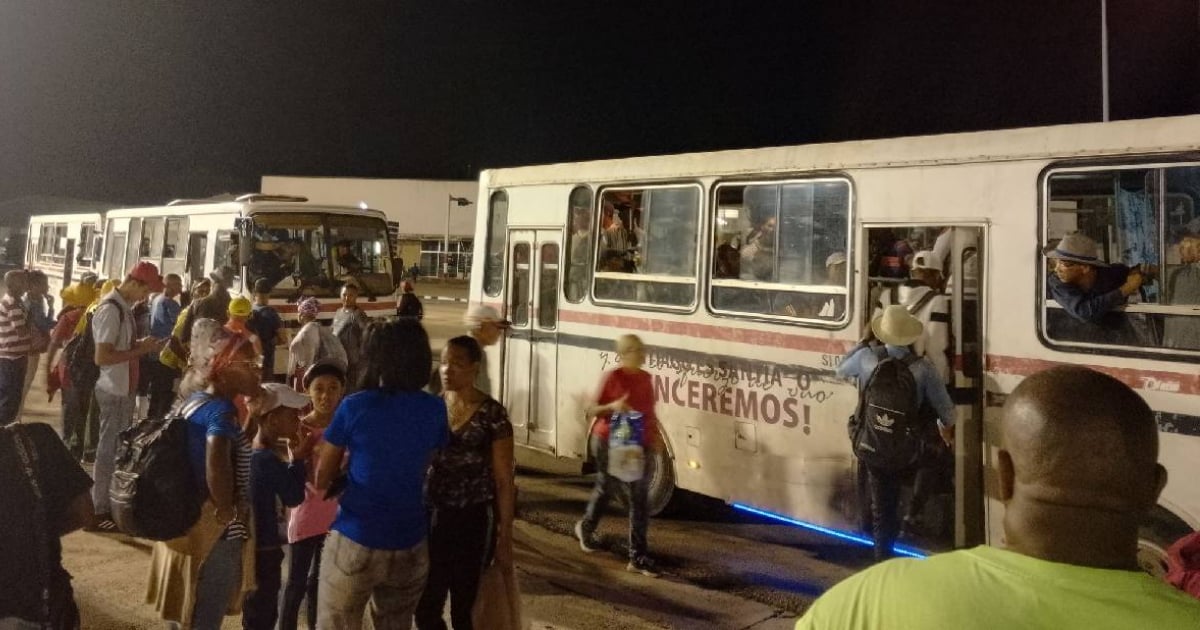
From early in the morning, workers, students, and neighbors from Santiago de Cuba set out on buses and trucks towards the coffee-growing areas of El Ramón de las Yaguas and Segundo Frente, in a massive mobilization aimed at supporting the 2025 coffee harvest.
The vehicles departed from the Plaza de la Revolución Mayor General Antonio Maceo, filled with banners and flags for an event called by the regime.
"Every bean collected matters," expressed one of the organizers as the event began.
Local authorities hope that this action will help offset the delays caused by the recent rains. The harvest has been deemed a strategic priority for the regional economy, they said.
Meanwhile, in Havana, the reactivation of volunteer work has sparked controversy. The leader Miguel Díaz-Canel openly criticized the low citizen participation in several areas during a garbage collection operation carried out the previous weekend.
"On October 10th, nothing happened in Diez de Octubre, Playa, and La Lisa. No one came out in those areas. Where are the delegates? Where are the responsible parties?" Díaz-Canel demanded during a follow-up meeting broadcast on state television.
The operation managed to collect over 35,000 cubic meters of waste, according to official figures, but there are still more than a thousand districts left to clean.
The lack of a sustainable waste collection plan is a concern for both the government and the public, who face health risks due to the accumulation of garbage.
Although promoted as a gesture of "unity and revolutionary commitment," voluntary work has historically been questioned by sectors that view it as a form of political pressure or as an improvised response to the structural inefficiency of public services.
On social media, several Cubans compared the current mobilizations to the hardest years of the Special Period, while others recalled that garbage collection or coffee harvesting should be ensured by organized services, not by last-minute calls to the population.
Filed under: