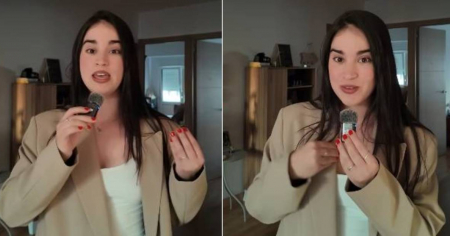
Cuban TikTok user @clauferrales, a trained journalist, shared a video in which she recounts some of the most absurd situations she has experienced as a shop assistant in Spain. With a direct and humorous tone, she highlights the cultural shock and everyday challenges faced by migrants working in customer service.
"I am Cuban, and I live in Spain. In my country, I was a journalist, but as an immigrant, I've had to work in different sectors," she begins by saying in the video. She currently works in customer service and decided to share some of her "most random experiences."
Among the episodes she mentions, she criticizes those who enter the establishment without returning a greeting: "Is everything okay at home? I get cold when I say hello and no one responds." She also refers to customers who, despite having the menu in front of them, ask for details that are clearly written: "Sizes, prices, it's right there, you have it in writing."
Another moment that stands out is when customers react with surprise at the absence of certain products: "'No, we don't have strawberries today.' 'Oh, but you don't have strawberries?' 'I just told you,' he comments sarcastically.
Claudia also dismisses the comments about the store's prices, reminding everyone that she is not the one who sets them: "I'm not going to say anything to the boss, go next door and buy a croissant, I don’t set the prices, I’m just a simple sales clerk."
One of the most striking moments in the video is when she recounts how some customers assume she is Brazilian because she works at a place that sells typical Brazilian products: "Do I need to be Brazilian to be able to work there? [...] I've even seen the reaction on customers' faces that, oh well...".
Claudia has been living in Girona since September 2022, as she has shared on her YouTube channel, where she posts videos about her daily life, advice for migrants, and reflections on her adaptation process.
Her testimony adds to a growing wave of content on social media where Cubans who have emigrated to Spain share their work experiences, integration challenges, and lessons learned. One of them is creator @wendhyta_ph, who debunked several myths about life in Spain, from access to medications to stereotypes about personal hygiene.
Also, the story of @ajstyle0105, a Cuban doctor who had to work as a waitress at public parties while awaiting the validation of her degree reflects the sacrifices many professionals face upon arriving in the country.
From a more critical perspective, the user @elixir_karen1994 has warned about the economic and tax obstacles of living in Spain, questioning the system as unfavorable for migrants.
In contrast, the tiktoker @marylu7879 shared a message of adaptation and gratitude, arguing that opportunities are available for those who manage to adapt and move forward.
On her part, @beautyjahely sparked debate by expressing her surprise at the number of festivals and celebrations in Spain, which led to divided reactions among those who supported her and those who viewed her opinions as misinformed.
These shared experiences on platforms like TikTok and YouTube have served as a bridge among migrants, as well as a space to channel frustrations, learn from others, and document the process of adapting away from home.
Frequently Asked Questions about the Experience of Cuban Migrants in Spain
What are some of the cultural shocks that Cubans face in Spain?
Cuban immigrants in Spain face various cultural shocks, such as the speed at which Spaniards speak, the bureaucracy involved in administrative processes, and the need to adjust their communication style from speaking loudly to a softer tone. These shocks reflect the significant differences in daily life between the two countries.
What challenges do Cuban professionals face when emigrating to Spain?
Many Cuban professionals who emigrate to Spain must face the challenge of validating their degrees and often have to accept jobs in sectors very different from their areas of expertise. This is due to the degree and certification requirements that exist in Spain, which complicates immediate access to qualified positions.
How does the migration process affect the cultural identity of Cubans in Spain?
The migratory process can be a challenge for the cultural identity of Cubans in Spain, as they face the dilemma of adapting to a new culture while maintaining their roots. Many rely on their traditions and Cuban culture to cope with the challenges of emigration. The migratory experience strengthens their Cuban identity, even as they adapt to a new environment.
Why do some Cubans prefer to live in Spain despite the economic difficulties?
Although economic difficulties are a reality, many Cubans prefer to live in Spain due to the possibility of accessing basic services, the respect for rights, and opportunities for personal growth. Compared to the situation in Cuba, living in Spain offers better well-being and quality of life.
Filed under: