
Related videos:
The Cuban musician Yotuel Romero compared the exile of the opposition leader José Daniel Ferrer on social media to that experienced by the Cuban apostle José Martí in the 19th century, stating that "history repeats itself."
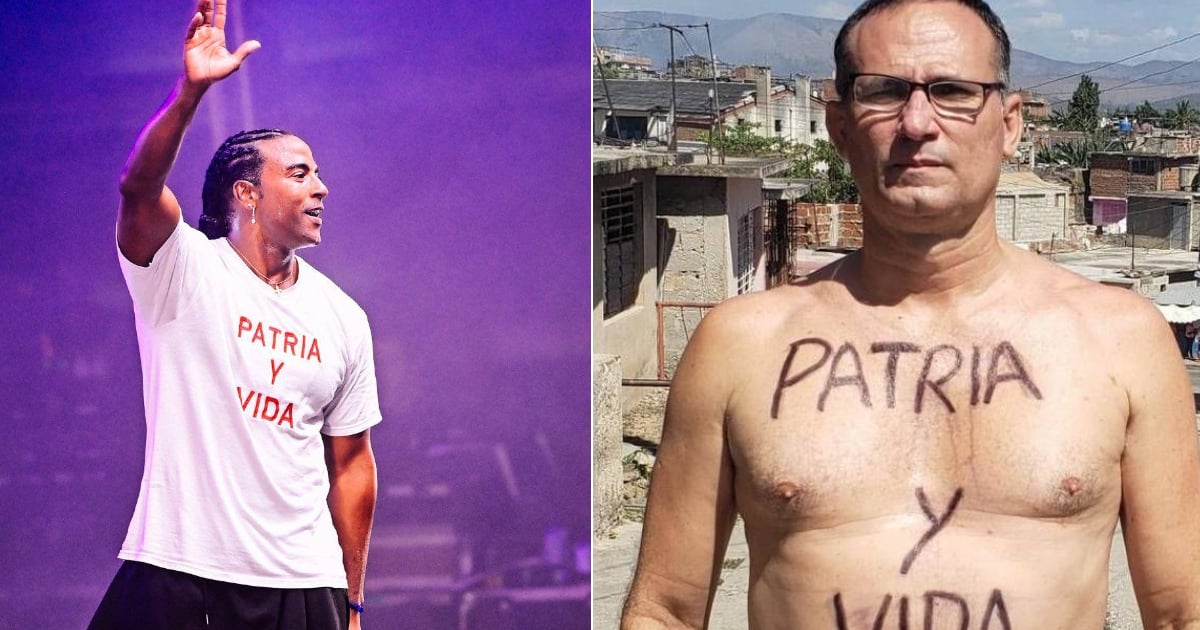
“José Martí was exiled in 1871 for dreaming of a free Cuba. From his exile, in a land of freedom, he organized for independence. Without an army, but with words, he managed to unite Cubans from New York and returned. Today, history repeats itself,” wrote the artist in a , accompanied by a photograph of Ferrer with his torso bare and the words “Patria y Vida” written on his chest.
Yotuel stated that Ferrer "is exiled, but not defeated," and emphasized that now, "in a land of freedom, where he can reunite with other patriots like Marco Rubio," he will continue to defend the cause of Cuba. "Because when a Cuban steps on free soil, he does not go into exile; he prepares to liberate," he concluded.
The leader of the Patriotic Union of Cuba (UNPACU) arrived in Miami on Monday accompanied by his wife, Nelva Ismarays Ortega Tamayo, and three of their children, after being transported directly from Mar Verde prison to Santiago de Cuba airport, amid a strong security operation, according to the Cuban Observatory of Human Rights (OCDH).
Cuban boxer Yordenis Ugás described the arrival of the opposition figure as “a special day,” and wrote on Facebook: “We welcome José Daniel Ferrer and his family to the land of freedom. Thank God for his strength, and he has arrived with health and emotion. But he leaves Cuba with his dignity intact and his head held high. One of the bravest men in Cuba.” Ugás also called for respect for Ferrer: “I hope every Cuban in our community shows him respect and treats him as a hero, our hero.”
The singer La Diosa also welcomed him with a direct message: “A hero, a hero who truly deserves respect, who has done so much for Cubans, who has spent many years of his life in dungeons, and nobody can take that away from him.” “He will fall, Ferrer, he will fall, it will happen in due time,” she asserted in a video posted on her social media.
The musician Willy Chirino described him as “one of the true heroes in the fight for Cuba's freedom.” “I can't wait to see you in person, give you a hug, and thank you for everything you have done and still have to do for our people,” he expressed.
From the Cuban American National Foundation (FNCA), activist Rosa María Payá described him as "a hero for all Cubans" and stated that "this exile will be short."
The U.S. Secretary of State, Marco Rubio, welcomed his arrival with an official message in which he stated that Ferrer is "free from the oppression of the regime" and demanded the release of over 700 political prisoners who remain incarcerated in Cuba.
In his first message from exile, published on his Facebook profile, Ferrer wrote: “The struggle continues with renewed strength. We must unite and make our fight for freedom very effective. We must topple the infamous and criminal tyranny; we must save Cuba.” He also expressed his gratitude to those who facilitated his departure, including President Donald Trump, Secretary of State Marco Rubio, the State Department, the U.S. Embassy in Cuba, Congress members, and Cuban-American activists.
During a press conference held at the FNCA headquarters following his arrival in Miami, Ferrer reaffirmed his intention to return to Cuba: “My intention is not to wait 17 years like Martí, Maceo, or Crombet; it is to return as soon as possible to put an end to the tyranny.”
Expressions of support have also come from political figures such as Congresswoman María Elvira Salazar, Congressman Carlos A. Giménez, and artist Yunior García Aguilera, who condemned the exile and emphasized the symbolism of his arrival as an act of resistance against the Cuban regime.
The opposition figure was awarded the Truman-Reagan Medal of Freedom, granted by exile organizations in recognition of his efforts in the fight against communism on the island.
Frequently Asked Questions about the Exile of José Daniel Ferrer and the Political Situation in Cuba
Why was José Daniel Ferrer exiled from Cuba?
José Daniel Ferrer was exiled from Cuba as a result of years of torture and pressure from the Cuban regime. His exile occurred after a long process of negotiations and under a heavy security operation. The regime sought to silence his voice within Cuba and prevent him from continuing his political activism. Ferrer accepted forced exile as a measure to protect his family, although he stated that his departure does not signify surrender.
What has José Daniel Ferrer said about his exile in the United States?
Since his arrival in the United States, José Daniel Ferrer has expressed his gratitude toward those who facilitated his departure from Cuba and reaffirmed his commitment to the fight for the freedom of the Cuban people. In his first message from exile, Ferrer stated that "the struggle continues with renewed strength" and emphasized the need to join efforts to end the tyranny in Cuba. He also expressed his intention to return to the island as soon as possible to continue his activism.
How have figures from the Cuban exile reacted to Ferrer's banishment?
The exile of José Daniel Ferrer has sparked a wave of solidarity and support from figures within the Cuban exile community, U.S. politicians, and human rights organizations. Many individuals have labeled him a hero, emphasizing his courage and resilience in the face of the Cuban regime. Figures such as Marco Rubio, Willy Chirino, and Rosa María Payá have expressed their support and highlighted the importance of his struggle for the cause of freedom in Cuba.
What comparison did Yotuel Romero make between Ferrer and José Martí?
The Cuban musician Yotuel Romero compared José Daniel Ferrer's exile to that of José Martí, the Cuban Apostle, who was also exiled in his time for his dream of a free Cuba. Yotuel stated that "history repeats itself" and emphasized that, like Martí, Ferrer can continue to advocate for the Cuban cause from exile, in a land of freedom.
Filed under: