
Related videos:
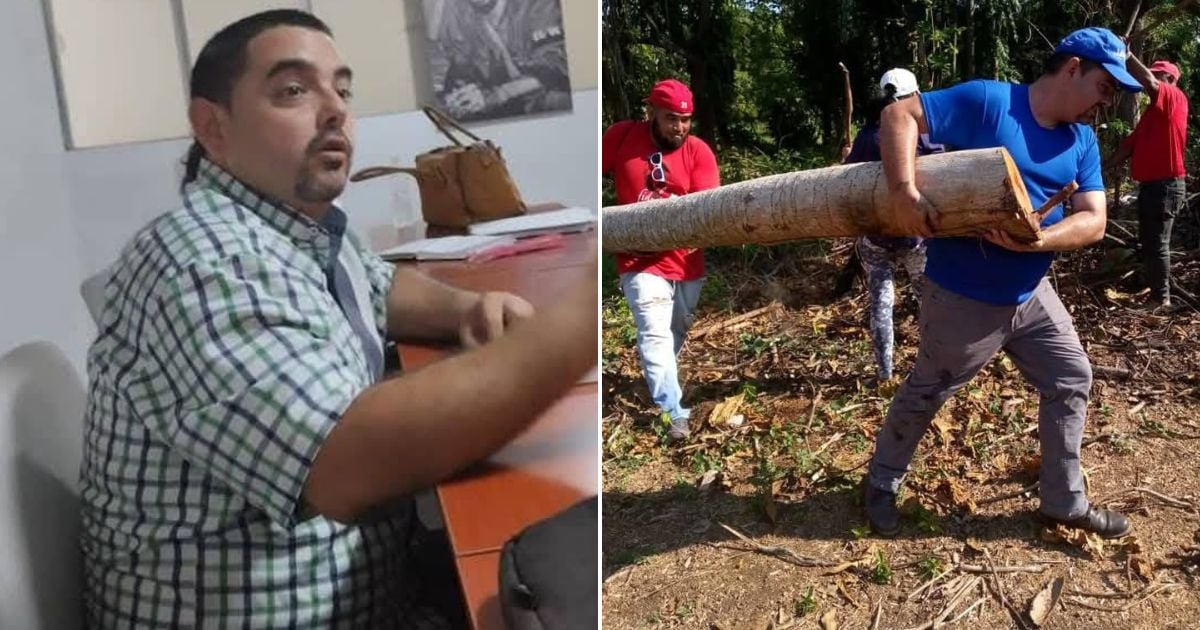
The Municipal Assembly of People's Power of La Lisa, in Havana, denied this Sunday that its president, Yoamel Acosta Morales, had been arrested for corruption, following the digital outlet La Tijera's publication stating that the official was under investigation for an alleged embezzlement of electric motorcycles.
According to the publication by La Tijera on its Facebook page, Acosta Morales —who is also a deputy to the National Assembly of the Popular Power and a member of the Communist Party of Cuba (PCC)— has reportedly been detained by the authorities following the discovery of 20 missing electric motorcycles intended for local entities.
The note also indicated that the official had already been linked to previous irregularities in the management of state resources, although it did not provide official documentation to support those allegations.
Hours later, the Municipal Assembly of La Lisa issued a statement on Facebook titled “Official Denial of False Allegations Regarding the President of the Municipal Assembly,” in which it described the information as “lacking in truthfulness” and assured that Acosta Morales “continues to carry out his duties with total commitment and transparency.”
"There is no evidence to support the accusations made by that outlet," the text states, which also encouraged citizens to gather information "through official channels" and not to be swayed by "disinformation campaigns."
The statement added that the official is currently leading cleanup efforts, reorganizing community services, and addressing vulnerable neighborhoods as part of the comprehensive improvement plan for the municipality.
So far, no independent evidence has been published to conclusively confirm or refute the accounts provided by both parties.
No statement has been issued by the provincial government of Havana or the Communist Party regarding the case.
The situation has sparked debate on social media, where citizens and users from both sides have expressed divided opinions.
Some call for greater institutional transparency in response to any allegations of irregularities, while others emphasize the need to verify information before sharing it on digital platforms.
In a context where access to official data is limited and both state and alternative media present differing versions of events, the independent confirmation of corruption allegations in Cuba remains a challenge, leaving citizens caught between distrust and a lack of verifiable information.
While the government of La Lisa denies the allegations against Yoamel Acosta Morales, other leaders of the Communist Party have begun to publicly acknowledge that the cases of corruption are not isolated.
From Las Tunas, an official admitted that "everything will be known," in what seems to be an attempt to contain the growing unrest over recent scandals.
One of the most visible processes has been that of a high-ranking government official sentenced to 15 years in prison for economic crimes.
The ruling, reported by the official press, detailed systematic practices of resource diversion and document forgery, while avoiding mention of complicity networks within the structures of power.
Meanwhile, in the province of Mayabeque, there was a million-dollar fraud in the coal trade, which involved a self-employed worker and revealed deep cracks in institutional control over exports.
The operation, according to the investigation, lasted for months with the complicity of state entities.
Additionally, in Sancti Spíritus, five officials were administratively sanctioned for negligence and irregularities related to the management of public resources.
Although the case did not go to court, it highlighted a pattern of impunity where the consequences rarely result in criminal accountability.
Frequently Asked Questions about Corruption and Motorcycle Theft in Cuba
Is Yoamel Acosta Morales involved in a corruption case in Havana?
The Municipal Assembly of La Lisa has denied the accusations that Yoamel Acosta Morales is involved in a corruption case related to the embezzlement of electric motorcycles. The information was described as "lacking veracity," and it was stated that the official continues to perform his duties with commitment and transparency.
How does the situation of electric motorcycle thefts affect citizens in Cuba?
The theft of electric motorcycles has become one of the most common and concerning crimes in Cuba, significantly affecting citizens who rely on these vehicles for their daily mobility. The lack of police effectiveness and the low recovery rate of stolen vehicles have led the public to resort to public complaints and rewards in an attempt to recover their belongings.
What is the level of transparency in the handling of corruption complaints in Cuba?
Access to official data in Cuba is limited, and state-run and alternative media often present different accounts of events. This complicates the independent verification of corruption allegations, leading to distrust and a lack of verifiable information among the citizenry.
What measures are being taken to combat the rise of motorcycle thefts in Cuba?
Despite the complaints and the rise in thefts, no effective or decisive measures are being observed from the authorities to combat this type of crime. Public complaints and rewards are the most commonly used mechanisms by citizens to try to recover their vehicles.
Filed under: