While the Cuban regime continues to maintain silence regarding the fate of former Economy Minister Alejandro Gil Fernández, who has been accused of corruption for over a year, this Wednesday it once again used state television to showcase its "anticorruption crusade," this time including names, crimes, and sentences.
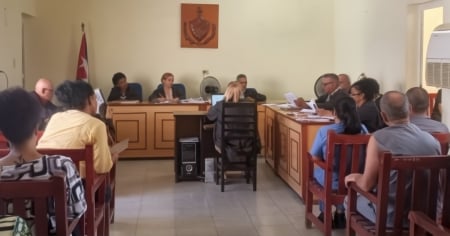
In a new broadcast of the program Hacemos Cuba, the official presenter Humberto López revealed that the former provincial director of Finance and Prices in Pinar del Río was sentenced to 15 years of imprisonment for a corruption scheme that involved embezzlement of state funds, document forgery, and influence peddling.
The case, regarded as one of the most serious publicly addressed so far, revealed how a high-ranking state official embezzled public funds, favored friendly private companies with million-dollar payments for services that were never provided, and intentionally violated the Budget Law.
"What they are doing is playing with money that is not theirs," López stated at the end of the program. "They have the trust of the people, appointed to manage something that does not belong to them," he added.
According to the explanation provided by the Deputy Comptroller General of the Republic, Reynold Pérez Fonticoba, the convicted official ordered irregular transfers of more than 2 million pesos to a small and medium-sized enterprise allegedly responsible for providing laundry services and furniture repairs for the provincial nursing home. The service was never performed.
The instruction was to use the budget coverage of the nursing home to move the money and benefit private partners personally connected to the official.
“She benefited from that transaction,” stated the deputy comptroller. In one of the operations, she acquired 40,000 pesos in cash, while an involved deputy director received another 30,000.
It was also revealed that the accused allowed unauthorized remote access to her work computer, from which irregular budgetary transactions were conducted.
The Deputy Attorney General Reinaldo Cruz Rivera explained that five criminal offenses have been classified, including:
- Misappropriation of public funds
- Forgery of banking and commercial documents
- Violation of computer security
- Traffic of influences
- Disclosure of classified information
The prosecutor requested 15 years in prison for the director, and the sentence was accepted by the provincial court. The deputy director of Prices was sentenced to 10 years of imprisonment, and a self-employed worker involved in the forgery of invoices received a sentence of 8 years. The sentences are currently under review by the Supreme Court.
Exemplary punishment... but only for some
In a passionate speech, the program stressed that "there are no godfathers or exceptions" in the fight against corruption. However, the Cuban audience, both on the island and abroad, does not forget the case that was not mentioned, that of former minister Alejandro Gil.
As previously reported, Gil was removed from his position in February 2024, and months later, the regime acknowledged that he was facing an investigation for “serious charges”. Since then, his whereabouts, any sanctions, or even whether he was tried have not been revealed.
The broadcast of Hacemos Cuba ended with a powerful statement: "The people observe, the people judge, the people command." However, for many Cubans, justice remains selective.
While farmers, workers, and now also provincial officials fall under the weight of the law, the silence regarding the big names continues to deafeningly overshadow any attempt by the regime to present itself as a guarantor of legality.
In a country where blackouts, food shortages, and the collapse of public services are an everyday reality, corruption is not just a crime, it is a betrayal of the people.
And that betrayal, until now, is only punished when it is convenient to expose it.
Filed under: