
Related videos:
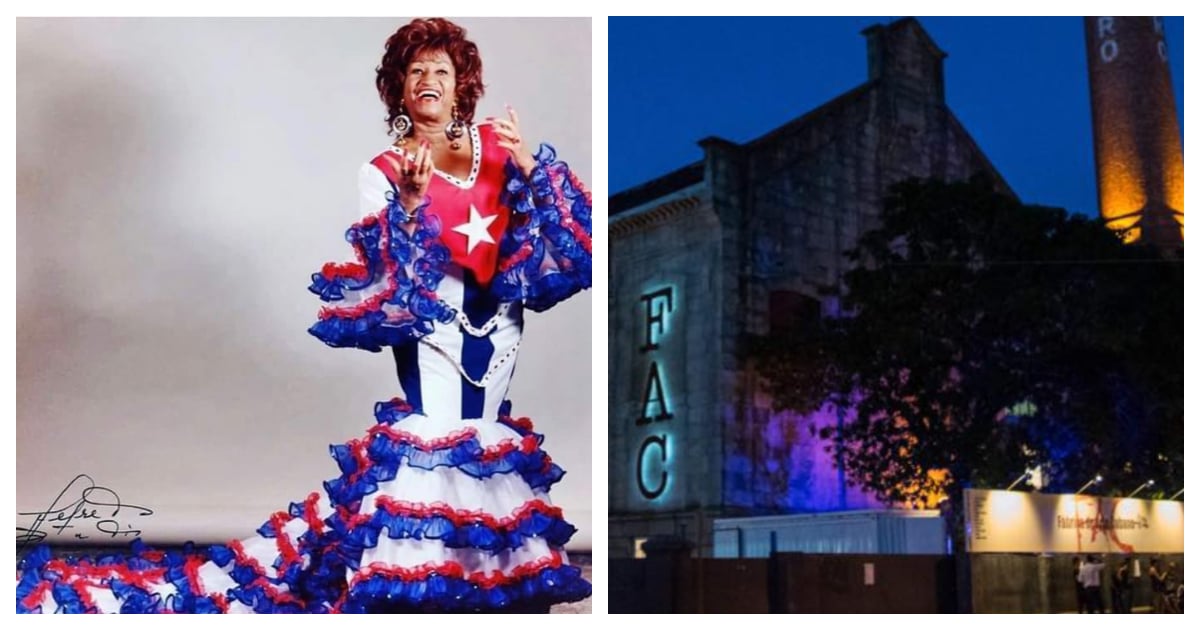
The tribute that the group Teatro El Público, directed by Carlos Díaz, was preparing together with the Fábrica de Arte Cubano (FAC) to commemorate the centenary of the birth of Celia Cruz (1925-2003) was suspended at the last minute by the decision of the National Center for Popular Music.
In a brief note posted on their Facebook account, the organization announced that "the performance by the theater group El Público, scheduled for this Sunday the 19th, will not take place," without providing reasons or mentioning the name of the honored artist.
The cancellation, announced just hours before the event, surprised both the organizers and participants, who had rehearsed for days to pay tribute to the Queen of Salsa.
According to researcher and critic Rosa Marquetti in a text shared on Facebook, some of those involved received personal summonses, unappealable orders, and warnings of potential consequences if they disobeyed the instruction.
Marquetti described the suspension as "a new chapter in the history of cultural censorship in Cuba" and denounced the use of "political commissariat methods" to silence an artistic celebration.
“They have spent 60 years fearing that voice, terrified by its power to rally people,” he wrote.
For the author, "they have been attacking her, overwhelming her, imposing upon her the misogyny and plantation racism that have characterized many of the decisions and policies in the cultural sphere for 60 years, while she stood in the world as the greatest representation of the Cuban identity, the most internationally recognized, the most beloved, the most applauded, the most honored."
She remembered that Celia Cruz "was more patriotic, more Cuban, and more significant than all her censors," while also questioning the possible merits, works, and contributions to Cuban culture of officials and cultural commissioners such as Abel Prieto, Alpidio Alonso, Fernando Rojas, Fernando León Jacomino, Indira Fajardo, Víctor Rodríguez “Vitico".
The reactions on social media came quickly. The director of the International Poor Film Festival of Gibara, Sergio Benvenuto Solás, expressed his dismay that they didn't even dare to mention the Queen of Salsa: “Couldn’t they at least include her name? Shameful,” he said.
The critic Sergio Rafael Vidal compared the measure to the totalitarian methods of the 20th century: “Stalin and Goebbels, wherever they are, must be proud to have such outstanding students,” he stated.
Hundreds of users expressed their outrage and sadness. "How long will the censorship and lack of respect for the greatest and most universal artist Cuba has produced continue?" wrote Dianna Rosa.
For Pedrop Laureiro, "the more they censor Celia Cruz, the more she will be remembered."
Others, like Ruandi Góngora, denounced the absurdity of preventing a tribute led by “artists of the highest professional level, all Cuban,” and exclaimed: “Censorship? Seriously? What a shame, what sadness! Celia lives and will live on!”
Iván García deemed the suspension "a display of institutional stupidity": "Censoring Celia Cruz in the midst of the century of new technologies makes no sense. Who gave the order? The Ministry of Culture or State Security?" he asked.
The call for transparency was echoed in dozens of messages demanding that the Ministry of Culture explain the reasons behind the cancellation. “The Social Communication Law requires providing all the information,” recalled the user Anyi Romera.
For many, the censorship of the tribute confirms the ongoing fear of the authorities towards a figure who, more than two decades after his death, remains a symbol of Cuban identity and freedom.
As Rosa Marquetti wrote, “Celia does not need the permission of any government to be who she is: it is us, the people, who need her to rebuild a country that seems to be sinking without remedy.”
This new act of censorship by Cuban institutions occurs just hours before October 20th, Cuban Culture Day.
Hundreds of people gathered on August 9 at the Summer Stage in Central Park, New York, to celebrate the centenary of Celia with a concert that made it clear that the voice and presence of the "queen of salsa" remain alive, even though her legacy is officially ignored in Cuba.
The legacy of the iconic Cuban artist, a member of the legendary orchestra La Sonora Matancera, shone in April during the third edition of Billboard Mujeres Latinas en la Música. The unforgettable Queen of Salsa was posthumously awarded the Legend Award in a heartfelt tribute to her extraordinary career and her centennial birthday.
Frequently Asked Questions about the Censorship of the Tribute to Celia Cruz in Cuba
Why was the tribute to Celia Cruz in Havana canceled?
The tribute to Celia Cruz was canceled by decision of the National Center for Popular Music, which did not provide any explanations regarding the reasons for the suspension. Some individuals involved received warnings of potential consequences if they defied the instruction, reflecting an act of censorship by the Cuban government towards a culturally influential figure.
How has the artistic community reacted to the censorship of the tribute to Celia Cruz?
The artistic community and the general public have expressed their outrage and sorrow over the censorship of the tribute to Celia Cruz. Critics and artists have compared this measure to the totalitarian methods of the 20th century, and have denounced the lack of respect towards one of the greatest and most universal figures in Cuban music.
What does Celia Cruz symbolize for Cuba and why does the government fear her legacy?
Celia Cruz symbolizes Cuban identity and freedom, and her legacy endures as a symbol of resistance and joy. The Cuban government fears her ability to rally people and her cultural impact, which is why it has excluded her name from official tributes, despite her international relevance and influence on Latin music.
Filed under: