
Related videos:
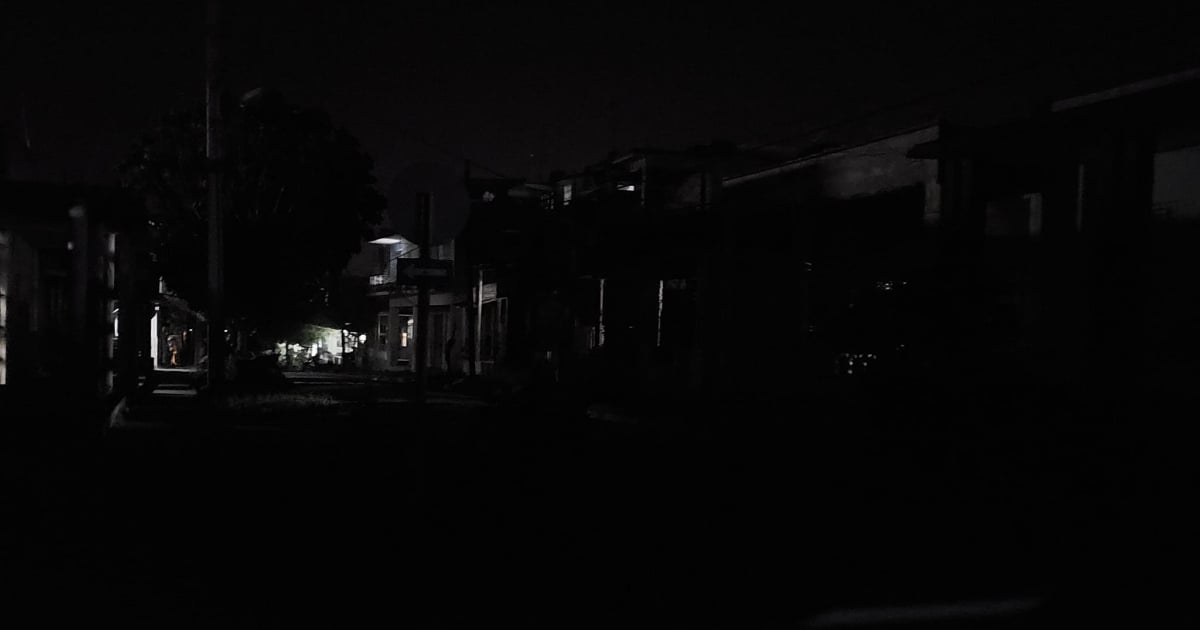
The electricity generation deficit in Cuba remains this Saturday below 1,400 megawatts (MW), according to the latest official report from the Electric Union (UNE).
The entity reported disruptions on Friday and early today, with a peak of 1,350 MW at 7:10 PM on Friday.
At six in the morning, the availability of the national electric system (SEN) was 1,858 MW, compared to a demand of 2,248 MW, resulting in a deficit of 390 MW.
For the nighttime schedule, UNE anticipates a maximum demand of 3,250 MW and an estimated availability of 1,938 MW, which would result in an impact of about 1,372 MW if conditions do not change.
The main incidents reported include malfunctions at the thermal power plants of Felton (unit two), Santa Cruz del Norte (unit three), Mariel (unit eight), and Renté (unit three).
On the other hand, unit two in Santa Cruz del Norte and unit four in Cienfuegos are undergoing maintenance.
Additionally, 399 MW remain out of service due to technical limitations, while 571 MW are affected by a lack of fuel and lubricants, which have rendered 52 distributed generation plants non-operational.
Despite the official announcements about new investments, the energy crisis remains chronic.
The 32 photovoltaic solar parks in operation contributed 3,195 MWh with a peak of 540 MW on Friday, a figure inadequate to offset the ongoing blackouts that continue to impact the entire country.
In the case of Havana, the Provincial Electric Company reported through its profile on Facebook that yesterday the electricity service was disrupted for 9 hours.
The maximum impact was 52 MW at 6:00 PM. Service was restored at 7:00 PM. Although it was planned, it was NOT necessary to affect blocks one and three between 7:00 PM and 11:00 PM, nor blocks two and five between 11:00 PM and 2:00 AM, as well as blocks one, four, and six between 2:00 AM and 8:00 AM, it was reported.
The day before, the UNE reported that, despite the ongoing issues with the SEN, Havana did not experience blackouts on Thursday, in contrast to other provinces in the country that continue to be affected by the generation deficit.
However, the prolonged power outages coupled with the scarcity of food and drinking water, triggered protests on Thursday night in Baire, in the municipality of Contramaestre, Santiago.
Frequently Asked Questions about the Energy Crisis in Cuba
What is the main cause of blackouts in Cuba?
The deficit in electricity generation is the main cause of blackouts in Cuba. This deficit is due to failures in thermal power plants, prolonged maintenance of units, technical limitations, and a chronic lack of fuel. The lack of investment in infrastructure and the obsolescence of the plants also contribute to this critical situation.
How do blackouts affect daily life in Cuba?
Power outages severely impact daily life in Cuba, interrupting essential activities such as food refrigeration, the operation of hospitals and schools, and overall productivity. They also create social unrest, with protests in various regions of the country due to the lack of electricity, water, and food.
What measures is the Cuban government taking to address the energy crisis?
The Cuban government has announced investments in new infrastructures, such as photovoltaic solar parks, and plans to increase the use of renewable energies. However, these measures have not been sufficient to address the structural deficit of the National Electric System. The lack of concrete results and the persistence of the crisis reflect the inefficiency of the state management model.
What is the impact of solar parks on electricity generation in Cuba?
The photovoltaic solar parks in Cuba provide a limited amount of energy, with a maximum generation peak that does not compensate for the structural deficit of the National Electric System. Despite their contribution, solar energy remains insufficient to meet the high energy demand of the country.
Filed under: