
Related videos:
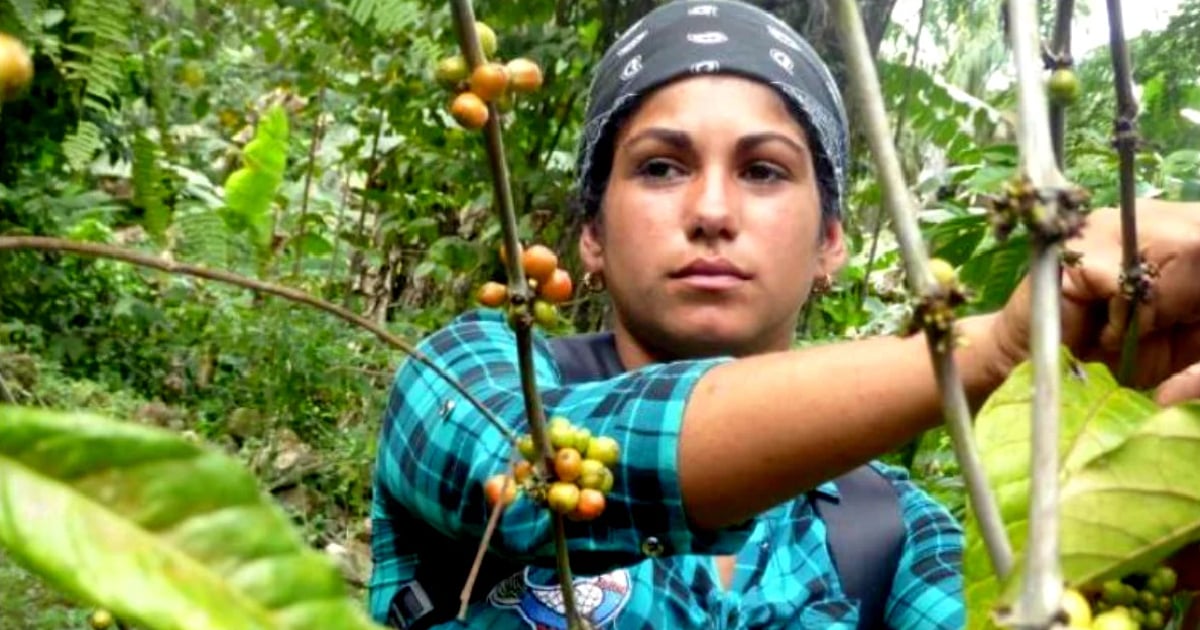
Coffee production in Santiago de Cuba is facing a deep crisis: the lack of workers in the mountainous areas and the heavy rains in recent weeks have complicated the harvesting of the bean, one of the emblematic crops of the eastern part of the country.
According to the newspaper Granma, the current harvest plan exceeds one million one hundred thousand cans of coffee between the arabica and robusta varieties, but so far only 43% of the target has been achieved.
Frank Ernesto Pérez Caballero, head of the coffee section of the Ministry of Agriculture in the province, acknowledged that the process is taking place “in a context characterized by the massive exodus from the mountainous areas, which has affected the availability of the workforce.”
Although the official stated that the basic resources for collection “are guaranteed,” the reality on the ground tells a different story: the beans are ripening without anyone to collect them.
Local television TV Santiago reported that the rains associated with Tropical Storm Imelda have put the agricultural sector on alert.
Excess humidity has accelerated the ripening of the coffee and threatens to spoil a significant portion of the harvest.
The Agriculture delegate in the province, Eliover Zapata Hidalgo, stated that about 80,000 cans of coffee are already ready for collection, mostly concentrated in the municipality of Segundo Frente, although others like Tercer Frente, San Luis, Guamá, and Songo-La Maya are facing similar difficulties.
To try to save what remains, local authorities have organized popular mobilizations and emergency brigades composed of experienced farmers and workers from other sectors.
However, the continuous rainfall and the lack of skilled labor keep production in suspense, a situation that worsens with the approach of the current tropical storm Melissa, which keeps the eastern region on edge.
In addition to coffee, essential crops like cassava are also at risk of being lost due to flooding in low-lying areas.
The news portal Diario de Cuba reported that official figures confirm the collapse of coffee production in Santiago de Cuba.
Although the regime speaks of "integrated strategies," the reality shows a neglected field, miserable wages, and exhausted farmers.
“The fields and coffee plantations are devastated. There is no workforce. And a tremendous issue is that producers are not being paid. What person can remain in those fields with such low salaries and such precarious conditions?” questioned independent journalist Miriam Leiva, quoted by Diario de Cuba, during a panel of the program Los puntos a las íes.
The Demographic Studies Center at the University of Havana also warned that nearly 30% of the youth who emigrated from rural areas in 2024 are between the ages of 15 and 34, exacerbating the shortage of rural labor.
That youth exodus threatens the agricultural sustainability of the eastern region, historically recognized as the coffee heartland of the country.
Amidst rainfall, state neglect, and migration, Santiago de Cuba faces another harvest marked by discouragement.
The coffee plantations are filled with ripe beans that no one collects, and the question is repeated with resignation in every mountain: who picks the coffee?
Filed under: