
Related videos:
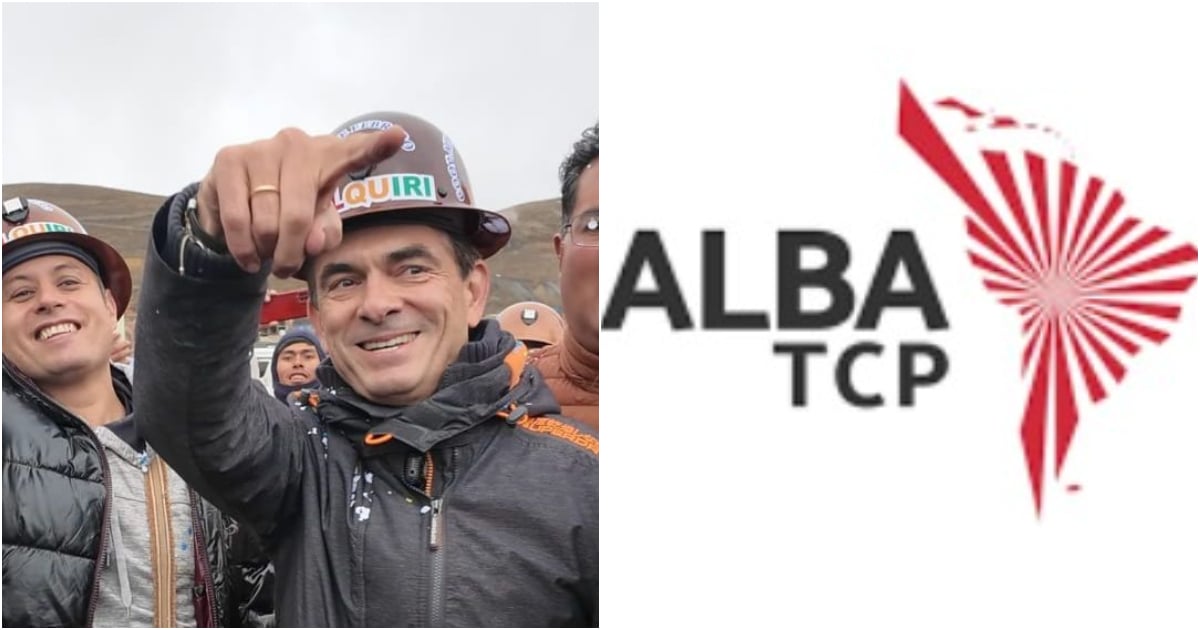
The Bolivarian Alliance for the Peoples of Our America (ALBA) announced this Friday the suspension of the government that will take office in Bolivia, which it labeled as “ultra-right” and accused of exhibiting “anti-Bolivarian, anti-Latin American, pro-imperialist, and colonialist” behavior.
In a statement released through the X account of the Venezuelan Embassy in Cuba, the bloc -comprising Cuba, Venezuela, and Nicaragua, among others- clarified that the measure will not affect the "permanent and supportive" ties with the Bolivian people, but will remain in effect "while the political conditions" in the Andean country are assessed.
The text accuses the new Bolivian government of making "unacceptable" statements against the regimes of Cuba, Venezuela, and Nicaragua, and emphasizes the "historical achievements" of socialist cooperation in health, education, and economic development during the years when Bolivia was an active member of ALBA.
The suspension comes after the electoral defeat of the socialist government and two decades of hegemony by the Movement for Socialism (MAS), marking a political break in the relationship between La Paz and the block promoted by Hugo Chávez (1954-2013) and Fidel Castro (1926-2016).
The elected president of Bolivia, Rodrigo Paz Pereira, from the Christian Democratic Party (PDC), confirmed that his government will not extend invitations to the leaders of Cuba, Venezuela, and Nicaragua for the inauguration ceremony scheduled for November 8.
"Our relationship is based on democracy," said Paz. "None of those three (Cuba, Venezuela, and Nicaragua) are democratic. Clearly, they are not, and I wouldn’t want my country to be any of those three," he stated, referring to the governments of Miguel Díaz-Canel, Nicolás Maduro, and Daniel Ortega, in an exclusive interview with CNN.
The decision marks a radical shift in Bolivia's foreign policy after two decades of close ties with regimes associated with 21st-century socialism.
For its part, the administration of President Donald Trump officially congratulated Paz and promised to collaborate with his government on the country's economic recovery, institutional strengthening, and trade openness.
With 54.6% of the votes, Paz defeated former president Jorge “Tuto” Quiroga and promised a government focused on macroeconomic stability and the reintegration of Bolivia into international markets.
Filed under: