
Related videos:
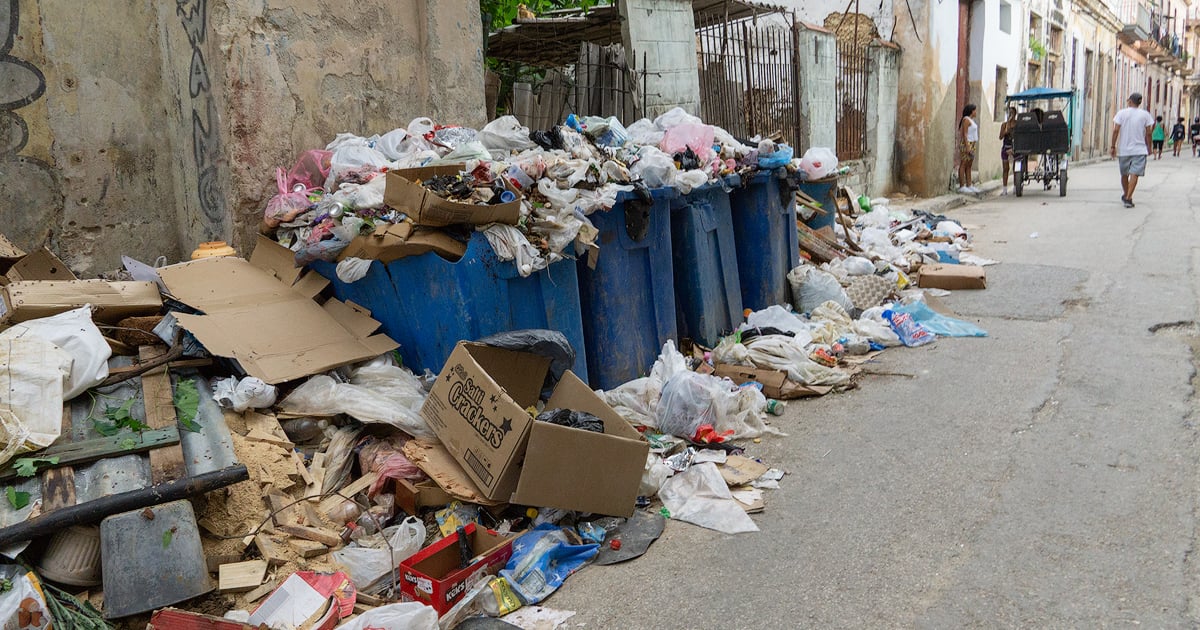
More than twenty days have passed since the start of the so-called intensive cleaning campaign in Havana, and the authorities reported that 396,157 cubic meters of garbage have been collected. The figure is significant, but it does not mask the evident collapse of urban sanitation in the Cuban capital.
During a meeting led by Miguel Díaz-Canel, along with other leaders of the Communist Party, it was acknowledged that “much remains to be done,” an admission that reflects the failure of waste management policies and the precariousness of basic services in the city.
According to Governor Yanet Hernández Pérez, in the last week, 128,370 cubic meters of waste were collected, using an average of 284 vehicles, of which 180 were "support" vehicles.
However, even official figures confirm that trash continues to accumulate in numerous neighborhoods, where overflowing bins and makeshift dumps are part of the daily landscape.
Government reports themselves acknowledge that garbage dumps still dominate many areas, and that it is necessary to "increase the collection of debris" generated by the population and other entities.
The Ministry of Transport has started to transform unused containers into ampiroll boxes (tipping cargo boxes) intended for collecting waste with animal traction in peripheral neighborhoods such as Guanabacoa.
Meanwhile, the deterioration of urban infrastructure remains alarming. The company Aguas de La Habana reported more than 2,800 water leaks, an increase compared to the previous week, and more than 46,000 people continue to lack regular access to drinking water.
The lack of proper sanitation and the accumulation of waste have also resulted in an increase in epidemiological risks, forcing the mobilization of more than 800 people per day to operate 420 fumigation machines.
Despite the official discourse of "commendable results," the reality on the streets of the capital portrays a city that is dirty, unhealthy, and aimless, where state inefficiency and a lack of resources turn every corner into a potential hotspot for diseases.
Filed under: