
Related videos:
In light of the devastation caused by Hurricane Melissa in eastern Cuba, the United Nations International Emergency Fund for Children (UNICEF) announced that it has activated its humanitarian response plan to support the most affected families, especially girls, boys, and adolescents.
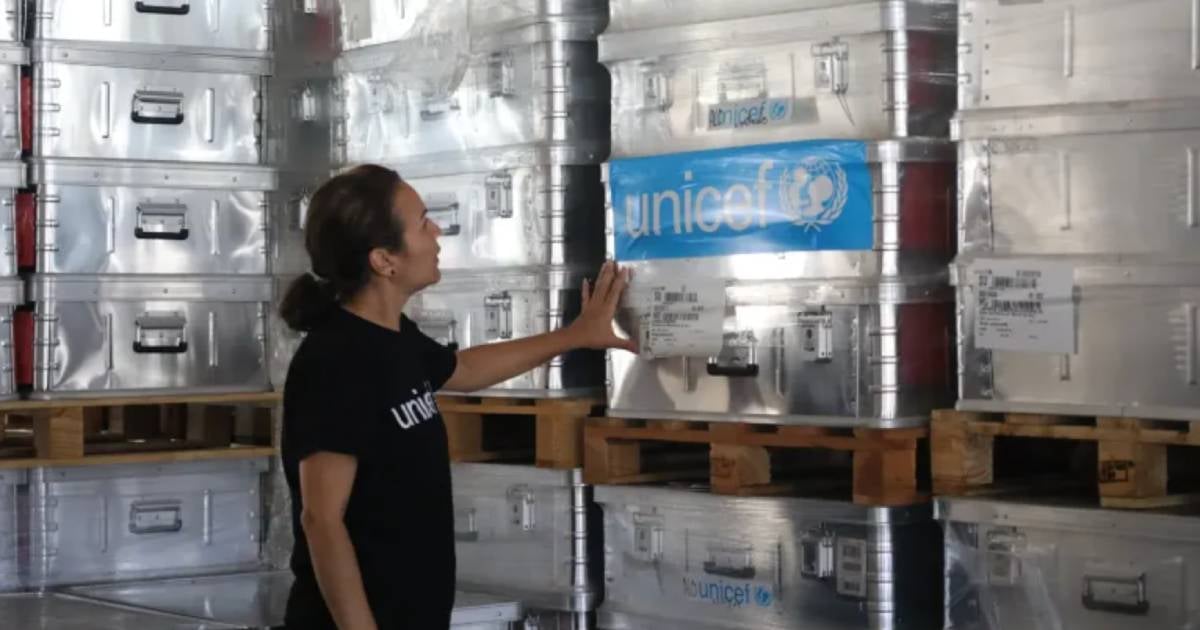
The international organization confirmed that it now has supplies in the country to address the most urgent needs of the affected population.
The passage of Hurricane Melissa, which made landfall on Wednesday morning as a category 3 storm, resulted in
Several communities are cut off from communication, thousands of homes have been damaged, and basic services such as drinking water, electricity, and communications have collapsed in extensive rural and urban areas. The regime has not published the total estimate of the damages.
From its headquarters in Havana, UNICEF Cuba reported that it has launched its emergency response plan aimed at ensuring the protection and well-being of children and their families in the areas hardest hit by the cyclone.
“Every hour of preparation counts when it comes to protecting children,” stated Alejandra Trossero, UNICEF representative in Cuba.
"Our commitment is to support the efforts of the national and local authorities to ensure that girls, boys, and adolescents are safe, supported, and have access to essential services before, during, and after the passage of Hurricane Melissa,” the statement notes.
UNICEF detailed that humanitarian supplies are already pre-positioned in the country to address the immediate needs of the affected families.
In the province of Las Tunas, 1,300 family hygiene kits are stored, enough to benefit over 6,500 people in evacuation centers.
Furthermore, the organization has two portable water treatment plants located in warehouses of the National Institute of Hydraulic Resources in Villa Clara and Holguín, ready to restore access to drinking water in communities where the service was interrupted due to flooding and damage to hydraulic networks.
As part of its humanitarian efforts, UNICEF will prioritize comprehensive care for affected minors. A total of 213 recreation kits have been prepared for over 20,000 girls, boys, and adolescents, in addition to 80 school supply kits and 209 early childhood kits for more than 10,000 children under five.
1,900 ceiling sheets and 5,000 m² of waterproof blankets have also been allocated for the rehabilitation of schools and educational spaces, in order to ensure a safe return to classes in the affected areas, he emphasized.
The impact of Melissa has been particularly severe in Palma Soriano, Baire, Urbano Noris, and Niceto Pérez, where the winds and flooding wreaked havoc on homes, crops, and basic infrastructure. UNICEF is coordinating with the Ministry of Education, the Ministry of Public Health, and the Civil Defense to distribute available resources and assist the evacuated families.
The agency emphasized that its support will focus on three main areas: restoring the supply of drinking water and basic sanitation in affected communities; rehabilitating maternal and child health services and providing essential medications and medical supplies; and offering psycho-emotional support and assistance to girls, boys, and adolescents in evacuation centers.
After Melissa passed, the scene in eastern Cuba is bleak. In Palma Soriano and Baire, roofs were blown off, hundreds of homes were destroyed, and trees were uprooted.
In Guantánamo, the overflowing rivers swept away bridges and rural roads, while in Holguín dozens of communities remain isolated without electricity or water.
The Civil Defense authorities have declared the region in recovery phase and have requested international cooperation to address the humanitarian emergency affecting thousands of families.
Countries like the United States and Germany have already provided humanitarian aid to the island.
Filed under: