
Related videos:
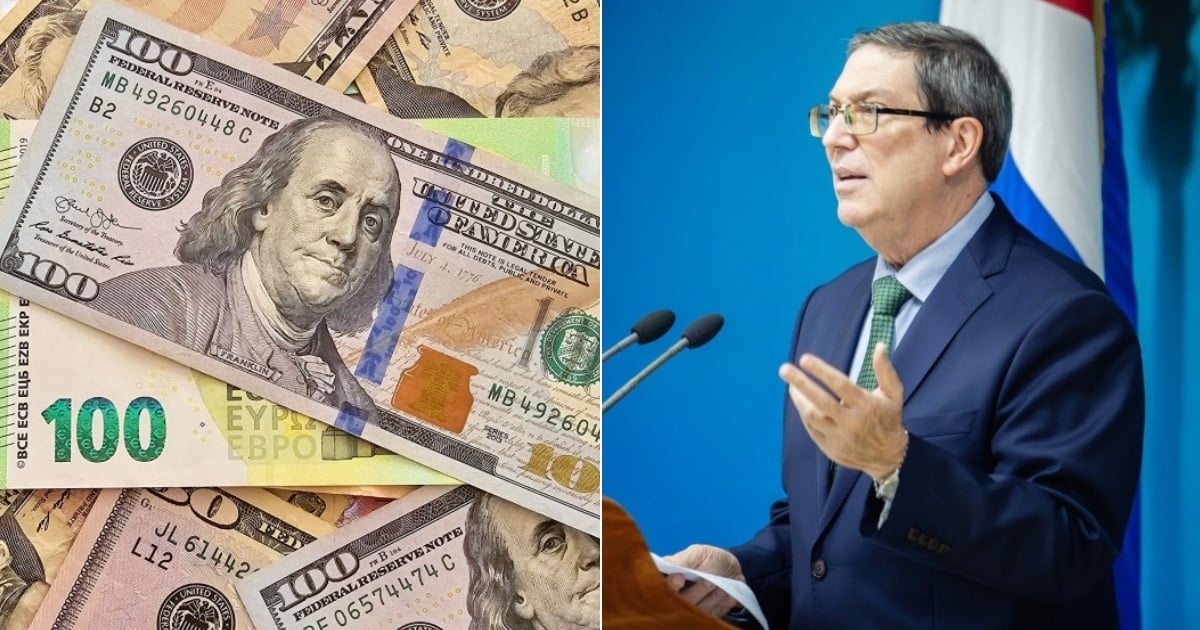
The Cuban Foreign Minister, Bruno Rodríguez Parrilla, has made a strong accusation against the informal foreign exchange market, attributing it to a campaign orchestrated from the United States aimed at provoking an economic crisis in Cuba.
According to the official, this is a deliberate strategy of "destabilization" that resorts to currency speculation, psychological manipulation, and illicit financing through U.S. federal resources.
The complaint, published this Saturday on his official account on the social media platform X, has sparked a wave of reactions, reviving the debate over the causes of inflation and the depreciation of the Cuban peso.
“The U.S. government organizes, funds, and directly executes a comprehensive destabilization program as part of its economic war against Cuba,” Rodríguez stated in a serious tone.
According to their account, the operation involves the use of “Cuban operators based in U.S. territory and other countries”, which implies an international network with a very specific goal: to directly affect the pocket of the Cuban citizen.
An attack aimed at the currency and social stability
The Cuban chancellor highlighted one of the most sensitive tools of that alleged offensive: the exchange rate.
According to him, “his mission is to depress the income level of the population through the speculative manipulation of the currency exchange rate.”
The direct consequence of this manipulation, he asserts, is "the rise in prices, the spread of intimidating and alarmist messages on social networks, and thus the disruption of the market's natural behavior."
In this regard, Rodríguez suggests that behind inflation, the uncontrolled rise of the dollar, and the loss of purchasing power of the Cuban peso, there are not only internal structural causes but also a concerted effort to amplify economic chaos.
“The effect is a severe damage to the income of every Cuban and additional obstacles to the macroeconomic stabilization programs,” he warned, suggesting that this type of currency sabotage would be directly interfering with the official economic recovery plans.
U.S. Congress funds, money laundering, and social networks
One of the most sensitive points in his statement is the one that directly links U.S. government institutions with the financing of this supposed operation.
Rodríguez stated that there is an occurrence of “money laundering of the U.S. federal budget, using funds allocated by the United States Congress”, and that these resources are channeled through the Department of State, contractors, and NGOs.
This financial component, according to the chancellor, would be intended to fund digital platforms, psychological manipulation campaigns, and structures that influence the informal economy, especially in the alternative currency market.
Although the Cuban Foreign Minister did not mention specific names, it is clear that the speech once again targets independent digital media such as elTOQUE, which has been pointed out by the authorities as an active player in the "speculative fixing" of the exchange rate in Cuba.
The citizens' response to the chancellor's complaint was quickly felt. Numerous users on X responded with criticisms of the Cuban government, questioning the true causes of inflation, the deterioration of the Cuban peso, and the rise of the informal market.
"The dollar has no ceiling because the peso has no value; inflation is a monetary phenomenon. Stop feeding the printing press for pesos," asserted a commentator
"When a government opens stores in dollars but pays in pesos, without real production to support the currency, the result is inevitable: inflation, devaluation, and inequality. A destabilization plan is not necessary for this to happen. What is lacking is good management and internal responsibility," pointed out another.
"Those who sell in dollars and pay in pesos are you..." a third Cuban recalled.
Between Denial and Mockery: Polarized Reaction
Alongside economic criticism, sarcastic remarks and mockery of the official discourse proliferated.
"Another day of talking badly about the United States"; "You really are smoking the good stuff"; "Now the exchange rate is also someone else's fault, it's never the result of your terrible economic management. What you give is disgusting."
Some questioned the logic of the official statement with international comparisons: “And why isn’t Taiwan in the same situation as Cuba? Since China has a much stronger economic blockade against it.”
In the face of a wave of questioning, several accounts defended the official stance, using hashtags like #TumbaElBloqueo and attacking elTOQUE.
Narrative of resistance or distraction?
For many Cubans, the official narrative regarding a supposed external manipulation of the exchange rate is seen as a smokescreen to divert attention from the internal economic collapse.
"So much fuss to say: we are as incompetent and corrupt as Gil, but the blame for inflation lies with elTOQUE"; " Invest in agriculture, don't funnel so much money into your pockets, listen to the people... you don't even know the price of a plantain in the market," concluded two other commentators.
The message from Chancellor Bruno Rodríguez not only sparked debate but also starkly reflected the growing gap between the official rhetoric and the perception of a significant portion of the public.
While the government insists that the country's problems are caused by external factors, a large segment of the population points to internal policies, the lack of structural reforms, the unresolved dual currency system, and the loss of purchasing power as deep-rooted causes of the crisis.
In this context, blaming the informal currency market—without acknowledging the errors in economic design, the disincentive for productivity, and systemic inequality—seems, to many, to be an attempt to evade responsibilities rather than confront them with real solutions.
Filed under: